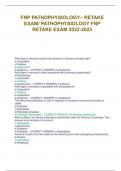
FNP PATHOPHYSIOLOGY– RETAKE EXAM/ PATHOPHYSIOLOGY FNP RETAKE EXAM
What type of necrosis results from ischemia of neurons and glial cells? a.Coagulative c.Caseous b.Liquefactive d.Gangrene - -CORRECT ANSWER- b.Liquefactive What type of necrosis is often associated with pulmonary tuberculosis? a.Bacteriologic c.Liquefactive b.Caseous d.Gangrenous - -CORRECT ANSWER- b.Caseous What type of necrosis is associated with wet gangrene? a.Coagulative c.Caseous b.Liquefactive d.Gangrene - -CORRECT ANSWER- b.Liquefactive The abnormal proliferation of cells in response to excessive hormonal stimulation is called: a.Dysplasia c.Hyperplasia b.Pathologic dysplasia d.Pathologic hyperplasia - -CORRECT ANSWER- d.Pathologic hyperplasia After ovulation, the uterine endometrial cells divide under the influence of estrogen. This process is an example of hormonal: a.Hyperplasia c.Hypertrophy b.Dysplasia d.Anaplasia - -CORRECT ANSWER- a.Hyperplasia Removal of part of the liver leads to the remaining liver cells undergoing compensatory: a.Atrophy c.Hyperplasia b.Metaplasia
Written for
- Institution
- FNP PATHOPHYSIOLOGY
- Course
- FNP PATHOPHYSIOLOGY
Document information
- Uploaded on
- March 20, 2024
- Number of pages
- 32
- Written in
- 2023/2024
- Type
- Exam (elaborations)
- Contains
- Questions & answers
Subjects
- fnp pathophysiology
- liquefactive
- caseous
- hyperplasia
- parathyroid gland damage
- muscle spasms
- increased serum ca
-
pathophysi
-
modification in the shape of a specific cell type
-
hyperthermia and tachycardia