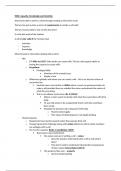
Wills: Capacity, Knowledge and Intention
Need to be able to advise a client through creating a will and its issues
The law has put in place a series of requirements to render a will valid
The law must be able to rely on this document
It is the last word of the testator
A will id only valid if the Testator had:
- Intention
- Capacity
- Knowledge
What to keep in mind when dealing with a client:
- Age
oS.7 Wills Act 1837: Only adults can create wills. The law only regards adults as
having the capacity to create wills
o Exceptions:
Privileged Wills
Members of the armed forces
People at sea
o Differences globally with when you can create a will – this is an area for reform of
succession law
Australia uses a test similar to Gillick where a court can grant permission to
make a will provided they are satisfied the minor understands the nature of
what they are doing
This is not without controversy (Re JS [2016])
Where a minor wants to decide with what they want done with their
body
14 year old wants to be cryogenically frozen until she could have
been cured
Mandate for personal rep in disposal of the body
o Must be done legally
o Ther clause of body disposal is not legally binding
- Mental Capacity
o Required to have mental capacity when they execute their will
o Frequent ground of challenge (along with undue influence) where family members
are unhappy with a will
o The test for capacity: Banks v Goodfellow (1869)
The testator must understand:
The nature and act of writing a will – nature
o Does the testator understand what a will is and what it
does?
o They don’t need to understand all potential consequences
of their cation (Simon Byford [2014])
The property they own – property
o General understanding
Need to be able to advise a client through creating a will and its issues
The law has put in place a series of requirements to render a will valid
The law must be able to rely on this document
It is the last word of the testator
A will id only valid if the Testator had:
- Intention
- Capacity
- Knowledge
What to keep in mind when dealing with a client:
- Age
oS.7 Wills Act 1837: Only adults can create wills. The law only regards adults as
having the capacity to create wills
o Exceptions:
Privileged Wills
Members of the armed forces
People at sea
o Differences globally with when you can create a will – this is an area for reform of
succession law
Australia uses a test similar to Gillick where a court can grant permission to
make a will provided they are satisfied the minor understands the nature of
what they are doing
This is not without controversy (Re JS [2016])
Where a minor wants to decide with what they want done with their
body
14 year old wants to be cryogenically frozen until she could have
been cured
Mandate for personal rep in disposal of the body
o Must be done legally
o Ther clause of body disposal is not legally binding
- Mental Capacity
o Required to have mental capacity when they execute their will
o Frequent ground of challenge (along with undue influence) where family members
are unhappy with a will
o The test for capacity: Banks v Goodfellow (1869)
The testator must understand:
The nature and act of writing a will – nature
o Does the testator understand what a will is and what it
does?
o They don’t need to understand all potential consequences
of their cation (Simon Byford [2014])
The property they own – property
o General understanding