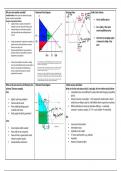
Why are some markets unstable? Maximum Prices Diagram Exchange Rates Buffer Stock Scheme
Unstable Market: Where prices are volatile and supply
and/or demand is unpredictable
Example of Agricultural Markets:
Aim to stabilise prices
Supply inelastic as supply unresponsive to
changes in price due to growth/rearing cycle Set a ceiling + floor price
Demand inelastic as food stuffs necessities
around equilibrium price
which generally take up small proportion of
income
Intervene by managing supply
Supply unpredictable as depends on weather, on + demand at ceiling + floor
good harvest is downward pressure on price, price
bad one sees prices rise
Demand unpredictable as many agricultural
products traded as commodities so demand
dependent on speculation
Farmers income likely to be volatile + change
over time, demand likely to be income elastic so
farmer’s incomes likely to fall behind over
sectors as demand increases by a smaller
proportion than income
What are the pros and cons of Minimum price Minimum Prices Diagram Market success and Failure
schemes? (farmers example) What are the five main factors which, in principle, the Free Market should deliver:
Pros: Competition (low costs (efficient) to make profit while charging competitive
prices)
Higher rural living standards Choice (consumer ‘sovereignty’ – firms respond to needs/wants as that is
Farmers able to invest what they are willing to pay for. And flexibility (firms respond to incentives)
Prices stabilised giving greater Efficient allocation of resources (allocative efficiency – maximising
certainty over future consumer + producer surplus. CS + PS = social welfare maximised)
Food supply should be guaranteed
But:
Cons:
Government intervention
Some produce will be wasted Information issues
Prices will rise for consumers Instability in the market
Taxes will rise as government needs 3rd party costs/benefits, e.g. pollution
money to acquire surplus Inequality
Overproduction will worsen Absence of property rights
Unstable Market: Where prices are volatile and supply
and/or demand is unpredictable
Example of Agricultural Markets:
Aim to stabilise prices
Supply inelastic as supply unresponsive to
changes in price due to growth/rearing cycle Set a ceiling + floor price
Demand inelastic as food stuffs necessities
around equilibrium price
which generally take up small proportion of
income
Intervene by managing supply
Supply unpredictable as depends on weather, on + demand at ceiling + floor
good harvest is downward pressure on price, price
bad one sees prices rise
Demand unpredictable as many agricultural
products traded as commodities so demand
dependent on speculation
Farmers income likely to be volatile + change
over time, demand likely to be income elastic so
farmer’s incomes likely to fall behind over
sectors as demand increases by a smaller
proportion than income
What are the pros and cons of Minimum price Minimum Prices Diagram Market success and Failure
schemes? (farmers example) What are the five main factors which, in principle, the Free Market should deliver:
Pros: Competition (low costs (efficient) to make profit while charging competitive
prices)
Higher rural living standards Choice (consumer ‘sovereignty’ – firms respond to needs/wants as that is
Farmers able to invest what they are willing to pay for. And flexibility (firms respond to incentives)
Prices stabilised giving greater Efficient allocation of resources (allocative efficiency – maximising
certainty over future consumer + producer surplus. CS + PS = social welfare maximised)
Food supply should be guaranteed
But:
Cons:
Government intervention
Some produce will be wasted Information issues
Prices will rise for consumers Instability in the market
Taxes will rise as government needs 3rd party costs/benefits, e.g. pollution
money to acquire surplus Inequality
Overproduction will worsen Absence of property rights