Pathophysiology final exam Correct 100%(SCORED A+)
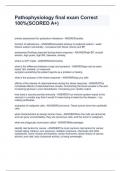
priority assessment for potassium imbalance - ANSWERcardiac function of aldosterone - ANSWERstimulates kidneys to reabsorb sodium - water follows sodium osmotically - increases both blood volume and BP assessment findings expected during stress response - ANSWERhigh BP, muscle tension, high pulse, high RR, diaeresis, anxiety, where is ATP made - ANSWERmitochondria what is the difference between a sign and symptom - ANSWERsign-can be seen, heard, felt, smelled, or measured symptom-something the patient reports as a problem or feeling what is the purpose of the stress response - ANSWERkeep you safe effects of the release of catecholamines during the stress response - ANSWERThe immediate effects of catecholamines include: Constricting the blood vessels in the skin. Increasing glucose in your bloodstream. Increasing your cardiac output how does a vaccine provide immunity - ANSWERYour immune system reacts to the vaccine in a similar way that it would if it were being invaded by the disease — by making antibodies. examples of malignant cells - ANSWERCarcinoma: These tumors form from epithelial cells what characteristics do benign tumors have - ANSWERWhen the cells are abnormal and can grow uncontrollably, they are cancerous cells, and the tumor is malignant. what are phagocytic monocytes called - ANSWERMacrophages identify risk factors for cancer - ANSWERThe most common risk factors for cancer include aging, tobacco, sun exposure, radiation exposure, chemicals and other substances, some viruses and bacteria, certain hormones, family history of cancer, alcohol, poor diet, lack of physical activity, or being overweight.
Written for
- Institution
- Pathophysiology
- Course
- Pathophysiology
Document information
- Uploaded on
- March 9, 2024
- Number of pages
- 10
- Written in
- 2023/2024
- Type
- Exam (elaborations)
- Contains
- Questions & answers
Subjects
-
pathophysiology final exam correct 100scored a
-
pathophysiology final exam stuvia

Also available in package deal