Social Studies 10-1 Unit 1(Ch.1-4) Study Guide Rated A+
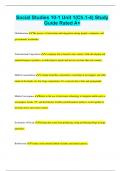
Social Studies 10-1 Unit 1(Ch.1-4) Study Guide Rated A+ Globalization The process of interaction and integration among people, companies, and governments worldwide. Transnational Corporation A company that is based in one country while developing and manufacturing its products, or delivering its goods and services in more than one country. Media Concentration A media trend that concentrates ownership of newspapers and other media in the hands of a few large corporations. It's a concern due to bias and propaganda. Media Convergence Refers to the use of electronic technology to integrate media such as newspapers, books, TV, and the Internet. Enables print/broadcast media to work together to develop stories and create content. Economies Of Scale Savings that come from producing, using and buying things in large quantities. Biodiversity Variety in the natural habitat of plants and animal species. Homogenization Erases the difference among people, and as a result, they become more and more similar(Americanization). Acculturation Refers to the cultural changes that occur when the cultures accommodate or adapt to, each other's worldview, the way they see the world. Accommodation Accepting and creating space for one another. Affects customs, traditions, technologies, values, beliefs, and languages of both cultures. Assimilation Occurs when the culture of a minority group is absorbed by another culture. The cultural identity of the minority group disappears as its members take on the identity of the other culture. Diversification The action of becoming more diverse or varied. Affirmation of identity The way that people assert themselves into their community. Ways of affirmation include founding associations and institutions, speaking their native language, expressing their cultural traditions, nation or gender. Forces of globalization Trade, transportation, communication technology, the media Assembly Of First Nations A Canadian group made up of representatives of the more than 600 First Nations groups. They work together to achieve Aboriginal and treaty rights, self- determination, and rights over natural resources. On the international front, they work with worldwide organizations on issues such as Native culture, history, and education. Multiculturalism In 1971, Canada adopted multiculturalism as an official government policy. The policy encourages cultural groups in Canada to preserve, enhance, and share their heritage, was adopted by Parliament and proclaimed by Prime Minister Pierre Elliott Trudeau. Cultural content laws Laws to protect artists, performers, songs, movies, and literature of their native country. Global village Where the world is viewed as a community by the use of electronic media. CRTC (Canadian Radio-Television and Telecommunications Commission) Created in 1968. The commission enforces quotas for Canadian content on radio and TV. The goal of the CRTC is to protect and preserve Canada's cultural identity. At least 30 percent of the music played on the radio must be Canadian and 60 percent of television programming must be Canadian. Marginalization Treatment of a person or group as inferior, insignificant, subhuman or less than. Examples include Chinese people, First Nations people, and African Americans. La Francophonie An international organization that represents countries and regions that have French as an official language, a significant amount of people who are Francophone or have a noticeable affiliation with French culture. La Francophonie hosts sports events, conferences, international competitions and cultural events
Written for
- Institution
- Social Studies 10-1 Unit 1
- Course
- Social Studies 10-1 Unit 1
Document information
- Uploaded on
- March 8, 2024
- Number of pages
- 10
- Written in
- 2023/2024
- Type
- Exam (elaborations)
- Contains
- Questions & answers
Subjects
-
social studies 10 1 unit 1ch1 4 study guide ra

Also available in package deal