1. MITOCHONDRIAL DISEASES: PRE-CLINICAL DRUG DISCOVERY
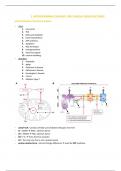
MITOCHONDRIAL FUNCTION & DISEASE
− roles:
1. urea cycle
2. TCA
3. fatty acid oxidation
4. haem biosynthesis
5. ATP synthesis
6. apoptosis
7. ROS formation
8. heat generation
9. electrical signals
10. calcium handling
− disorders:
1. metabolic
2. aging
3. Parkinson's disease
4. Alzheimer's disease
5. Huntington's disease
6. cancer
7. diabetes type 2
− acetyl-CoA = product of fatty acid oxidation that goes into TCA
− CI = NADH → NAD+, electron donor
− CII = FADH2 → FAD, electron donor
− CIV = O2 → H2O, electron acceptor
− CII = the only one that is not a proton pump
− proton-motive force = pH and charge difference → used for ATP synthesis
,− primary mitochondrial disorders = mitochondria-localized protein-encoding gene mutations
− secondary mitochondrial disorders = arising from an external influence on mitochondria; diabetes
type II, Parkinson’s, obesity, epilepsy, colorectal cancer
− mtDNA = encodes part of the mitochondrial proteome, plasmids)
− OXPHOS = all proteins derived from both nDNA and mtDNA, except for CII (only nDNA)
− heteroplasmy:
1. inheritance of mtDNA-encoded
mutations
2. mutated DNA after division is
accumulated in some cells, but not
in all
3. threshold effect = a certain higher
percentage of the mutated mtDNA
plasmids leads to a phenotype
presentation
4. caused by mitochondrial bottleneck
during oogenesis → division by chance
− inheritance:
1. mtDNA → maternal
2. nDNA → autosomal recessive
3. OXPHOS system is bi-genomic
− highly heterogeneous phenotypes of mitochondrial disorders
− mutations in the same OXPHOS genes can give different clinical phenotypes
− mutations in different OXPHOS genes can give similar clinical phenotypes
− tissue-specific effects of mutations in OXPHOS genes
ISOLATED HUMAN CI DEFICIENCY
− a model system for mitochondrial dysfunction and disease since it causes most of primary
mitochondrial disorders
− 44 different subunits: dehydrogenase (N), hydrogenase (Q), & membrane (P) modules
− supracomplexes with CIII and CIV → makes electron transfer and ATP synthesis more efficient,
disturbed in mutations
− clinical features of deficiency:
1. normal pregnancy and birth
2. central nervous system
3. skeletal muscle and heart
4. failure to thrive
5. within the first 2 years of life
6. increases in blood and CSF lactate
− symptoms: retarded growth rate, muscle weakness, loss of motor skills, seizures, ataxia, lethargy,
encephalopathy, reduced heart rate, reduced oxygen saturation
− no treatment available
− mutations reduce expression and activity of the fully assembled CI
, CELLULAR CONSEQUENCES of CI DEFICIENCY
− using living cells:
1. mitochondrial structure and function are altered by isolation procedures
2. the cellular environment provides submaximal substrate concentrations
3. mitochondria exchange ions and metabolites with the cytosol
4. mitochondrial function is controlled by the signalling circuits derived from the cytosol
− chemical molecules & targeted proteins → introduced into the cell for visualization → live-cell
microscopy → image quantification → analysis of fluorescent data → high-content life cell readouts
− ROS generation:
o affect cellular processes
o stress induction
o produced at many different
levels in the OXPHOS
process
o linked to CI deficiency
− CI deficiency:
o ↑ HEt (hydroethidine) →
measures superoxide
o ↑ CM-DCF → measures
H2O2
MITOCHONDRIAL ROS & DYNAMICS
− mitochondrial shape:
o fusion proteins: Mfn ½ for MOM, OPA for MIM
o fission proteins: Drp1
o activity regulated by ROS → post-translational modifications
− different mitochondrial morphologies in mutations → computer processing of images
− part of the population shows more fragmentation with lower CI expression
− less ROS increase → less fragmentation, lower average age death
DRUG DEVELOPMENT → LEAD IDENTIFICATION
− exogenous antioxidants may lower ROS and improve mitochondrial shape and function
− Trolox:
o vitamin E derived antioxidant
o normalizes increased ROS levels in patient fibroblasts
o reverses mitochondrial fragmentation in patient cells
o increases CI levels and activity of CI, CIV, CS (citrate synthase) in control and patient cells
o stimulates mitochondrial filamentation through Mfn ½
− Trolox is a lead compound = a chemical molecule displaying pharmacological or biological activity
likely to be therapeutically useful, but with suboptimal chemical structure that requires modification
to acquire better drug-like properties such as efficacy, potency, safety, synthesis route, cost, chemical
and metabolic stability, patentability
MITOCHONDRIAL FUNCTION & DISEASE
− roles:
1. urea cycle
2. TCA
3. fatty acid oxidation
4. haem biosynthesis
5. ATP synthesis
6. apoptosis
7. ROS formation
8. heat generation
9. electrical signals
10. calcium handling
− disorders:
1. metabolic
2. aging
3. Parkinson's disease
4. Alzheimer's disease
5. Huntington's disease
6. cancer
7. diabetes type 2
− acetyl-CoA = product of fatty acid oxidation that goes into TCA
− CI = NADH → NAD+, electron donor
− CII = FADH2 → FAD, electron donor
− CIV = O2 → H2O, electron acceptor
− CII = the only one that is not a proton pump
− proton-motive force = pH and charge difference → used for ATP synthesis
,− primary mitochondrial disorders = mitochondria-localized protein-encoding gene mutations
− secondary mitochondrial disorders = arising from an external influence on mitochondria; diabetes
type II, Parkinson’s, obesity, epilepsy, colorectal cancer
− mtDNA = encodes part of the mitochondrial proteome, plasmids)
− OXPHOS = all proteins derived from both nDNA and mtDNA, except for CII (only nDNA)
− heteroplasmy:
1. inheritance of mtDNA-encoded
mutations
2. mutated DNA after division is
accumulated in some cells, but not
in all
3. threshold effect = a certain higher
percentage of the mutated mtDNA
plasmids leads to a phenotype
presentation
4. caused by mitochondrial bottleneck
during oogenesis → division by chance
− inheritance:
1. mtDNA → maternal
2. nDNA → autosomal recessive
3. OXPHOS system is bi-genomic
− highly heterogeneous phenotypes of mitochondrial disorders
− mutations in the same OXPHOS genes can give different clinical phenotypes
− mutations in different OXPHOS genes can give similar clinical phenotypes
− tissue-specific effects of mutations in OXPHOS genes
ISOLATED HUMAN CI DEFICIENCY
− a model system for mitochondrial dysfunction and disease since it causes most of primary
mitochondrial disorders
− 44 different subunits: dehydrogenase (N), hydrogenase (Q), & membrane (P) modules
− supracomplexes with CIII and CIV → makes electron transfer and ATP synthesis more efficient,
disturbed in mutations
− clinical features of deficiency:
1. normal pregnancy and birth
2. central nervous system
3. skeletal muscle and heart
4. failure to thrive
5. within the first 2 years of life
6. increases in blood and CSF lactate
− symptoms: retarded growth rate, muscle weakness, loss of motor skills, seizures, ataxia, lethargy,
encephalopathy, reduced heart rate, reduced oxygen saturation
− no treatment available
− mutations reduce expression and activity of the fully assembled CI
, CELLULAR CONSEQUENCES of CI DEFICIENCY
− using living cells:
1. mitochondrial structure and function are altered by isolation procedures
2. the cellular environment provides submaximal substrate concentrations
3. mitochondria exchange ions and metabolites with the cytosol
4. mitochondrial function is controlled by the signalling circuits derived from the cytosol
− chemical molecules & targeted proteins → introduced into the cell for visualization → live-cell
microscopy → image quantification → analysis of fluorescent data → high-content life cell readouts
− ROS generation:
o affect cellular processes
o stress induction
o produced at many different
levels in the OXPHOS
process
o linked to CI deficiency
− CI deficiency:
o ↑ HEt (hydroethidine) →
measures superoxide
o ↑ CM-DCF → measures
H2O2
MITOCHONDRIAL ROS & DYNAMICS
− mitochondrial shape:
o fusion proteins: Mfn ½ for MOM, OPA for MIM
o fission proteins: Drp1
o activity regulated by ROS → post-translational modifications
− different mitochondrial morphologies in mutations → computer processing of images
− part of the population shows more fragmentation with lower CI expression
− less ROS increase → less fragmentation, lower average age death
DRUG DEVELOPMENT → LEAD IDENTIFICATION
− exogenous antioxidants may lower ROS and improve mitochondrial shape and function
− Trolox:
o vitamin E derived antioxidant
o normalizes increased ROS levels in patient fibroblasts
o reverses mitochondrial fragmentation in patient cells
o increases CI levels and activity of CI, CIV, CS (citrate synthase) in control and patient cells
o stimulates mitochondrial filamentation through Mfn ½
− Trolox is a lead compound = a chemical molecule displaying pharmacological or biological activity
likely to be therapeutically useful, but with suboptimal chemical structure that requires modification
to acquire better drug-like properties such as efficacy, potency, safety, synthesis route, cost, chemical
and metabolic stability, patentability