NURS 6560 FINAL EXAM
Guaranteed A+ Latest Edition 2024.
1. QUESTION/ANSWER:
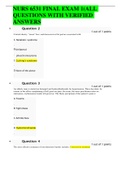
The AGACNP is reviewing a chart of a head-injured patient. Which of the following would alert
the AGACNP for the possibility that the patient is over hydrated, thereby increasing the risk
for increased intracranial pressure?
A. BUN = 10
B. Shift output = 800 ml, shift input
= 825 ml Unchanged weight
C. Serum osmolality = 260
2. QUESTION/ANSWER:
A patient who has been in the intensive care unit for 17 days develops hyponatremic
hyperosmolality. The patient weighs 132 lb (59.9 kg), is intubated, and is receiving mechanical
ventilation. The serum osmolality is 320 mOsm/L kg H2O. Clinical signs include tachycardia
and hypotension. The adult-gerontology acute care nurse practitioner's initial treatment is to:
A. reduce serum osmolality by infusing a 5% dextrose in
0.2% sodium chloride solution
B. reduce serum sodium concentration by infusing a 0.45%
sodium chloride solution
C. replenish volume by infusing a 0.9% sodium chloride solution
D. replenish volume by infusing a 5% dextrose in water solution.
3. QUESTION/ANSWER:
A 16-year-old male presents with fever and right lower quadrant discomfort. He complains of
nausea and has had one episode of vomiting, but he denies any diarrhea. His vital signs are
as follows: temperature 101.9°F, pulse 100 bpm, respirations 16 breaths per minute, and
blood pressure 110/70 mm Hg. A complete blood count reveals a WBC count of 19,100
cells/µL. The AGACNP expects that physical examination will reveal:
A. + Murphy’s sign
B. + Chvostek’s sign
C. + McBurney’s sign
D. + Kernig’s sign
4. QUESTION/ANSWER:
Myasthenia gravis is best described as:
A. An imbalance of dopamine and acetylcholine in the
basal ganglia Demyelination of peripheral
ascending nerves
,B. Demyelination in the central nervous system
C. An autoimmune disorder characterized by decreased neuromuscular activation
5. QUESTION/ANSWER:
,Mrs. Coates is a 65-year-old female who is on postoperative day 1 following a duodenal
resection for a bleeding ulcer. She had an uneventful immediate postoperative course, but
throughout the course of day 1 she has complained of a mild abdominal discomfort that has
progressed throughout the day. This evening the AGACNP is called to the bedside to evaluate
the patient for persistent and progressive discomfort. Likely causes of her symptoms include all
of the following except:
A. Colic due to
return of
peristalsis
B. Leakage from
the duodenal
stump
C. Gastric retention
D. Hemorrhage
6. QUESTION/ANSWER:
Mrs. Coates is a 65-year-old female who is on postoperative day 1 following a duodenal
resection for a bleeding ulcer. She had an uneventful immediate postoperative course, but
throughout the course of day 1 she has complained of a mild abdominal discomfort that has
progressed throughout the day. This evening the AGACNP is called to the bedside to
evaluate the patient for persistent and progressive discomfort. Likely causes of her
symptoms
include all of the following except:
A. Colic due to
return of
peristalsis
B. Leakage from
the duodenal
stump
C. Gastric retention
D. Hemorrhage
7. QUESTION/ANSWER:
When a patient is hospitalized with a possible stroke, the AGACNP recognizes that the
stroke most likely resulted from a subarachnoid hemorrhage when the patient’s family
reports that the patient:
A. Has a history of atrial fibrillation
B. Was unable to be aroused in the morning
C. Had been complaining of a headache before losing consciousness
D. Has had several brief episodes of mental confusion and right arm and leg weakness
, 8. QUESTION/ANSWER:
You are asked to see a 29 year old female complaining of abdominal pain. She states she is
experiencing constant RUQ pain that radiates to her back. The pain is not relieved by bowel
Guaranteed A+ Latest Edition 2024.
1. QUESTION/ANSWER:
The AGACNP is reviewing a chart of a head-injured patient. Which of the following would alert
the AGACNP for the possibility that the patient is over hydrated, thereby increasing the risk
for increased intracranial pressure?
A. BUN = 10
B. Shift output = 800 ml, shift input
= 825 ml Unchanged weight
C. Serum osmolality = 260
2. QUESTION/ANSWER:
A patient who has been in the intensive care unit for 17 days develops hyponatremic
hyperosmolality. The patient weighs 132 lb (59.9 kg), is intubated, and is receiving mechanical
ventilation. The serum osmolality is 320 mOsm/L kg H2O. Clinical signs include tachycardia
and hypotension. The adult-gerontology acute care nurse practitioner's initial treatment is to:
A. reduce serum osmolality by infusing a 5% dextrose in
0.2% sodium chloride solution
B. reduce serum sodium concentration by infusing a 0.45%
sodium chloride solution
C. replenish volume by infusing a 0.9% sodium chloride solution
D. replenish volume by infusing a 5% dextrose in water solution.
3. QUESTION/ANSWER:
A 16-year-old male presents with fever and right lower quadrant discomfort. He complains of
nausea and has had one episode of vomiting, but he denies any diarrhea. His vital signs are
as follows: temperature 101.9°F, pulse 100 bpm, respirations 16 breaths per minute, and
blood pressure 110/70 mm Hg. A complete blood count reveals a WBC count of 19,100
cells/µL. The AGACNP expects that physical examination will reveal:
A. + Murphy’s sign
B. + Chvostek’s sign
C. + McBurney’s sign
D. + Kernig’s sign
4. QUESTION/ANSWER:
Myasthenia gravis is best described as:
A. An imbalance of dopamine and acetylcholine in the
basal ganglia Demyelination of peripheral
ascending nerves
,B. Demyelination in the central nervous system
C. An autoimmune disorder characterized by decreased neuromuscular activation
5. QUESTION/ANSWER:
,Mrs. Coates is a 65-year-old female who is on postoperative day 1 following a duodenal
resection for a bleeding ulcer. She had an uneventful immediate postoperative course, but
throughout the course of day 1 she has complained of a mild abdominal discomfort that has
progressed throughout the day. This evening the AGACNP is called to the bedside to evaluate
the patient for persistent and progressive discomfort. Likely causes of her symptoms include all
of the following except:
A. Colic due to
return of
peristalsis
B. Leakage from
the duodenal
stump
C. Gastric retention
D. Hemorrhage
6. QUESTION/ANSWER:
Mrs. Coates is a 65-year-old female who is on postoperative day 1 following a duodenal
resection for a bleeding ulcer. She had an uneventful immediate postoperative course, but
throughout the course of day 1 she has complained of a mild abdominal discomfort that has
progressed throughout the day. This evening the AGACNP is called to the bedside to
evaluate the patient for persistent and progressive discomfort. Likely causes of her
symptoms
include all of the following except:
A. Colic due to
return of
peristalsis
B. Leakage from
the duodenal
stump
C. Gastric retention
D. Hemorrhage
7. QUESTION/ANSWER:
When a patient is hospitalized with a possible stroke, the AGACNP recognizes that the
stroke most likely resulted from a subarachnoid hemorrhage when the patient’s family
reports that the patient:
A. Has a history of atrial fibrillation
B. Was unable to be aroused in the morning
C. Had been complaining of a headache before losing consciousness
D. Has had several brief episodes of mental confusion and right arm and leg weakness
, 8. QUESTION/ANSWER:
You are asked to see a 29 year old female complaining of abdominal pain. She states she is
experiencing constant RUQ pain that radiates to her back. The pain is not relieved by bowel