

Lecture 1: Introduction
Part 1: What is adolescence? Conceptualizations and definitions
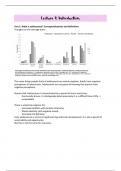
Thoughts on the teenage brain:
The name things people think of adolescents are mainly negative. Adults have negative
perceptions of adolescents. Adolescents are very good at knowing that parents have
negative perceptions.
Stanley Hall: Adolescence is characterized by a period of storm and stress.
- Hormonally driven, it is biologically determined why it is a difficult time of life ->
unavoidable.
There is empirical evidence for:
- Increased conflicts with parents (intensity).
- Mood volativity (and negative mood).
- Increased risk behavior.
Early adolescence is a time of rapid learning and brain development. It is also a period of
vulnerability and opportunity.
But this is not the same for everyone.
,Adolescents were asked whether they saw different behaviors and characteristics of
adolescents. In Hongkong they believed that mood swings were more something for
adolescents. Longitudinally, people who have negative stereotypes showed more negative
expressivity and acted badly.
There also are short-term changes as well as long-term.
Defining adolescence: The period between the onset of sexual maturation (puberty) and the
attainment of adult roles and responsibilities.
- The transition from:
o child status (requires adult monitoring).
o To adult status (self-responsibility for behavior).
When are you an adult? -> is different for all countries and groups etc.
Book:
- Early adolescence (10-13 years)
- Middle adolescence (14-17 years)
- Late adolescence (18-21 years)
- Young adulthood (22–30 years)
Other authors:
- Emerging adulthood (18-25 years) then young adulthood.
3 primary changes in adolescence:
- Biological: puberty (body and brain). Effects hormones.
- Cognitive: abstract thinking, executive functions, social cognition (interacting with
other people).
- Social: redefinition of an individual from child to an adult (or non-child). So, how
people treat you.
Developmental tasks (what skills are people acquiring in specific times of life):
- Accepting one’s physical body and keeping it healthy.
- Achieving new and more mature relationships with age mates of both sexes.
- Achieving (emotional) autonomy from parents and other adults.
- Achieving a satisfying gender role.
, - Preparing for a job or career (e.g. through education).
- Making decisions about marriage and family life.
- Becoming socially responsible.
- Developing a workable philosophy, a mature set of
values, and worthy ideals.
But development doesn’t occur in a vacuum ->
Bronfenbrenner’s ecological model.
Part 2: The beginning of adolescence: puberty
Puberty = maturational process during which primary (e.g.
testes, ovaries) and secondary (e.g. breasts, pubic hair) sex
characteristics mature resulting in capacity to reproduce.
5 areas of change:
- Maturation of reproductive organs, secondary sex characteristics.
- Nervous and endocrine system.
o Feedback loops in the brain -> influence our hormone levels. The HPA (stress-
regulator) and HPG axis.
▪ During adolescence there is more activity in the HPA axis, so
adolescents are more sensitive and vulnerable for stressful situations.
▪ HPG axis plays a role in sexual hormones. Increases development of
sex characteristics.
- Skeletal growth.
- Body composition, change in distribution of fat and muscle.
- Circulatory and respiratory systems.
- Brain: a lot of changes to hypothalamus and limbic system (emotional feelings,
reward sensitivity).
Adolescents also have growth spurts: this starts earlier in girls than in boys. But boys become
taller eventually. The peak in the gain of height is earlier for girls than boys. Girls go earlier
, through puberty than boys as well. There are developmental consequences when you
develop at a different (earlier or later) time than your peers.
Factors influencing puberty:
- Genetics: The average difference in time of menarche (menstruation) for strangers is
19 months, for sisters 13 months, for identical twins 2.8 months. Go through puberty
at almost the same time as your close family.
- Increase kisspeptin (via leptin and melatonin). Leptin has to do with the amount of
fat, the more fat they have the more early they will start puberty. Melatonin has to do
with the amount of light you get, people who live in lighter areas will go through
puberty earlier.
- Nutrition. Enough bodyfat -> good to start puberty.
- Health care. Better health care now, people are healthier.
- Environmental stress. People that experience environmental stress will start puberty
earlier. People have feeling they need to reproduce earlier because maybe they do
not live as long as other people.
- Unrelated family members of opposite sex. Adolescent girls with male family
members often go to puberty at a different time, is because of pheromones.
➔ Reproductive strategies?
Part 1: What is adolescence? Conceptualizations and definitions
Thoughts on the teenage brain:
The name things people think of adolescents are mainly negative. Adults have negative
perceptions of adolescents. Adolescents are very good at knowing that parents have
negative perceptions.
Stanley Hall: Adolescence is characterized by a period of storm and stress.
- Hormonally driven, it is biologically determined why it is a difficult time of life ->
unavoidable.
There is empirical evidence for:
- Increased conflicts with parents (intensity).
- Mood volativity (and negative mood).
- Increased risk behavior.
Early adolescence is a time of rapid learning and brain development. It is also a period of
vulnerability and opportunity.
But this is not the same for everyone.
,Adolescents were asked whether they saw different behaviors and characteristics of
adolescents. In Hongkong they believed that mood swings were more something for
adolescents. Longitudinally, people who have negative stereotypes showed more negative
expressivity and acted badly.
There also are short-term changes as well as long-term.
Defining adolescence: The period between the onset of sexual maturation (puberty) and the
attainment of adult roles and responsibilities.
- The transition from:
o child status (requires adult monitoring).
o To adult status (self-responsibility for behavior).
When are you an adult? -> is different for all countries and groups etc.
Book:
- Early adolescence (10-13 years)
- Middle adolescence (14-17 years)
- Late adolescence (18-21 years)
- Young adulthood (22–30 years)
Other authors:
- Emerging adulthood (18-25 years) then young adulthood.
3 primary changes in adolescence:
- Biological: puberty (body and brain). Effects hormones.
- Cognitive: abstract thinking, executive functions, social cognition (interacting with
other people).
- Social: redefinition of an individual from child to an adult (or non-child). So, how
people treat you.
Developmental tasks (what skills are people acquiring in specific times of life):
- Accepting one’s physical body and keeping it healthy.
- Achieving new and more mature relationships with age mates of both sexes.
- Achieving (emotional) autonomy from parents and other adults.
- Achieving a satisfying gender role.
, - Preparing for a job or career (e.g. through education).
- Making decisions about marriage and family life.
- Becoming socially responsible.
- Developing a workable philosophy, a mature set of
values, and worthy ideals.
But development doesn’t occur in a vacuum ->
Bronfenbrenner’s ecological model.
Part 2: The beginning of adolescence: puberty
Puberty = maturational process during which primary (e.g.
testes, ovaries) and secondary (e.g. breasts, pubic hair) sex
characteristics mature resulting in capacity to reproduce.
5 areas of change:
- Maturation of reproductive organs, secondary sex characteristics.
- Nervous and endocrine system.
o Feedback loops in the brain -> influence our hormone levels. The HPA (stress-
regulator) and HPG axis.
▪ During adolescence there is more activity in the HPA axis, so
adolescents are more sensitive and vulnerable for stressful situations.
▪ HPG axis plays a role in sexual hormones. Increases development of
sex characteristics.
- Skeletal growth.
- Body composition, change in distribution of fat and muscle.
- Circulatory and respiratory systems.
- Brain: a lot of changes to hypothalamus and limbic system (emotional feelings,
reward sensitivity).
Adolescents also have growth spurts: this starts earlier in girls than in boys. But boys become
taller eventually. The peak in the gain of height is earlier for girls than boys. Girls go earlier
, through puberty than boys as well. There are developmental consequences when you
develop at a different (earlier or later) time than your peers.
Factors influencing puberty:
- Genetics: The average difference in time of menarche (menstruation) for strangers is
19 months, for sisters 13 months, for identical twins 2.8 months. Go through puberty
at almost the same time as your close family.
- Increase kisspeptin (via leptin and melatonin). Leptin has to do with the amount of
fat, the more fat they have the more early they will start puberty. Melatonin has to do
with the amount of light you get, people who live in lighter areas will go through
puberty earlier.
- Nutrition. Enough bodyfat -> good to start puberty.
- Health care. Better health care now, people are healthier.
- Environmental stress. People that experience environmental stress will start puberty
earlier. People have feeling they need to reproduce earlier because maybe they do
not live as long as other people.
- Unrelated family members of opposite sex. Adolescent girls with male family
members often go to puberty at a different time, is because of pheromones.
➔ Reproductive strategies?


