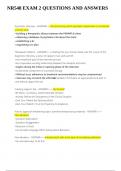
NR548 EXAM 2 QUESTIONS AND ANSWERS
Psychiatric interview - ANSWERthe process by which psychiatric assessment is conducted -primary tasks • building a therapeutic alliance between the PMHNP & client • obtaining a database of psychiatric info about the client • establishing a dx • negotiating a tx plan Therapeutic Alliance - ANSWERa feeling that you should create over the course of the diagnostic interview, a sense of rapport, trust, and warmth -most important goal of the interview process -the cooperative working relationship between the therapist and client • begins during the initial or opening phase of the interview -fundamental component of successful therapy • Without trust, adherence to treatment recommendations may be compromised • interview may not elicit the informati on needed to formulate an appropriate dx & plan of care without rapport & trust Creating rapport: tips - ANSWER-Be Yourself -Be Warm, Courteous, and Emotionally Sensitive -Actively Defuse the Strangeness of the Clinical Situation -Give Your Patient the Opening Word -Gain Your Patient's Trust by Projecting Competence How to approach threatening topics (sensitive/embarrassing material) - ANSWER- Normalization -Symptom Expectation -Symptom Exaggeration -Reduction of Guilt -Use Familiar Language When Asking about Behaviors Normalization - ANSWERIntroducing Q with some type of normalizing statement -two principal ways to do this: NR548 EXAM 2 QUESTIONS AND ANSWERS 1. start the question by implying that the behavior is a normal or understandable response to a mood or situation • ex: Sometimes when people are very depressed, they think of hurting themselves. Has this been true for you? 2. Begin by describing another patient (or patients) who has engaged in the behavior, showing your patient that she is not alone • ex: I've talked to several patients who've said that their depression causes them to have strange experiences, like hearing voices or thinking that strangers are laughing at them. Has that been happening to you? Symptom Expectation - ANSWERcommunicate that a behavior is in some way normal or expected -Phrase your Q's to imply that you already assume the patient has engaged in some behavior and that you will not be offended by a positive response -high index of suspicion of some self-destructive activity -Ex: patient is profoundly depressed and has expressed feelings of hopelessness. You suspect suicidality, but you sense that the patient may be too ashamed to admit it. Rather than gingerly asking "Have you had any thoughts that you'd be better off dead?" you might decide to use symptom expectation. "What kinds of ways to hurt yourself have you thought about?" *reserve this technique for situations in which it seems appropriate Symptom Exaggeration - ANSWERsuggesting a frequency of a problematic behavior that is higher than your expectation, so that the patient feels that their actual, lower frequency of the behavior will not be perceived by you as being "bad." -helpful in clarifying the severity of symptoms *reserve this technique for situations in which it seems appropriate Reduction of guilt - ANSWERseeks to directly reduce a patient's guilt about a specific behavior in order to discover what they have been doing -useful in obtaining a hx of domestic violence & other antisocial behavior Domestic Violence
Document information
- Uploaded on
- February 27, 2024
- Number of pages
- 19
- Written in
- 2023/2024
- Type
- Exam (elaborations)
- Contains
- Questions & answers