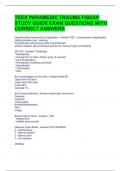
TEEX PARAMEDIC TRAUMA FISDAP STUDY GUIDE EXAM QUESTIONS WITH CORRECT ANSWERS
TEEX PARAMEDIC TRAUMA FISDAP STUDY GUIDE EXAM QUESTIONS WITH CORRECT ANSWERS Cardiac Tamponade s/s - Answer-falling systolic BP, narrow pulse pressure, JVD, muffled heart sounds Cyanosis of nails, lips, restless ICP - Answer-intracranial pressure (normal pressure is 5 to 15 mm Hg) Head injuries and intracranial hemorrhage - Answer-• Extradural (epidural) hemorrhage - arterial in origin, blood form torn branches of middle meningeal artery collects between external periosteal layer of dura and calvaria, stripping dura from cranium. Usually follows hard blow, forms extradural (epidural) hematoma. Brief concussion occurs, followed by lucid interval of several hours, eventually leading to drowsiness and coma. Compression of brain occurs, necessitating evacuation of blood/occlusion of bleeding vessels. • Dural border (subdural) hematoma - usually caused by extravasated blood that splits open dural border cell layer, creating space at dura-arachnoid junction. Usually follows blow to head that jerks brain inside cranium and injures it, trauma may be trivial or forgotten. Typically venous in origin, commonly results from tearing a superior cerebral vein as it enters superior sagittal sinus. • Subarachnoid hemorrhage - extravasation of blood, usually arterial, into subarachnoid space, usually resulting from rupture of a saccular aneurysm (sac-like dilation on side of an artery, eg aneurysm of internal carotid). Assocated with head trauma involving cranial fractures/cerebral lacerations. Bleeding results in meningeal irritation, severe headache, stiff neck, loss of consciousness. Long bone fracture cause what type of shock? - Answer-Hypovolemic due to large amount of blood found there. neurogenic shock s/s - Answer-Hypovolemic sx's due to profound vasodilation Neuro - restlessness, confusion CV - Profound decreased BP and bradycardia Resp - tachypnea >60 bpm GI - nausea
Written for
- Institution
- FISDAP PARAMEDIC
- Course
- FISDAP PARAMEDIC
Document information
- Uploaded on
- February 26, 2024
- Number of pages
- 4
- Written in
- 2023/2024
- Type
- Exam (elaborations)
- Contains
- Questions & answers
Subjects
-
teex paramedic trauma fisdap study guide exam ques
-
disseminating intravascular coagulation answer
-
burn percentages on the body answer head 9
-
ss of pneumothorax answer asymmetric movement

Also available in package deal