NOD 3- Nystagmus 123 Questions with 100% Correct Answers | Verified | Latest Update
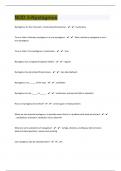
Nystagmus, for the most part, is (voluntary/involuntary). - ️️involuntary True or False: Voluntary nystagmus is a true nystagmus. - ️️false; voluntary nystagmus is not a true nystagmus True or False: True nystagmus is involuntary. - ️️true Nystagmus has a (regular/irregular) rhythm. - ️️regular Nystagmus has (one/two/three) phases. - ️️two (aka biphasic) Nystagmus is an _____ of the eyes. - ️️oscillation Nystagmus can be _____ or _____. - ️️continuous, paroxysmal (aka in episodes) How can nystagmus be evoked? - ️️certain gaze or head positions When we see acquired nystagmus, it typically means there is a problem with what structures? - ️️cerebellum, brainstem, vestibular nerve, labyrinth What are some symptoms of nystagmus? - ️️vertigo, dizziness, oscillopsia, blurred vision, abnormal head positions, nausea and vomiting Can nystagmus also be asymptomatic? - ️️yes
Written for
- Institution
- NOD 3-Nystagmus
- Course
- NOD 3-Nystagmus
Document information
- Uploaded on
- February 11, 2024
- Number of pages
- 12
- Written in
- 2023/2024
- Type
- Exam (elaborations)
- Contains
- Questions & answers
Subjects

Also available in package deal