AQA AS LEVEL BIOLOGY WITH COMPLETE SOLUTION
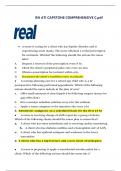
AQA AS LEVEL BIOLOGY WITH COMPLETE SOLUTION what is RNA? - ribonucleic acid MRNA and TRNA single stranded shorter AU CG what are biological molecules? - molecules made and used by living organisms eg. lipids, carbs, DNA, AT, water, inorganic ions what are the functions of carbohydrates? - -energy source (respiration) -energy store (starch and glycogen) -structure (cellulose) ATP structure? - 1 adenosine 3 phosphates ADP and energy= ATP condensation reaction using ATP synthase carries energy in bonds hydrolysis breaks down into ADP and energy using ATP hydrolase releases energy from phosphate group bonds what are the building blocks of carbohydrates called? - monosaccharides why is ATP a good source of energy? - immediate release, only need to break one bond releases small amounts of energy at a time, manageable examples of monosaccharides - glucose, fructose, galactose uses of ATP? - protein synthesis organelle synthesis dna replication mitosis active transport metabolic reactions movement homeostasis formula for monosaccharides? - c6h12o6 -same formula but arranged differently role of water in biology? - acts as a habitat for organisms make up cytoplasm, tissue fluid, blood, xylem and phloem water properties? - dipolar partially positive hydrogen partially negative oxygen so separate water molecules form hydrogen bonds with eachother difference between alpha and beta glucose? - on carbon 1, alpha glucose has an OH group on the bottom. beta glucose has it at the top. how are monosaccharides joined together? - condensation reaction between 2 OH groups roles of water? - -habitat, high shc so a lot of heat needs to be applied before evaporation due to hydrogen bonds. ice is less dense than water so floats up -solvent, dipolar so separate solutes by charge depending on partial charge. solute dissolves in water, useful for cytoplasm, diffusion and active transport ect -hydrostatic pressure, when pressurised, water provides a strong pushing force particularly in mass flow. supports turgidity -homeostasis, sweat on skin uses blood heat to evaporate, cooling individual. sweat is made up of hydrogen bonds,stable structure, large amount of heat to evaporate. LATENT HEAT OF EVAPORATION. bond in carbohydrate? - glycosidic what are inorganic ions? - salts or minerals don't contain carbon eg sodium and chloride ions examples of disaccharides - sucrose, lactose (glucose + galactose), maltose (glucose + glucose) kingdoms of biology? - animal, plant, bacteria, fungi, protocista animal and plant multicellular others are microorganisms viruses aren't living all organisms made up of cells eukaryotic vs prokaryotic - eukaryotic - membrane bound organelles eg. nucleus prokaryotic - no membrane bound organelles, smaller ribosomes formula for disaccharides? - c12h22o11 what are the 2 forms of reproduction? - sexual- 2 parents each provide gamete which fuse to make zygote which develops into organism
Written for
- Institution
- AQA AS LEVEL BIOLOGY
- Course
- AQA AS LEVEL BIOLOGY
Document information
- Uploaded on
- February 7, 2024
- Number of pages
- 15
- Written in
- 2023/2024
- Type
- Exam (elaborations)
- Contains
- Questions & answers
Subjects
-
aqa as level biology with complete solution what