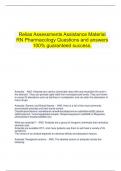
Relias Assessments Assistance Material RN Pharmacology Questions and answers 100% guaranteed success.
Relias Assessments Assistance Material RN Pharmacology Questions and answers 100% guaranteed success. Antacids - ANS. Antacids are used to chemically react with and neutralize the acid in the stomach. They can provide rapid relief from increased acid levels. They are known to cause GI alterations such as diarrhea or constipation and can alter the absorption of many drugs. Antacids: Generic and Brand Names - ANS. Here is a list of the most commonly encountered antacids and their brand names. ClassificationGeneric nameBrand nameAntacidsaluminum saltsAlternaGELcalcium saltsOystercal, TumsmagaldrateLosopan, Riopanmagnesium saltsMilk of Magnesia, otherssodium bicarbonateBell-ans What are antacids? - ANS. Antacids are a group of inorganic chemicals that neutralize stomach acid. Antacids are available OTC, and many patients use them to self-treat a variety of GI symptoms. The choice of an antacid depends on adverse effects and absorption factors. Antacids Therapeutic actions - ANS. The desired actions of antacids include the following: Neutralize stomach acid by direct chemical reaction. Symptomatic relief of an upset stomach associated with hyperacidity, as well as the hyperacidity associated with peptic ulcer, gastritis, peptic esophagitis, gastric hyperacidity, and hiatal hernia. Antacids Contraindications and Cautions - ANS. The following are contraindications and cautions when using antacids: Allergy. The antacids are contraindicated in the presence of any known allergy to antacid products or any component of the drug to prevent hypersensitivity reactions. Co-morbidities. Caution should be used in the following instances: any condition that can be exacerbated by electrolyte or acid-based imbalance to prevent exacerbations and serious adverse effects; any electrolyte imbalance , which could be exacerbated by the electrolyte-changing effects of these drugs; GI obstruction which could cause systemic absorption of the drugs and increase adverse effects; renal dysfunction, which could lead to electrolyte disturbance if any absorbed antacid is neutralized properly. Pregnancy and lactation. Antacids are contraindicated for pregnant and lactating women because of the potential for adverse effects on the fetus or neonate. Histamine-2 (H2) receptor antagonists - ANS. Histamine-2 (H2) receptor antagonists block the release of acid in response to gastrin or parasympathetic release. Histamine-2 Antagonist: Generic and Brand Names - ANS. Here is a table of the most commonly used H2 antagonists. ClassificationGeneric nameBrand nameHistamine-2 antagonistscimetidineTagametranitidineZantacfamotidinePepcidnizatidineAxid H2 blockers Therapeutic actions - ANS. The desired actions of H2 antagonists include the following: Selectively block H2 receptors located on the parietal cells. Prevents the release of gastrin, a hormone that causes local release of histamine (due to stimulation of histamine receptors), ultimately blocking the production of hydrochloric acid. Decreases pepsin production by the chief cells. Proton Pump Inhibitors - ANS. The gastric acid pump or proton pump inhibitors suppress gastric acid secretion by specifically inhibiting the hydrogen-potassium adenosine triphosphate enzyme system on the secretory surface of the gastric parietal cells. Proton Pump Inhibitors: Generic and Brand Names - ANS. Here is a table of the most commonly encountered proton pump inhibitor: ClassificationGeneric nameBrand nameProton pump inhibitorsdexlansoprazoleKapidexesomeprazoleNexiumlansoprazolePrevacidomeprazolePrilosecpantoprazoleProtonixrabeprazoleAciphex What are Proton Pump Inhibitors? - ANS. Proton pump inhibitors suppress the secretion of hydrochloric acid into the lumen of the stomach. PPI Nursing Assessment - ANS. Assess for possible contraindications and cautions: history of allergy to a proton pump inhibitor to reduce the risk of hypersensitivity reaction and current status of pregnancy or lactation because of the potential for adverse effects on the fetus or nursing baby. Perform a physical examination to establish baseline data before beginning therapy to determine the effectiveness of the therapy and to evaluate for the occurrence of any adverse effects associated with drug therapy. Inspect the skin for lesions, rash, pruritus, and dryness to identify possible adverse effects. Assess neurological status, including level of orientation, affect and reflexes to evaluate for CNS effects of the drug. Inspect and palpate the abdomen to determine potential underlying medical conditions; assess for changes in bowel elimination and GI upset to identify possible adverse effects. Assess respiratory status, including respiratory rate and rhythm; note evidence of cough, hoarseness, and epistaxis, to monitor for potential adverse effects of the drugs. Inhaled Steroids - ANS. Inhaled steroids have been found to be a very effective treatment for bronchospasm. The drug of choice depends on the individual patient's response; a patient may have little response to one agent and do very well on another. Inhaled Steroids: Generic and Brand Names - ANS. Here is a list of some of the most commonly encountered inhaled steroids. ClassificationGeneric nameBrand nameInhaled steroidsbeclomethasoneBecloventbudesonidePulmicortciclesonideAlvescofluticasoneFloventtriamcinoloneAzmacort What are Inhaled Steroids? - ANS. Inhaled steroids are used to decrease the inflammatory response in the airway. Inhaling the steroid tends to decrease the numerous systemic effects that are associated with steroid use. It is usually useful to try another preparation if one is not effective within 2 to 3 weeks. Inhaled Steroids Nursing Assessments - ANS. Assess for possible contraindications and cautions: acute asthmatic attacks and allergy to the drugs, which are contraindications; and systemic infections, pregnancy, or lactation, which require cautious use. Perform a physical examination to establish baseline data for assessing the effectiveness of the drug and the occurrence of any adverse effects associated with drug therapy. Assess temperature to monitor for possible infections. Monitor blood pressure, pulse, and auscultation to evaluate cardiovascular response. Assess respirations and adventitious sounds to monitor drug effectiveness.
Document information
- Uploaded on
- February 1, 2024
- Number of pages
- 8
- Written in
- 2023/2024
- Type
- Exam (elaborations)
- Contains
- Questions & answers