o test PDF Combine only
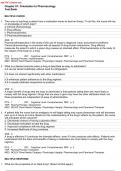
Chapter 01: Orientation to Pharmacology
Test Bank
MULTIPLE CHOICE
1. The nurse is teaching a patient how a medication works to treat an illness. To do this, the nurse will rely
on knowledge of which topic?
a. Clinical pharmacology
b. Drug efficacy
c. Pharmacokinetics
d. Pharmacotherapeutics
ANS: D
Pharmacotherapeutics is the study of the use of drugs to diagnose, treat, and prevent conditions.
Clinical pharmacology is concerned with all aspects of drug-human interactions. Drug efficacy
measures the extent to which a given drug causes an intended effect. Pharmacokinetics is the study of
the impact of the body on a drug.
PTS: 1 DIF: Cognitive Level: Comprehension REF: p. 1
TOP: Nursing Process: Implementation
MSC: NCLEX Client Needs Category: Physiologic Integrity: Pharmacologic and Parenteral Therapies
2. What is a desired outcome when a drug is described as easy to administer?
a It can be stored indefinitely without need for refrigeration.
.
b It does not interact significantly with other medications.
.
c. It enhances patient adherence to the drug regimen.
d It is usually relatively inexpensive to produce.
.
ANS: C
A major benefit of drugs that are easy to administer is that patients taking them are more likely to
comply with the drug regimen. Drugs that are easy to give may have the other attributes listed, but
those properties are independent of ease of administration.
PTS: 1 DIF: Cognitive Level: Comprehension REF: p. 2
TOP: Nursing Process: Assessment
MSC: NCLEX Client Needs Category: Physiologic Integrity: Pharmacologic and Parenteral Therapies
3. A patient tells the nurse that an analgesic he will begin taking may cause drowsiness and will decrease
pain up to 4 hours at a time. Based on this understanding of the drug’s effects by the patient, the nurse
will anticipate which outcome?
a. Decreased chance of having a placebo effect
b. Decreased motivation to take the drug
c. Improved compliance with the drug regimen
d. Increased likelihood of drug overdose
ANS: C
A drug is effective if it produces the intended effects, even if it also produces side effects. Patients who
understand both the risks and benefits of taking a medication are more likely to comply with the drug
regimen.
PTS: 1 DIF: Cognitive Level: Comprehension REF: p. 2
TOP: Nursing Process: Evaluation
MSC: NCLEX Client Needs Category: Physiologic Integrity: Pharmacologic and Parenteral Therapies
MULTIPLE RESPONSE
1. What are the properties of an ideal drug? (Select all that apply.)
,o test PDF Combine only
a. Irreversible action
b. Predictability
c. Ease of administration
d. Chemical stability
e. A recognizable trade name
ANS: B, C, D
In addition to predictability, ease of administration, and chemical stability, other properties include a
reversible action so that any harm the drug may cause can be undone and a simple generic name,
because generic names are usually complex and difficult to remember and pronounce.
PTS: 1 DIF: Cognitive Level: Comprehension REF: pp. 1-2
TOP: Nursing Process: Assessment
MSC: NCLEX Client Needs Category: Physiologic Integrity: Pharmacologic and Parenteral Therapies
2. Before administering a medication, what does the nurse need to know to evaluate how individual
patient variability might affect the patient’s response to the medication? (Select all that apply.)
a. Chemical stability of the medication
b. Ease of administration
c. Family medical history
d. Patient’s age
e. Patient’s diagnosis
ANS: C, D, E
The family medical history can indicate genetic factors that may affect a patient’s response to a
medication. Patients of different ages can respond differently to medications. The patient’s illness can
affect how drugs are metabolized. The chemical stability of the medication and the ease of
administration are properties of drugs.
PTS: 1 DIF: Cognitive Level: Analysis REF: pp. 3-4
TOP: Nursing Process: Implementation
MSC: NCLEX Client Needs Category: Physiologic Integrity: Reduction of Risk Potential
,oChapter 01: Orientation
test PDF Combine only to Pharmacology
Bank
TIPLE CHOICE
The nurse is teaching a patient how a medication works to treat an illness. To do this, the nurse will rely on knowledge of
which topic?
a. Clinical pharmacology
b. Drug efficacy
c. Pharmacokinetics
d. Pharmacotherapeutics
ANS: D
Pharmacotherapeutics is the study of the use of drugs to diagnose, treat, and prevent conditions. Clinical pharmacology is
concerned with all aspects of drug-human interactions. Drug efficacy measures the extent to which a given drug causes an
intended effect. Pharmacokinetics is the study of the impact of the body on a drug.
PTS: 1 DIF: Cognitive Level: Comprehension REF: p. 1
TOP: Nursing Process: Implementation
MSC: NCLEX Client Needs Category: Physiologic Integrity: Pharmacologic and Parenteral Therapies
What is a desired outcome when a drug is described as easy to administer?
a. It can be stored indefinitely without need
for refrigeration.
b. It does not interact significantly with other
medications.
c. It enhances patient adherence to the drug
regimen.
d. It is usually relatively inexpensive to
produce.
ANS: C
A major benefit of drugs that are easy to administer is that patients taking them are more likely to comply with the drug
regimen. Drugs that are easy to give may have the other attributes listed, but those properties are independent of ease of
administration.
PTS: 1 DIF: Cognitive Level: Comprehension REF: p. 2
TOP: Nursing Process: Assessment
MSC: NCLEX Client Needs Category: Physiologic Integrity: Pharmacologic and Parenteral Therapies
A patient tells the nurse that an analgesic he will begin taking may cause drowsiness and will decrease pain up to 4 hours at
time. Based on this understanding of the drug’s effects by the patient, the nurse will anticipate which outcome?
a. Decreased chance of having a placebo
effect
b. Decreased motivation to take the drug
c. Improved compliance with the drug
regimen
d. Increased likelihood of drug overdose
,ANS: C
o test PDF Combine only
A drug is effective if it produces the intended effects, even if it also produces side effects. Patients who understand both the
risks and benefits of taking a medication are more likely to comply with the drug regimen.
PTS: 1 DIF: Cognitive Level: Comprehension REF: p. 2
TOP: Nursing Process: Evaluation
MSC: NCLEX Client Needs Category: Physiologic Integrity: Pharmacologic and Parenteral Therapies
TIPLE RESPONSE
What are the properties of an ideal drug? (Select all that apply.)
a. Irreversible action
b. Predictability
c. Ease of administration
d. Chemical stability
e. A recognizable trade name
ANS: B, C, D
In addition to predictability, ease of administration, and chemical stability, other properties include a reversible action so tha
any harm the drug may cause can be undone and a simple generic name, because generic names are usually complex and
difficult to remember and pronounce.
PTS: 1 DIF: Cognitive Level: Comprehension REF: pp. 1-2
TOP: Nursing Process: Assessment
MSC: NCLEX Client Needs Category: Physiologic Integrity: Pharmacologic and Parenteral Therapies
Before administering a medication, what does the nurse need to know to evaluate how individual patient variability might
affect the patient’s response to the medication? (Select all that apply.)
a. Chemical stability of the medication
b. Ease of administration
c. Family medical history
d. Patient’s age
e. Patient’s diagnosis
ANS: C, D, E
The family medical history can indicate genetic factors that may affect a patient’s response to a medication. Patients of
different ages can respond differently to medications. The patient’s illness can affect how drugs are metabolized. The chemic
stability of the medication and the ease of administration are properties of drugs.
PTS: 1 DIF: Cognitive Level: Analysis REF: pp. 3-4
TOP: Nursing Process: Implementation
MSC: NCLEX Client Needs Category: Physiologic Integrity: Reduction of Risk Potential
Chapter 01: Orientation to Pharmacology
Test Bank
MULTIPLE CHOICE
1. The nurse is teaching a patient how a medication works to treat an illness. To do this, the nurse will rely
on knowledge of which topic?
a. Clinical pharmacology
b. Drug efficacy
c. Pharmacokinetics
d. Pharmacotherapeutics
ANS: D
Pharmacotherapeutics is the study of the use of drugs to diagnose, treat, and prevent conditions.
Clinical pharmacology is concerned with all aspects of drug-human interactions. Drug efficacy
measures the extent to which a given drug causes an intended effect. Pharmacokinetics is the study of
the impact of the body on a drug.
PTS: 1 DIF: Cognitive Level: Comprehension REF: p. 1
TOP: Nursing Process: Implementation
MSC: NCLEX Client Needs Category: Physiologic Integrity: Pharmacologic and Parenteral Therapies
2. What is a desired outcome when a drug is described as easy to administer?
a It can be stored indefinitely without need for refrigeration.
.
b It does not interact significantly with other medications.
.
c. It enhances patient adherence to the drug regimen.
d It is usually relatively inexpensive to produce.
.
ANS: C
A major benefit of drugs that are easy to administer is that patients taking them are more likely to
comply with the drug regimen. Drugs that are easy to give may have the other attributes listed, but
those properties are independent of ease of administration.
PTS: 1 DIF: Cognitive Level: Comprehension REF: p. 2
TOP: Nursing Process: Assessment
MSC: NCLEX Client Needs Category: Physiologic Integrity: Pharmacologic and Parenteral Therapies
3. A patient tells the nurse that an analgesic he will begin taking may cause drowsiness and will decrease
pain up to 4 hours at a time. Based on this understanding of the drug’s effects by the patient, the nurse
will anticipate which outcome?
a. Decreased chance of having a placebo effect
b. Decreased motivation to take the drug
c. Improved compliance with the drug regimen
d. Increased likelihood of drug overdose
ANS: C
A drug is effective if it produces the intended effects, even if it also produces side effects. Patients who
understand both the risks and benefits of taking a medication are more likely to comply with the drug
regimen.
PTS: 1 DIF: Cognitive Level: Comprehension REF: p. 2
TOP: Nursing Process: Evaluation
MSC: NCLEX Client Needs Category: Physiologic Integrity: Pharmacologic and Parenteral Therapies
MULTIPLE RESPONSE
1. What are the properties of an ideal drug? (Select all that apply.)
,o test PDF Combine only
a. Irreversible action
b. Predictability
c. Ease of administration
d. Chemical stability
e. A recognizable trade name
ANS: B, C, D
In addition to predictability, ease of administration, and chemical stability, other properties include a
reversible action so that any harm the drug may cause can be undone and a simple generic name,
because generic names are usually complex and difficult to remember and pronounce.
PTS: 1 DIF: Cognitive Level: Comprehension REF: pp. 1-2
TOP: Nursing Process: Assessment
MSC: NCLEX Client Needs Category: Physiologic Integrity: Pharmacologic and Parenteral Therapies
2. Before administering a medication, what does the nurse need to know to evaluate how individual
patient variability might affect the patient’s response to the medication? (Select all that apply.)
a. Chemical stability of the medication
b. Ease of administration
c. Family medical history
d. Patient’s age
e. Patient’s diagnosis
ANS: C, D, E
The family medical history can indicate genetic factors that may affect a patient’s response to a
medication. Patients of different ages can respond differently to medications. The patient’s illness can
affect how drugs are metabolized. The chemical stability of the medication and the ease of
administration are properties of drugs.
PTS: 1 DIF: Cognitive Level: Analysis REF: pp. 3-4
TOP: Nursing Process: Implementation
MSC: NCLEX Client Needs Category: Physiologic Integrity: Reduction of Risk Potential
,oChapter 01: Orientation
test PDF Combine only to Pharmacology
Bank
TIPLE CHOICE
The nurse is teaching a patient how a medication works to treat an illness. To do this, the nurse will rely on knowledge of
which topic?
a. Clinical pharmacology
b. Drug efficacy
c. Pharmacokinetics
d. Pharmacotherapeutics
ANS: D
Pharmacotherapeutics is the study of the use of drugs to diagnose, treat, and prevent conditions. Clinical pharmacology is
concerned with all aspects of drug-human interactions. Drug efficacy measures the extent to which a given drug causes an
intended effect. Pharmacokinetics is the study of the impact of the body on a drug.
PTS: 1 DIF: Cognitive Level: Comprehension REF: p. 1
TOP: Nursing Process: Implementation
MSC: NCLEX Client Needs Category: Physiologic Integrity: Pharmacologic and Parenteral Therapies
What is a desired outcome when a drug is described as easy to administer?
a. It can be stored indefinitely without need
for refrigeration.
b. It does not interact significantly with other
medications.
c. It enhances patient adherence to the drug
regimen.
d. It is usually relatively inexpensive to
produce.
ANS: C
A major benefit of drugs that are easy to administer is that patients taking them are more likely to comply with the drug
regimen. Drugs that are easy to give may have the other attributes listed, but those properties are independent of ease of
administration.
PTS: 1 DIF: Cognitive Level: Comprehension REF: p. 2
TOP: Nursing Process: Assessment
MSC: NCLEX Client Needs Category: Physiologic Integrity: Pharmacologic and Parenteral Therapies
A patient tells the nurse that an analgesic he will begin taking may cause drowsiness and will decrease pain up to 4 hours at
time. Based on this understanding of the drug’s effects by the patient, the nurse will anticipate which outcome?
a. Decreased chance of having a placebo
effect
b. Decreased motivation to take the drug
c. Improved compliance with the drug
regimen
d. Increased likelihood of drug overdose
,ANS: C
o test PDF Combine only
A drug is effective if it produces the intended effects, even if it also produces side effects. Patients who understand both the
risks and benefits of taking a medication are more likely to comply with the drug regimen.
PTS: 1 DIF: Cognitive Level: Comprehension REF: p. 2
TOP: Nursing Process: Evaluation
MSC: NCLEX Client Needs Category: Physiologic Integrity: Pharmacologic and Parenteral Therapies
TIPLE RESPONSE
What are the properties of an ideal drug? (Select all that apply.)
a. Irreversible action
b. Predictability
c. Ease of administration
d. Chemical stability
e. A recognizable trade name
ANS: B, C, D
In addition to predictability, ease of administration, and chemical stability, other properties include a reversible action so tha
any harm the drug may cause can be undone and a simple generic name, because generic names are usually complex and
difficult to remember and pronounce.
PTS: 1 DIF: Cognitive Level: Comprehension REF: pp. 1-2
TOP: Nursing Process: Assessment
MSC: NCLEX Client Needs Category: Physiologic Integrity: Pharmacologic and Parenteral Therapies
Before administering a medication, what does the nurse need to know to evaluate how individual patient variability might
affect the patient’s response to the medication? (Select all that apply.)
a. Chemical stability of the medication
b. Ease of administration
c. Family medical history
d. Patient’s age
e. Patient’s diagnosis
ANS: C, D, E
The family medical history can indicate genetic factors that may affect a patient’s response to a medication. Patients of
different ages can respond differently to medications. The patient’s illness can affect how drugs are metabolized. The chemic
stability of the medication and the ease of administration are properties of drugs.
PTS: 1 DIF: Cognitive Level: Analysis REF: pp. 3-4
TOP: Nursing Process: Implementation
MSC: NCLEX Client Needs Category: Physiologic Integrity: Reduction of Risk Potential