Chapter 42, Thyroid and Antithyroid Drugs|| TEST BANK INTRODUCTORY CLINICAL PHARMACOLOGY 12TH EDITION By Susan M Ford
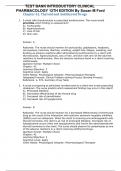
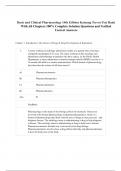
1. A client with thyrotoxicosis is prescribed levothyroxine. The nurse would prioritize which finding on assessment? A) Tachycardia B) Agranulocytosis C) Loss of hair D) Skin rash Answer: A Rationale: The nurse should monitor for tachycardia, palpitations, headache, nervousness, insomnia, diarrhea, vomiting, weight loss, fatigue, sweating, and flushing as adverse reactions after administering levothyroxine to a client with thyrotoxicosis. Agranulocytosis, loss of hair, and skin rash are not the adverse reactions to levothyroxine; they are adverse reactions found in a client receiving methimazole. Question format: Multiple Choice Chapter: 42 Learning Objective: 3 Cognitive Level: Apply Client Needs: Physiological Integrity: Pharmacological Therapies Integrated Process: Clinical Problem-solving Process (Nursing Process) Reference: p. 574, Summary Drug Table 2. A nurse is preparing to administer levothyroxine to a client who is also prescribed citalopram. The nurse predicts which assessment finding may occur in this client? A) Prolonged bleeding B) Decreased effectiveness of the thyroid drug C) Increased risk of paresthesias D) Increased risk of hypoglycemia Answer: B Rationale: The nurse should monitor for a decreased effectiveness of thethyroid drug as the result of the interaction with selective serotonin reuptake inhibitors (SSRIs) such as citalopram. When the client is receiving oral anticoagulants with thyroid hormones, the client is at risk of prolonged bleeding. Increased risk of hypoglycemia occurs when oral hypoglycemics and insulin are administeredwith thyroid hormones to the client. The nurse should observe for paresthesias as one of the adverse reactions in a client receiving antithyroid drugs. Question format: Multiple Choice Chapter: 42 Learning Objective: 3 Cognitive Level: Apply Client Needs: Physiological Integrity: Pharmacological Therapies Integrated Process: Clinical Problem-solving Process (Nursing Process) Reference: p. 569, Contraindications and Precautions 3. A nurse is preparing to administer liothyronine to a client with chronic thyroiditis. The nurse determines the drug needs to be administered cautiously after noting which disorder in the client's medical history? A) Upper respiratory tract infection B) Diabetes C) Elevated body temperature D) Cardiac disease Answer: D Rationale: The nurse should be cautious about existing conditions such as cardiac disease and also cautious about lactating clients before administering liothyronine to clients with chronic thyroiditis. The nurse need not be cautious about administering liothyronine to clients with an upper respiratory tract infection, diabetes, or elevated body temperature. The nurse should be cautious about clients contracting an upper respiratory tract infection on administrating antithyroid drugs. A client with diabetes may experience an increase in diabetes while undergoing thyroid hormone replacement therapy. The nurse should observe for elevated body temperature while managing the needs of a client administered thyroid hormones. Question format: Multiple Choice Chapter: 42 Learning Objective: 2 Cognitive Level: Apply Client Needs: Physiological Integrity: Pharmacological Therapies Integrated Process: Clinical Problem-solving Process (Nursing Process) Reference: p. 569, Contraindications and Precautions 4. A nurse is teaching a client about the thyroid hormone replacement therapy which has been prescribed. The nurse determines the teaching session is successful when the client indicates which time to take the drug? A) Before bedtime B) Just before dinner C) After lunch D) Before breakfast
Written for
- Institution
- INTRODUCTORY CLINICAL PHARMACOLOGY
- Course
- INTRODUCTORY CLINICAL PHARMACOLOGY
Document information
- Uploaded on
- January 28, 2024
- Number of pages
- 13
- Written in
- 2023/2024
- Type
- Exam (elaborations)
- Contains
- Questions & answers
Subjects
-
chapter 42 thyroid and antithyroid drugs
-
test bank introductory clinical pharmacology
-
12th edition by susan m ford

Also available in package deal