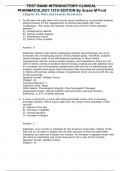
Chapter 43, Male and Female Hormones |TEST BANK INTRODUCTORY CLINICAL PHARMACOLOGY 12TH EDITION By Susan M Ford
1. An 80-year-old male client with chronic renal insufficiency is prescribed anabolic steroid therapy for the management of anemia associated with renal insufficiency. The nurse will carefully monitor the client for which potential disorder? A) Hypoglycemic attacks B) Serious cardiac disease C) Hypotensive shock D) Cancer of the prostate Answer: D Rationale: Elderly male clients undergoing anabolic steroid therapy are at an increased risk of developing cancer of the prostate gland. Therefore, anabolic steroid therapy needs to be administered cautiously in these clients. Hypoglycemic attacks, serious cardiac disease, and hypotensive shock are not seen in elderly clients on anabolic steroid therapy. Individuals with diabetes have an increased risk of developing hypoglycemia with the use of sulfonylureas and anabolic steroids if also given male hormones. Male hormones are contraindicated in clients with serious cardiac disease. Hypotensive shock can occur with the use of glucocorticoids. Question format: Multiple Choice Chapter: 43 Learning Objective: 1 Cognitive Level: Apply Client Needs: Physiological Integrity: Pharmacological Therapies Integrated Process: Clinical Problem-solving Process (Nursing Process) Reference: p. 577, Anabolic Steroids 2. A nurse is caring for a client with advanced breast cancer who is receiving androgen therapy. Which signs might alert the nurse to the possibility of liver toxicity? A) Edema of the feet B) Increase in appetite C) Clinical jaundice D) Increase in weight Answer: C Rationale: Liver toxicity is indicated by the presence of jaundice. Edema of the feet and an increase in weight may be seen because of fluid and electrolyte imbalance but does not indicate liver toxicity. An increase in appetite shows that the client is responding well to the drug and is not a sign of liver toxicity. Question format: Multiple Choice Chapter: 43 Learning Objective: 2 Cognitive Level: Analyze Client Needs: Physiological Integrity: Reduction of Risk Potential Integrated Process: Clinical Problem-solving Process (Nursing Process) Reference: p. 584, Client Receiving a Female Hormone 3. When caring for a client receiving estrogen replacement therapy for postmenopausal symptoms, the nurse documents a diagnosis of ineffective tissue perfusion. Which condition is the nurse prioritizing in the diagnosis? A) Thromboembolism B) Edema of the feet C) Gastrointestinal upset D) Chloasma Answer: A Rationale: The nursing diagnosis of ineffective tissue perfusion is related to thromboembolism, which is a complication of estrogen replacement therapy. A nurse may note other female hormone–related adverse reactions such as edema of the feet due to excess fluid volume or gastrointestinal upset, which manifests as nausea, vomiting, abdominal cramps, and bloating. Chloasma is a dermatologic reaction due to female hormones, which results in excessive pigmentation of the skin. Question format: Multiple Choice Chapter: 43 Learning Objective: 3 Cognitive Level: Understand Client Needs: Physiological Integrity: Reduction of Risk Potential Integrated Process: Clinical Problem-solving Process (Nursing Process) Reference: p. 587, Altered Tissue Perfusion
Written for
- Institution
- INTRODUCTORY CLINICAL PHARMACOLOGY
- Course
- INTRODUCTORY CLINICAL PHARMACOLOGY
Document information
- Uploaded on
- January 28, 2024
- Number of pages
- 15
- Written in
- 2023/2024
- Type
- Exam (elaborations)
- Contains
- Questions & answers
Subjects
-
test bank introductory clinical pharmacology
-
12th edition by susan m ford
-
chapter 43 male and female hormones

Also available in package deal