Cato Sluyts
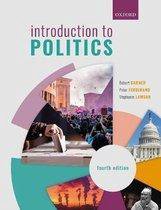
INTRODUCTION TO POLITICS
Minimal summary
Introduction
1. The nature of politics and political analysis
Readers guide:
This chapter will begin by seeking to define the nature of politics and the political before
asking whether politics is an inevitable feature of all human societies. Some time is spent
examining the boundary problems inherent in the analysis of the nature of the political
period two are particularly notable. Should politics be defined narrowly, and the context of
the state, or should it be the broadly defined to encompass other social institutions?
Second, is politics equivalent to consensus and cooperation, so that politics does not exist in
the event of conflict and war? To chapter then goes on to distinguish between different
forms of political analysis - the empirical, the normative, and the semantic - and outlines
different approaches to the study of politics. Finally, it is asked whether politics can ever be
a science to rival subjects in the natural sciences.
Is politics inevitable: key points
• Six is usually predicated on the existence of competing interests and values in all
societies of any complexity
• for most commentators politics is inevitable precisely because all societies contain
differences that have to be tackled in some way
• different versions of ‘endism’ proclaim the dominance of Liberal Democratic values
but this cannot be sustained in the face of ongoing ideological conflicts around the
world
• contemporary politics in western democracies appear to have generated much
pessimism about the capacity of politics to actually deliver the good life, as reflected
in the phenomenon of anti-politics
political questions: key points
• Assuming differences of values and interests politics becomes a study of which
values and interests come to dominate, who is responsible for these decisions, and
with what justification
• politics involves the exercise of power, but issues of authority and legitimacy
moderate the manner in which it is exercised
,Cato Sluyts
The boundaries of the political: key points
• Defining politics is beset by boundary problems
• some argue that the boundaries of the political ought to be drawn narrowly,
recognizing the state as the key political institution. Others argue that politics ought
to be drawn far more broadly to encompass power relations in social institutions
such as the family or political institutions at the supranational level
• the second boundary problem concerns the subject matter of politics, rather than its
location. Here, there are those, such as Crick, who seek to define politics in terms of
consensus building and cooperation. For many, however, this definition is unduly
limiting. Politics is not absent in undemocratic regimes or in periods of civil or
international strife.
Deductive and inductive methods: key points
• Political analysis involves three main approaches: empirical, normative, and semantic
• Theorizing normatively about politics remains difficult and often contentious
• Recognizing this it should be noted that one could exaggerated these difficulties, and
a moral relativism is not the inevitable sequence of political philosophy
• In practice, these three forms of political analysis are not mutually exclusive. We
need to know what is before we can talk sensibly about what ought to be. Similarly,
analysis presupposes some normative assumptions
• Empirical political analysis tends to use either inductive or deductive reasoning. The
former can be illustrated by behavioralism, at the latter by rational choice theory
Can politics be a science: key points
• Behavioralists, in particular, suggest that politics can have scientific reader of the
natural sciences
• choose challenges in this view were noted. In the first place one can question
whether the methods of natural science can be transferred to a social science such
as politics
• add a second, more fundamental level one can question whether the whole scientific
enterprise in both natural and social settings is a valid and useful exercise
,Cato Sluyts
Conclusion:
This chapter has sought to introduce you to certain basic definition features of politics and
some central themes within political analysis. Difficulty of studying politics, because of the
lack of consensus on its meaning, has not been disguised. We suggest that having an open
mind to what is political prevents undue conservatism which would miss much that is
important in the real world. The rest of this book operates in this vein. Part one, chapters 2-
7, continues the exploration of political ideas and ideologies, focusing on the state, power
and democracy, Freedom and Justice, and traditional and new political ideologies. Part 2,
chapters 8-15, focuses on the study of political institutions and processes, with chapters on
the main elements of the political system: institutions and states; law, constitutions, and
federalism; vouchers, elections, legislatures, and legislators; executives, bureaucracies,
Policy Studies, and governance; political parties; civil society, interest groups, and the
media; and democratization and authoritarianism. It will become apparent that the vast
majority of political thinkers whose ideas are discussed in this book are white European
males. This is an understandable reflection of the dominance of the white man in western
political thought. As something of a corrective to this, though we have also added in this
edition a separate chapter on non-western approaches to politics. Bar three, chapters 16-22
deals with relationships between states. Dissection starts with the definition of key terms,
and a historical account of the development of state system, before going on to examine
international relations theory, International Security, diplomacy and foreign policy,
international organizations, and finally, international political economy.
Key questions:
1. What is politics?
2. Is politics synonymous with the state?
3. Is politics an inevitable feature of all societies?
4. What is the difference between normative and empirical analysis in the study of
politics?
5. Can politics be a science?
6. Should politics be seen in a positive light?
7. What is the case for defining politics narrowly?
8. How can we evaluate between competing normative claims?
9. What is meant by inductive and deductive approaches to political studies?
10. Politics is generally this parged as an activity which is shrinking in importance and
relevance. Discuss
, Cato Sluyts
Part 1; concepts, theories, and ideologies in politics
2. Politics and the state
Readers guide:
This chapter begins by stressing the importance of the state and sovereignty to the study of
politics. An attempt is made to provide an empirical typology of the state, before going on
to outline various theories about the distribution of power in a state namely pluralism,
elitism, Marxism, a new rights theory. The chapter then proceeds to examine different views
about what the role of the state ought to be, from the minimalist state recommended by
classical liberal theory to the pursuit of distinctive social objectives as recommended, in
particular, by, communitarian thinkers. finally, empirical and normative challenges to the
state or reviewed
A typology of the state: key points
• However difficult it is to define the state is undoubtedly a crucial institution for
political analyst
• Sovereignty is a key, defining feature of the state, although it is a concept that,
arguably, has greater legal than political importance
• It is possible to develop an empirical typology of the state from the minimalist
nightwatchman state, approximated by the 19th century capitalist regimes at one
end of the spectrum, to the totalitarian state of the 20th century at the other
The empirical dimension of the state: key points
• There are a number of empirical theories of the state arranged on a continuum from
classical pluralism at one end to ruling elite and Marxist theory at the other
• Whereas pluralism sees the power structure as diffuse and fragmented, ruling elite
and Marxist theories sees it as concentrated
• the two key differences between ruling elite and Marxism are, first, but for the latter
the dominant group is always that class that owns the means of production,
distribution, and exchange, whereas for former the source of power can be varied.
Second, Marxism postulates the existence of a future equalitarian society whereas
ruling elite theory sees elites as an inevitable feature of all societies
• the new rice theory of the state offers a different take on the role of the state,
focusing on a critique of the collectivist rather than a description of the distribution
of power
• it is impossible to distinguish between an empirical and a normative examination of
the state. In empirical terms, we can criticize pluralism, elitism, Marxism and a new
ray theory for their failure adequately to describe the reality of the world as it is
INTRODUCTION TO POLITICS
Minimal summary
Introduction
1. The nature of politics and political analysis
Readers guide:
This chapter will begin by seeking to define the nature of politics and the political before
asking whether politics is an inevitable feature of all human societies. Some time is spent
examining the boundary problems inherent in the analysis of the nature of the political
period two are particularly notable. Should politics be defined narrowly, and the context of
the state, or should it be the broadly defined to encompass other social institutions?
Second, is politics equivalent to consensus and cooperation, so that politics does not exist in
the event of conflict and war? To chapter then goes on to distinguish between different
forms of political analysis - the empirical, the normative, and the semantic - and outlines
different approaches to the study of politics. Finally, it is asked whether politics can ever be
a science to rival subjects in the natural sciences.
Is politics inevitable: key points
• Six is usually predicated on the existence of competing interests and values in all
societies of any complexity
• for most commentators politics is inevitable precisely because all societies contain
differences that have to be tackled in some way
• different versions of ‘endism’ proclaim the dominance of Liberal Democratic values
but this cannot be sustained in the face of ongoing ideological conflicts around the
world
• contemporary politics in western democracies appear to have generated much
pessimism about the capacity of politics to actually deliver the good life, as reflected
in the phenomenon of anti-politics
political questions: key points
• Assuming differences of values and interests politics becomes a study of which
values and interests come to dominate, who is responsible for these decisions, and
with what justification
• politics involves the exercise of power, but issues of authority and legitimacy
moderate the manner in which it is exercised
,Cato Sluyts
The boundaries of the political: key points
• Defining politics is beset by boundary problems
• some argue that the boundaries of the political ought to be drawn narrowly,
recognizing the state as the key political institution. Others argue that politics ought
to be drawn far more broadly to encompass power relations in social institutions
such as the family or political institutions at the supranational level
• the second boundary problem concerns the subject matter of politics, rather than its
location. Here, there are those, such as Crick, who seek to define politics in terms of
consensus building and cooperation. For many, however, this definition is unduly
limiting. Politics is not absent in undemocratic regimes or in periods of civil or
international strife.
Deductive and inductive methods: key points
• Political analysis involves three main approaches: empirical, normative, and semantic
• Theorizing normatively about politics remains difficult and often contentious
• Recognizing this it should be noted that one could exaggerated these difficulties, and
a moral relativism is not the inevitable sequence of political philosophy
• In practice, these three forms of political analysis are not mutually exclusive. We
need to know what is before we can talk sensibly about what ought to be. Similarly,
analysis presupposes some normative assumptions
• Empirical political analysis tends to use either inductive or deductive reasoning. The
former can be illustrated by behavioralism, at the latter by rational choice theory
Can politics be a science: key points
• Behavioralists, in particular, suggest that politics can have scientific reader of the
natural sciences
• choose challenges in this view were noted. In the first place one can question
whether the methods of natural science can be transferred to a social science such
as politics
• add a second, more fundamental level one can question whether the whole scientific
enterprise in both natural and social settings is a valid and useful exercise
,Cato Sluyts
Conclusion:
This chapter has sought to introduce you to certain basic definition features of politics and
some central themes within political analysis. Difficulty of studying politics, because of the
lack of consensus on its meaning, has not been disguised. We suggest that having an open
mind to what is political prevents undue conservatism which would miss much that is
important in the real world. The rest of this book operates in this vein. Part one, chapters 2-
7, continues the exploration of political ideas and ideologies, focusing on the state, power
and democracy, Freedom and Justice, and traditional and new political ideologies. Part 2,
chapters 8-15, focuses on the study of political institutions and processes, with chapters on
the main elements of the political system: institutions and states; law, constitutions, and
federalism; vouchers, elections, legislatures, and legislators; executives, bureaucracies,
Policy Studies, and governance; political parties; civil society, interest groups, and the
media; and democratization and authoritarianism. It will become apparent that the vast
majority of political thinkers whose ideas are discussed in this book are white European
males. This is an understandable reflection of the dominance of the white man in western
political thought. As something of a corrective to this, though we have also added in this
edition a separate chapter on non-western approaches to politics. Bar three, chapters 16-22
deals with relationships between states. Dissection starts with the definition of key terms,
and a historical account of the development of state system, before going on to examine
international relations theory, International Security, diplomacy and foreign policy,
international organizations, and finally, international political economy.
Key questions:
1. What is politics?
2. Is politics synonymous with the state?
3. Is politics an inevitable feature of all societies?
4. What is the difference between normative and empirical analysis in the study of
politics?
5. Can politics be a science?
6. Should politics be seen in a positive light?
7. What is the case for defining politics narrowly?
8. How can we evaluate between competing normative claims?
9. What is meant by inductive and deductive approaches to political studies?
10. Politics is generally this parged as an activity which is shrinking in importance and
relevance. Discuss
, Cato Sluyts
Part 1; concepts, theories, and ideologies in politics
2. Politics and the state
Readers guide:
This chapter begins by stressing the importance of the state and sovereignty to the study of
politics. An attempt is made to provide an empirical typology of the state, before going on
to outline various theories about the distribution of power in a state namely pluralism,
elitism, Marxism, a new rights theory. The chapter then proceeds to examine different views
about what the role of the state ought to be, from the minimalist state recommended by
classical liberal theory to the pursuit of distinctive social objectives as recommended, in
particular, by, communitarian thinkers. finally, empirical and normative challenges to the
state or reviewed
A typology of the state: key points
• However difficult it is to define the state is undoubtedly a crucial institution for
political analyst
• Sovereignty is a key, defining feature of the state, although it is a concept that,
arguably, has greater legal than political importance
• It is possible to develop an empirical typology of the state from the minimalist
nightwatchman state, approximated by the 19th century capitalist regimes at one
end of the spectrum, to the totalitarian state of the 20th century at the other
The empirical dimension of the state: key points
• There are a number of empirical theories of the state arranged on a continuum from
classical pluralism at one end to ruling elite and Marxist theory at the other
• Whereas pluralism sees the power structure as diffuse and fragmented, ruling elite
and Marxist theories sees it as concentrated
• the two key differences between ruling elite and Marxism are, first, but for the latter
the dominant group is always that class that owns the means of production,
distribution, and exchange, whereas for former the source of power can be varied.
Second, Marxism postulates the existence of a future equalitarian society whereas
ruling elite theory sees elites as an inevitable feature of all societies
• the new rice theory of the state offers a different take on the role of the state,
focusing on a critique of the collectivist rather than a description of the distribution
of power
• it is impossible to distinguish between an empirical and a normative examination of
the state. In empirical terms, we can criticize pluralism, elitism, Marxism and a new
ray theory for their failure adequately to describe the reality of the world as it is