Hearing Aid Dispenser's Written Exam (Pulled from Dispenser's Book) Questions And Answers Solved 100% Correct!!
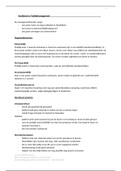
Hearing Aid Dispenser's Written Exam (Pulled from Dispenser's Book) Questions And Answers Solved 100% Correct!! Why do we perform audiometric tests? to determine the different characteristics of a hearing loss if one presents A hearing loss is characterized by what three descriptors? 1. Type of hearing loss (conductive, sensorineural, mixed) 2. Degree of hearing loss (mild, moderate, etc) 3. Configuration of hearing loss or what the hearing loss looks like (ex: flat, rising, sloping, etc) Conductive hearing loss a loss that occurs when sound is NOT transmitted efficiently through the ear canal, eardrum and ossicles of the middle ear. What can cause a conductive hearing loss? - middle or outer ear infection - perforated tympanic membrane - cerumen impaction - benign tumors - absence/malformation of the outer ear, ear canal, or middle ear Can conductive hearing losses be medically treated? Yes (and surgically) Sensorineural hearing loss occurs when there is damage to the inner ear (cochlea) or to the nerve pathways from the inner ear to the brain (retrocochlear) permanent loss What can cause a sensorineural hearing loss? - disease - birth injury - ototoxic drugs - genetic syndromes - noise exposure - viruses - head trauma - aging - tumors Can sensorineural hearing loss be medically or surgically corrected? No Mixed hearing loss occurs when there is damage to the outer and inner ear (cochlea) or auditory nerve air-bone gap with abnormal air and bone conduction thresholds Degree of hearing loss Normal: -10-25 Mild: 26-40 Moderate: 41-55 Moderately-severe: 56-70 Severe: 71-90 Profound: 91 + pediatric normal: -10-15, slight: 16-25 The configuration (or shape) of the hearing loss refers to what? 1. extent of hearing loss at each frequency 2. overall picture of hearing that is created What are some configurations of hearing loss? - flat: generally varies within 10-15 dB at all frequencies - gently sloping: a gradual reduction from lower to higher frequencies - rising or reverse slope: greater hearing loss in the low frequencies, better hearing in the high frequencies - precipitous slope: (ski slope or high frequency) better hearing in the low frequency range to a severe drop in the high frequency range Noise-notch hearing loss - common with people that have had a history of noise exposure - noise notch between 3000 and 6000 Hz Unilateral hearing loss loss of hearing in one ear only Bilateral hearing loss loss of hearing in both ears Fluctuating hearing loss hearing loss that is always changing over time Stable hearing loss no change in hearing over time Sudden hearing loss loss of hearing that occurs quickly Progressive hearing loss loss of hearing that presents slowly over time Symmetrical hearing loss the characteristics of degree and configuration of the loss are the same in both ears 10 dB Asymmetrical hearing loss the characteristics of degree and configuration of the loss are different between ears 10 dB The audiogram typically consists of what information? - patient name - age - sex - date of exam - equipment used - test reliability - comments - hearing test information Threshold the safest level that someone can hear 50% of the time Why use colors for the audiogram? using different color pens is helpful during counseling the patient because it makes it easier for the patient to distinguish between the ears when explaining the results blue = left red = right Air conduction symbols O = right ear X = left ear Δ = right ear with masking □ = left ear with masking Bone conduction symbols = right ear = left ear [ = right ear with masking ] = left ear with masking Anotia complete absence of the auricle Atresia complete closure of the external auditory canal Congenital present at birth Microtia a very tiny external auditory canal that is congenital in nature Stenosis narrowing of the external auditory canal The FDA's 8 Red Flags 1. visible congenital or traumatic deformity of the ear 2. history of active drainage from the ears in the last 90 days 3. history of sudden or rapidly progressive hearing loss within the last 90 days 4. acute or chronic dizziness 5. unilateral hearing loss of sudden or recent onset within the last 90 days 6.Air-bone gap equal to or greater than 15 dB at 500, 1000, and 2000 Hz 7. visible evidence of significant cerumen accumulation or a foreign body in the ear canal 8. pain or discomfort in the ear (otalgia) Primary disorders of the outer ear - malformations of the auricle/pinna and external auditory canal - impacted cerumen - eczema or dermatitis - external otitis Other disorders of the outer ear - polyps: growths in the external auditory canal - perforation of the TM - foreign objects in the ear canal - exostoses: bony growths in the ear canal Disorders of the middle ear - tympanosclerosis: calcium build-up on the tympanic membrane causing the tympanic membrane to become thickened - otitis media - otosclerosis: bony growth in the middle ear (typically on the footplate of the stapes) - ossicular discontinuity: bones of middle ear become altered - ossicular fixation: middle ear bones become ossified - cholesteatoma: tumor in the middle ear and/or mastoid (forms a sac of concentric rings of protein) Disorders of the inner ear - acoustic trauma: sudden exposure to loud sound, traumatizing the inner ear and causing permanent damage - noise-induced hearing loss: initial tinnitus that fades - tinnitus: does not indicate a hearing loss - Meniere's disease: excess endolymph fluid accompanied by symptoms like fluctuating low frequency sensorineural hearing loss, dizziness and tinnitus - acoustic neuroma: tumor that develops in the auditory nerve - ototoxicity What are the features of a handheld otoscope? 1. Head (surgical, diagnostic) 2. Power source (standard or rechargeable battery, 2.5-V incandescent or 3.5-V halogen bulb) 3. Speculums Aseptic Technique 1. wash hands thoroughly before contact with the patient and your equipment 2. sterilize all equipment before using it on the patient 3. ensure all your equipment is placed on a sterile towel or surface 4. use a sanitary wipe when handling the specula tips 5. only use one specula tip per ear to avoid cross contamination 6. always have extra sanitized specula on hand 7. dispose of specula tips after use What is the first step in an otoscopic examination? a thorough inspection of the outer ear When performing an otoscopic examination what should you check for? 1. general condition of the ear canal 2. obstruction 3. discharge or drainage FDA Red Flag Questions 1. Have you had any trauma or surgeries to your ears in the past? 2. Have you experienced drainage from your ears in the past 90 days? 3. Have you been experiencing any dizziness in the past 90 days? 4. Have you ever had wax removed from your ears? 5. Have you ever been told you have a conductive or mixed hearing loss? 6. Have you experienced hearing loss in only one ear? 7. Have you experienced a sudden or rapid onset of hearing loss in the past 90 days? 8. Do you have any pain or discomfort in your ears? Otoscopic Inspection for the state exam
Written for
- Institution
- Hearing Aid Dispenser\'s
- Course
- Hearing Aid Dispenser\'s
Document information
- Uploaded on
- January 24, 2024
- Number of pages
- 13
- Written in
- 2023/2024
- Type
- Exam (elaborations)
- Contains
- Questions & answers
Subjects
-
hearing aid dispensers written exam pulled from

Also available in package deal