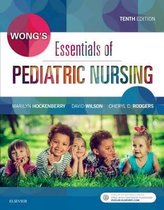
Wongs Essentials Of Pediatric Nursing
10th Edition Hockenberry Test Bank:
2023 LATEST: VERIFIED QAS:
GRADED A
, WONGS ESSENTIALS OF PEDIATRIC NURSING 10TH EDITION HOCKENBERRY TEST BANK
Chapter 01: Perspectives of Pediatric Nursing
Hockenberry: Wong’s Essentials of Pediatric Nursing, 10th Edition
MULTIPLE CHOICE
1. A nurse is planning a teaching session for parents of preschool children. Which statement
explains why the nurse should include information about morbidity and mortality?
a. Life span statistics are included in the data.
b. It explains effectiveness of treatment.
c. Cost-effective treatment is detailed for the general population.
d. High-risk age groups for certain disorders or hazards are identified.
ANS: D
Analysis of morbidity and mortality data provides the parents with information about which
groups of individuals are at risk for which health problems. Life span statistics is a part of the
mortality data. Treatment modalities and cost are not included in morbidity and mortality data.
DIF: Cognitive Level: Apply REF: p. 11
TOP: Integrated Process: Nursing Process: Planning
MSC: Area of Client Needs: Health Promotion and Maintenance
2. A clinic nurse is planning a teaching session about childhood obesity prevention for parents of
school-age children. The nurse should include which associated risk of obesity in the teaching
plan?
a. Type I diabetes
b. Respiratory disease
NURSINGTB.COM
c. Celiac disease
d. Type II diabetes
ANS: D
Childhood obesity has been associated with the rise of type II diabetes in children. Type I
diabetes is not associated with obesity and has a genetic component. Respiratory disease is not
associated with obesity, and celiac disease is the inability to metabolize gluten in foods and is
not associated with obesity.
DIF: Cognitive Level: Apply REF: p. 2
TOP: Integrated Process: Nursing Process: Planning
MSC: Area of Client Needs: Health Promotion and Maintenance
3. Which is the leading cause of death in infants younger than 1 year?
a. Congenital anomalies
b. Sudden infant death syndrome
c. Respiratory distress syndrome
d. Bacterial sepsis of the newborn
ANS: A
Congenital anomalies account for 20.1% of deaths in infants younger than 1 year. Sudden
infant death syndrome accounts for 8.2% of deaths in this age group. Respiratory distress
syndrome accounts for 3.4% of deaths in this age group. Infections specific to the perinatal
period account for 2.7% of deaths in this age group.
NURSINGTB.COM
, WONGS ESSENTIALS OF PEDIATRIC NURSING 10TH EDITION HOCKENBERRY TEST BANK
DIF: Cognitive Level: Remember REF: p. 6
TOP: Integrated Process: Nursing Process: Assessment
MSC: Area of Client Needs: Health Promotion and Maintenance
4. Which leading cause of death topic should the nurse emphasize to a group of
African-American boys ranging in age from 15 to 19 years?
a. Suicide
b. Cancer
c. Firearm homicide
d. Occupational injuries
ANS: C
Firearm homicide is the second overall cause of death in this age group and the leading cause
of death in African-American males. Suicide is the third-leading cause of death in this
population. Cancer, although a major health problem, is the fourth-leading cause of death in
this age group. Occupational injuries do not contribute to a significant death rate for this age
group.
DIF: Cognitive Level: Understand REF: p. 7
TOP: Integrated Process: Nursing Process: Planning
MSC: Area of Client Needs: Health Promotion and Maintenance
5. Which is the major cause of death for children older than 1 year?
a. Cancer
b. Heart disease
c. Unintentional injuries
d. Congenital anomalies
NURSINGTB.COM
ANS: C
Unintentional injuries (accidents) are the leading cause of death after age 1 year through
adolescence. Congenital anomalies are the leading cause of death in those younger than 1
year. Cancer ranks either second or fourth, depending on the age group, and heart disease
ranks fifth in the majority of the age groups.
DIF: Cognitive Level: Remember REF: p. 7
TOP: Integrated Process: Nursing Process: Planning
MSC: Area of Client Needs: Health Promotion and Maintenance
6. Which is the leading cause of death from unintentional injuries for females ranging in age
from 1 to 14?
a. Mechanical suffocation
b. Drowning
c. Motor vehicle–related fatalities
d. Fire- and burn-related fatalities
ANS: C
Motor vehicle–related fatalities are the leading cause of death for females ranging in age from
1 to 14, either as passengers or as pedestrians. Mechanical suffocation is fourth or fifth,
depending on the age. Drowning is the second- or third-leading cause of death, depending on
the age. Fire- and burn-related fatalities are the second-leading cause of death.
DIF: Cognitive Level: Remember REF: p. 3
NURSINGTB.COM
, WONGS ESSENTIALS OF PEDIATRIC NURSING 10TH EDITION HOCKENBERRY TEST BANK
TOP: Integrated Process: Nursing Process: Assessment
MSC: Area of Client Needs: Health Promotion and Maintenance
7. Which factor most impacts the type of injury a child is susceptible to, according to the child’s
age?
a. Physical health of the child
b. Developmental level of the child
c. Educational level of the child
d. Number of responsible adults in the home
ANS: B
The child’s developmental stage determines the type of injury that is likely to occur. The
child’s physical health may facilitate the child’s recovery from an injury but does not impact
the type of injury. Educational level is related to developmental level, but it is not as
important as the child’s developmental level in determining the type of injury. The number of
responsible adults in the home may affect the number of unintentional injuries, but the type of
injury is related to the child’s developmental stage.
DIF: Cognitive Level: Understand REF: p. 3
TOP: Integrated Process: Nursing Process: Planning
MSC: Area of Client Needs: Health Promotion and Maintenance
8. Which is now referred to as the “new morbidity”?
a. Limitations in the major activities of daily living
b. Unintentional injuries that cause chronic health problems
c. Discoveries of new therapies to treat health problems
d. Behavioral, social, and educational problems that alter health
NURSINGTB.COM
ANS: D
The new morbidity reflects the behavioral, social, and educational problems that interfere with
the child’s social and academic development. It is currently estimated that the incidence of
these issues is from 5% to 30%. Limitations in major activities of daily living and
unintentional injuries that result in chronic health problems are included in morbidity data.
Discovery of new therapies would be reflected in changes in morbidity data over time.
DIF: Cognitive Level: Remember REF: p. 2
TOP: Integrated Process: Nursing Process: Assessment
MSC: Area of Client Needs: Health Promotion and Maintenance
9. A nurse on a pediatric unit is practicing family-centered care. Which is most descriptive of the
care the nurse is delivering?
a. Taking over total care of the child to reduce stress on the family
b. Encouraging family dependence on health care systems
c. Recognizing that the family is the constant in a child’s life
d. Excluding families from the decision-making process
ANS: C
The three key components of family-centered care are respect, collaboration, and support.
Family-centered care recognizes the family as the constant in the child’s life. Taking over
total care does not include the family in the process and may increase stress instead of
reducing stress. The family should be enabled and empowered to work with the health care
system. The family is expected to be part of the decision-making process.
NURSINGTB.COM
10th Edition Hockenberry Test Bank:
2023 LATEST: VERIFIED QAS:
GRADED A
, WONGS ESSENTIALS OF PEDIATRIC NURSING 10TH EDITION HOCKENBERRY TEST BANK
Chapter 01: Perspectives of Pediatric Nursing
Hockenberry: Wong’s Essentials of Pediatric Nursing, 10th Edition
MULTIPLE CHOICE
1. A nurse is planning a teaching session for parents of preschool children. Which statement
explains why the nurse should include information about morbidity and mortality?
a. Life span statistics are included in the data.
b. It explains effectiveness of treatment.
c. Cost-effective treatment is detailed for the general population.
d. High-risk age groups for certain disorders or hazards are identified.
ANS: D
Analysis of morbidity and mortality data provides the parents with information about which
groups of individuals are at risk for which health problems. Life span statistics is a part of the
mortality data. Treatment modalities and cost are not included in morbidity and mortality data.
DIF: Cognitive Level: Apply REF: p. 11
TOP: Integrated Process: Nursing Process: Planning
MSC: Area of Client Needs: Health Promotion and Maintenance
2. A clinic nurse is planning a teaching session about childhood obesity prevention for parents of
school-age children. The nurse should include which associated risk of obesity in the teaching
plan?
a. Type I diabetes
b. Respiratory disease
NURSINGTB.COM
c. Celiac disease
d. Type II diabetes
ANS: D
Childhood obesity has been associated with the rise of type II diabetes in children. Type I
diabetes is not associated with obesity and has a genetic component. Respiratory disease is not
associated with obesity, and celiac disease is the inability to metabolize gluten in foods and is
not associated with obesity.
DIF: Cognitive Level: Apply REF: p. 2
TOP: Integrated Process: Nursing Process: Planning
MSC: Area of Client Needs: Health Promotion and Maintenance
3. Which is the leading cause of death in infants younger than 1 year?
a. Congenital anomalies
b. Sudden infant death syndrome
c. Respiratory distress syndrome
d. Bacterial sepsis of the newborn
ANS: A
Congenital anomalies account for 20.1% of deaths in infants younger than 1 year. Sudden
infant death syndrome accounts for 8.2% of deaths in this age group. Respiratory distress
syndrome accounts for 3.4% of deaths in this age group. Infections specific to the perinatal
period account for 2.7% of deaths in this age group.
NURSINGTB.COM
, WONGS ESSENTIALS OF PEDIATRIC NURSING 10TH EDITION HOCKENBERRY TEST BANK
DIF: Cognitive Level: Remember REF: p. 6
TOP: Integrated Process: Nursing Process: Assessment
MSC: Area of Client Needs: Health Promotion and Maintenance
4. Which leading cause of death topic should the nurse emphasize to a group of
African-American boys ranging in age from 15 to 19 years?
a. Suicide
b. Cancer
c. Firearm homicide
d. Occupational injuries
ANS: C
Firearm homicide is the second overall cause of death in this age group and the leading cause
of death in African-American males. Suicide is the third-leading cause of death in this
population. Cancer, although a major health problem, is the fourth-leading cause of death in
this age group. Occupational injuries do not contribute to a significant death rate for this age
group.
DIF: Cognitive Level: Understand REF: p. 7
TOP: Integrated Process: Nursing Process: Planning
MSC: Area of Client Needs: Health Promotion and Maintenance
5. Which is the major cause of death for children older than 1 year?
a. Cancer
b. Heart disease
c. Unintentional injuries
d. Congenital anomalies
NURSINGTB.COM
ANS: C
Unintentional injuries (accidents) are the leading cause of death after age 1 year through
adolescence. Congenital anomalies are the leading cause of death in those younger than 1
year. Cancer ranks either second or fourth, depending on the age group, and heart disease
ranks fifth in the majority of the age groups.
DIF: Cognitive Level: Remember REF: p. 7
TOP: Integrated Process: Nursing Process: Planning
MSC: Area of Client Needs: Health Promotion and Maintenance
6. Which is the leading cause of death from unintentional injuries for females ranging in age
from 1 to 14?
a. Mechanical suffocation
b. Drowning
c. Motor vehicle–related fatalities
d. Fire- and burn-related fatalities
ANS: C
Motor vehicle–related fatalities are the leading cause of death for females ranging in age from
1 to 14, either as passengers or as pedestrians. Mechanical suffocation is fourth or fifth,
depending on the age. Drowning is the second- or third-leading cause of death, depending on
the age. Fire- and burn-related fatalities are the second-leading cause of death.
DIF: Cognitive Level: Remember REF: p. 3
NURSINGTB.COM
, WONGS ESSENTIALS OF PEDIATRIC NURSING 10TH EDITION HOCKENBERRY TEST BANK
TOP: Integrated Process: Nursing Process: Assessment
MSC: Area of Client Needs: Health Promotion and Maintenance
7. Which factor most impacts the type of injury a child is susceptible to, according to the child’s
age?
a. Physical health of the child
b. Developmental level of the child
c. Educational level of the child
d. Number of responsible adults in the home
ANS: B
The child’s developmental stage determines the type of injury that is likely to occur. The
child’s physical health may facilitate the child’s recovery from an injury but does not impact
the type of injury. Educational level is related to developmental level, but it is not as
important as the child’s developmental level in determining the type of injury. The number of
responsible adults in the home may affect the number of unintentional injuries, but the type of
injury is related to the child’s developmental stage.
DIF: Cognitive Level: Understand REF: p. 3
TOP: Integrated Process: Nursing Process: Planning
MSC: Area of Client Needs: Health Promotion and Maintenance
8. Which is now referred to as the “new morbidity”?
a. Limitations in the major activities of daily living
b. Unintentional injuries that cause chronic health problems
c. Discoveries of new therapies to treat health problems
d. Behavioral, social, and educational problems that alter health
NURSINGTB.COM
ANS: D
The new morbidity reflects the behavioral, social, and educational problems that interfere with
the child’s social and academic development. It is currently estimated that the incidence of
these issues is from 5% to 30%. Limitations in major activities of daily living and
unintentional injuries that result in chronic health problems are included in morbidity data.
Discovery of new therapies would be reflected in changes in morbidity data over time.
DIF: Cognitive Level: Remember REF: p. 2
TOP: Integrated Process: Nursing Process: Assessment
MSC: Area of Client Needs: Health Promotion and Maintenance
9. A nurse on a pediatric unit is practicing family-centered care. Which is most descriptive of the
care the nurse is delivering?
a. Taking over total care of the child to reduce stress on the family
b. Encouraging family dependence on health care systems
c. Recognizing that the family is the constant in a child’s life
d. Excluding families from the decision-making process
ANS: C
The three key components of family-centered care are respect, collaboration, and support.
Family-centered care recognizes the family as the constant in the child’s life. Taking over
total care does not include the family in the process and may increase stress instead of
reducing stress. The family should be enabled and empowered to work with the health care
system. The family is expected to be part of the decision-making process.
NURSINGTB.COM