Liberalism
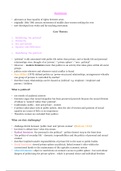
Origins and development:
- 19th century during breakdown of feudalism and rise of capitalism.
- Liberals challenged the ‘divine right’ of the monarchy and authority of the church and sought to
replace absolutism with constitutionalism and later representative government
- Liberals criticised the political and economic structure of feudal societies where social position
was ascribed rather than achieved, then through industrialisation advocated laissez faire.
- By the late 19th century, the radical/revolutionary aspect of liberalism faded and it became
increasing conservative, standing less for change and reform but more for the liberal status quo;
constitutionalism and democratic freedom.
Liberal ideas too began to change with the progress of industrialisation leading to two separate
traditions:
1. Classical Liberalism - characterised by a belief in ‘minimal’ state, whose function is limited
to the maintenance of domestic order and personal security.
2. Modern Liberalism - state should interfere to help people help themselves through
welfarism and a regulated economy - ‘enabling state’.
Today Liberalism is believed to be the only ‘working’ ideology. Fukuyama - liberalism triumphed.
Core Themes:
1. Individualism FRITE & DCS
2. Freedom
3. Reason
4. Tolerance
5. Equality and Justice
6. Liberal Democracy
7. Constitutionalism and Consent
8. The Liberal State
1. Individualism
- the supreme importance of the individual over any social group - central importance
- Under feudalism: people’s lives and identities were determined by their social group (class,
village, family etc).
- Development of industrial capitalism: people encouraged to think for themselves, and to think
of themselves - ‘free men’ - ability to choose
- political system should always be constructed out of the needs of, and respect for, the individual.
- Kant - equal worth of human beings - ‘ends in themselves’
Importance of individuals has two contrasting implications:
1. Uniqueness of each human being since we are defined by our inner qualities.
2. We each share the same status as individuals.
HOWEVER, Liberals differ on the implication individualism has on society:
, Classical Liberals:
- Atomistic individualism - society as a collection of individuals each seeking to satisfy their own
needs and interests (individuals are atoms)
- collection of self-sufficient individuals.
- believe human nature is egoistic, self-seeking and largely self-reliant. They believe atomistic or
egotistical individualism can help to maximise individual freedom - Macpherson - ‘possessive
individualism'
Modern Liberals:
- Advocate developmental individualism.
- more optimistic view of human nature
- egoism is tempered by a sense of social responsibility, especially towards those who are
unable to look after themselves. E.g. the poor or disabled.
- united in desire for all in society to reach full responsibility - help from state to do that.
Despite their difference, both support the importance of the individuals over social groups.
2. Freedom
- most important political value - liberty is central to any political system.
- individual is sovereign over his/ her body
- Locke - ‘life, liberty, property’
- HOWEVER, DO NOT believe in absolute freedom as unlimited liberty can become a licence of
abuse (e.g. crime). E.g. J.S. Mill On Liberty (1859) - minimal restrictions ‘to prevent harm to
others’ (e.g. Law and order).
- Does not include restrictions on individuals to potentially harm themselves (e.g. law forcing
drivers to wear seat belts) - their choice
- J Rawls - entitled to widest liberty with a ‘like liberty for all’
- HOWEVER, while liberals agree on the value of liberty, they differ on what it means to be ‘free’:
Classical Liberals:
- liberty is a natural right as it allows individuals the opportunity to choose/ pressure own
interests. E.g. people are able to choose where they live, work etc.
- They advocate Negative Freedom which is based on the absence of external restrictions or
constraints on the individual.
Modern Liberals:
- liberty enables people to develop their skills and talents.
- They advocate Positive freedom which implies governmental intervention with the goal of
achieving self-mastery or self-realisation; in short freedom is the autonomy to develop ones
individual fulfilment.
- T.H. Green argued to achieve self-mastery the state must play an active role for it is “pointless
being free to read a book if no one has taught you to read”.
Berlin Two Concepts of Liberty - Negative and positive freedom.
Origins and development:
- 19th century during breakdown of feudalism and rise of capitalism.
- Liberals challenged the ‘divine right’ of the monarchy and authority of the church and sought to
replace absolutism with constitutionalism and later representative government
- Liberals criticised the political and economic structure of feudal societies where social position
was ascribed rather than achieved, then through industrialisation advocated laissez faire.
- By the late 19th century, the radical/revolutionary aspect of liberalism faded and it became
increasing conservative, standing less for change and reform but more for the liberal status quo;
constitutionalism and democratic freedom.
Liberal ideas too began to change with the progress of industrialisation leading to two separate
traditions:
1. Classical Liberalism - characterised by a belief in ‘minimal’ state, whose function is limited
to the maintenance of domestic order and personal security.
2. Modern Liberalism - state should interfere to help people help themselves through
welfarism and a regulated economy - ‘enabling state’.
Today Liberalism is believed to be the only ‘working’ ideology. Fukuyama - liberalism triumphed.
Core Themes:
1. Individualism FRITE & DCS
2. Freedom
3. Reason
4. Tolerance
5. Equality and Justice
6. Liberal Democracy
7. Constitutionalism and Consent
8. The Liberal State
1. Individualism
- the supreme importance of the individual over any social group - central importance
- Under feudalism: people’s lives and identities were determined by their social group (class,
village, family etc).
- Development of industrial capitalism: people encouraged to think for themselves, and to think
of themselves - ‘free men’ - ability to choose
- political system should always be constructed out of the needs of, and respect for, the individual.
- Kant - equal worth of human beings - ‘ends in themselves’
Importance of individuals has two contrasting implications:
1. Uniqueness of each human being since we are defined by our inner qualities.
2. We each share the same status as individuals.
HOWEVER, Liberals differ on the implication individualism has on society:
, Classical Liberals:
- Atomistic individualism - society as a collection of individuals each seeking to satisfy their own
needs and interests (individuals are atoms)
- collection of self-sufficient individuals.
- believe human nature is egoistic, self-seeking and largely self-reliant. They believe atomistic or
egotistical individualism can help to maximise individual freedom - Macpherson - ‘possessive
individualism'
Modern Liberals:
- Advocate developmental individualism.
- more optimistic view of human nature
- egoism is tempered by a sense of social responsibility, especially towards those who are
unable to look after themselves. E.g. the poor or disabled.
- united in desire for all in society to reach full responsibility - help from state to do that.
Despite their difference, both support the importance of the individuals over social groups.
2. Freedom
- most important political value - liberty is central to any political system.
- individual is sovereign over his/ her body
- Locke - ‘life, liberty, property’
- HOWEVER, DO NOT believe in absolute freedom as unlimited liberty can become a licence of
abuse (e.g. crime). E.g. J.S. Mill On Liberty (1859) - minimal restrictions ‘to prevent harm to
others’ (e.g. Law and order).
- Does not include restrictions on individuals to potentially harm themselves (e.g. law forcing
drivers to wear seat belts) - their choice
- J Rawls - entitled to widest liberty with a ‘like liberty for all’
- HOWEVER, while liberals agree on the value of liberty, they differ on what it means to be ‘free’:
Classical Liberals:
- liberty is a natural right as it allows individuals the opportunity to choose/ pressure own
interests. E.g. people are able to choose where they live, work etc.
- They advocate Negative Freedom which is based on the absence of external restrictions or
constraints on the individual.
Modern Liberals:
- liberty enables people to develop their skills and talents.
- They advocate Positive freedom which implies governmental intervention with the goal of
achieving self-mastery or self-realisation; in short freedom is the autonomy to develop ones
individual fulfilment.
- T.H. Green argued to achieve self-mastery the state must play an active role for it is “pointless
being free to read a book if no one has taught you to read”.
Berlin Two Concepts of Liberty - Negative and positive freedom.