

BIOD 151 Module 2 Questions & Answers 2024 A+
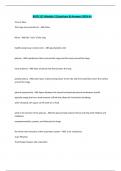
BIOD 151 Module 2 Questions & Answers 2024 A+ True or false. The lungs are symmetrical. - ANS-False Hilum - ANS-the "root" of the lung healthy lung tissue is what color - ANS-peachy/pink color pleurae - ANS-membranes that surround the lungs and the cavity around the lungs visceral pleura - ANS-layer of pleura that faces/covers the lung parietal pleura - ANS-outer layer of pleura lying closer to the ribs and chest wall that covers the surface around the lungs pleural space/cavity - ANS-Space between the visceral and parietal pleural membranes (small) typically empty but has a small amount of fluid that allows for frictionless breathing when diseased, this space can fill with air or fluid what is the function of the pleurae - ANS-the pleurae help reduce friction and help with inflation and inhalation compartmentalize, protect, and lubricate the lungs the three main functions of the respiratory system - ANS-1) air conduction 2) air filtration 3) exchange of gases aka respiration other things respiratory system has roles in - ANS-vocalization, sense of smell. body's pH regulation structures in the respiratory system - ANS-nasal cavity, pharynx, larynx, trachea, bronchi, lungs what happens to air as it goes from outside the body to the lungs - ANS-air is filtered so it has no debris air is warmed to body temp air is humidified and becomes saturated with water nasal cavities aka fossae are composed of what - ANS-none and cartilage nasal septum - ANS-a wall of cartilage that divides the nose into two equal sections of left and right fossae vestibule - ANS-most external part of nasal cavity just inside the nostrils vestibule lining - ANS-skin continuation from the face and vissibrae Vibrissae - ANS-short thick hairs that help filter for the respiratory tract aka nose hairs nasal conchae or folds - ANS-increase the surface area of nasal cavity to aid in warming and humidification of incoming air why is the nasal cavity highly vascularized - ANS-to warm incoming air Three regions of the pharynx - ANS-nasopharynx, oropharynx, laryngopharynx nasopharynx - ANS-connection between nasal cavity and pharynx - superior region of the pharynx at the back of the nose and above the soft palate Eustachian tube - ANS-connects the middle ear with the nasopharynx and allows passage of air oropharynx - ANS-central portion of the pharynx caudal to the mouth and anterior to the epiglottis laryngopharynx - ANS-inferior part of the pharynx connecting the pharynx to the opening into the larynx and esophagus what separates the nasal cavity from the oral cavity in the mouth - ANS-the hard and soft palates hard palate - ANS-roof of the mouth aspiration - ANS-when food or liquid accidentally enters the trachea may cause pneumonia Pharynx - ANS-passageway for food to the esophagus and air to the larynx advantages of shared passageway of the pharynx - ANS-1) air can enter through the mouth when nasal cavity is obstructed 2) allows for relatively normal breathing while eating 3) greater air intake during heavy exercise that requires more gas exchange soft palate - ANS-the muscular posterior portion of the palate that closes off the nasopharynx during swallowing or speaking CONTINUES...
Document information
- Uploaded on
- December 29, 2023
- Number of pages
- 13
- Written in
- 2023/2024
- Type
- Exam (elaborations)
- Contains
- Questions & answers


