How energy is made and utilised by the body.
This booklet will explain the anatomy and physiology of sport. It will help you to understand
the physiology of the digestive system and the respiratory system in relation to energy
metabolism.
Digestive system
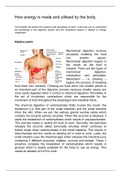
Mechanical digestion involves
physically breaking the food
into smaller pieces.
Mechanical digestion begins in
the mouth as the food is
chewed. There are two types of
mechanical digestion;
mastication and peristalsis.
Mastication – i.e. chewing –
begins the process of breaking
food down into nutrients. Chewing our food down into smaller pieces is
an important part of the digestive process because smaller pieces are
more easily digested when it comes to chemical digestion. Peristalsis is
the act of involuntary contractions which are responsible for the
movement of food throughout the esophagus and intestinal tracts.
The chemical digestion of carbohydrates firstly involve the mouth, the
duodenum (i.e. first part of the small intestine) and the small intestine
(from the villi). When we eat, the salivary glands secrete saliva which
contains the enzyme salivary amylase. When this enzyme is released, it
starts the breakdown of carbohydrates which results in polysaccharides.
This process needs a neutral pH level to work. Secondly, the pancreas
releases the enzyme called pancreatic amylase which continues to
further break down carbohydrates in the small intestine. This results in
disaccharides and this needs an alkaline pH in order to work. Lastly, the
small intestine uses the intestinal glad which releases the intestinal juice
containing 3 different enzymes; maltase, sucrose and lactase. These 3
enzymes complete the breakdown of carbohydrates which results in
glucose which is readily available for the body to use as energy. This
needs an alkaline pH of 8 to work.
This booklet will explain the anatomy and physiology of sport. It will help you to understand
the physiology of the digestive system and the respiratory system in relation to energy
metabolism.
Digestive system
Mechanical digestion involves
physically breaking the food
into smaller pieces.
Mechanical digestion begins in
the mouth as the food is
chewed. There are two types of
mechanical digestion;
mastication and peristalsis.
Mastication – i.e. chewing –
begins the process of breaking
food down into nutrients. Chewing our food down into smaller pieces is
an important part of the digestive process because smaller pieces are
more easily digested when it comes to chemical digestion. Peristalsis is
the act of involuntary contractions which are responsible for the
movement of food throughout the esophagus and intestinal tracts.
The chemical digestion of carbohydrates firstly involve the mouth, the
duodenum (i.e. first part of the small intestine) and the small intestine
(from the villi). When we eat, the salivary glands secrete saliva which
contains the enzyme salivary amylase. When this enzyme is released, it
starts the breakdown of carbohydrates which results in polysaccharides.
This process needs a neutral pH level to work. Secondly, the pancreas
releases the enzyme called pancreatic amylase which continues to
further break down carbohydrates in the small intestine. This results in
disaccharides and this needs an alkaline pH in order to work. Lastly, the
small intestine uses the intestinal glad which releases the intestinal juice
containing 3 different enzymes; maltase, sucrose and lactase. These 3
enzymes complete the breakdown of carbohydrates which results in
glucose which is readily available for the body to use as energy. This
needs an alkaline pH of 8 to work.