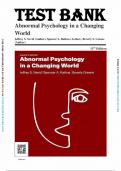
ABNORMAL PSYCHOLOGY IN
A CHANGING WORLD 11TH
EDITION NEVID TEST BANK
Introduction and Methods of Research
Multiple-Choice Questions
1. Which emotional concern has developed in the police photographer who described
his crime scene experiences?
a. anger c. fear
b. sadness d. loneliness
ANSWER: C
Diff: E Page: 3
Topic: Chapter Introduction
Skill: Factual
2. In “Cowering Under the Covers,” the woman with bipolar disorder
experienced terror directly after .
a. feeling high and exhilarated
b. witnessing a serious vehicular accident in which a person died
c. developing suicidal thoughts
d. an argument with her husband
ANSWER: A
Diff: M Page: 3
Topic: Chapter Introduction
Skill: Factual
3. Thomas, the young man with paranoid schizophrenia and major
depression, experienced severe symptoms until he .
a. received two months of treatment in the psychiatric hospital
b. found the correct medication
c. met his real father
d. was given a prefrontal lobotomy
ANSWER: B
Diff: E Page: 4
Topic: Chapter Introduction
Skill: Factual
4. An abnormal behavior pattern that involves a disturbance of psychological functioning
1
,or behavior is a(n) .
a. abreaction c. perceptual set
b. reaction formation d. psychological disorder
ANSWER: D
Diff: E Page: 4
Topic: Chapter Introduction
2
, Skill: Factual
5. Abnormal psychology deals chiefly with .
a. diseases c. abnormal behaviors
b. traits d. problems of immaturity
ANSWER: C
Diff: E Page: 4
Topic: Chapter Introduction
Skill: Factual
6. The branch of psychology that deals with the description, causes, and treatment of
abnormal behavior patterns is psychology.
a. abnormal c. evolutionary
b. social d. developmental
ANSWER: A
Diff: E Page: 4
Topic: Chapter Introduction
Skill: Factual
7. people are ever admitted to a mental hospital during the course of their lifetime.
a. Relatively few c. About half of
b. Nearly 1/3 of d. Nearly 2/3 of
ANSWER: A
Diff: E Page: 4
Topic: Chapter Introduction
Skill: Factual
8. people accused of crimes plead not guilty to crimes on grounds of insanity.
a. Very few c. About half of
b. Nearly 1/3 of d. Nearly 2/3 of
ANSWER: A
Diff: E Page: 4
Topic: Chapter Introduction
Skill: Factual
9. Who is affected by abnormal behavior?
a. Only those who are mentally ill themselves
b. Only those who are related to individuals with a mental illness
c. Only those who work with individuals with a mental illness
d. Virtually everyone
ANSWER: D
Diff: E Page: 4
Topic: Chapter Introduction
Skill: Conceptual
10. Nearly one in of us is directly affected by a diagnosable mental illness at some
point in our lives.
a. two c. four
3
, b. three d. five
ANSWER: A
Diff: D Page: 4
Topic: Chapter Introduction
Skill: Factual
11. About one in adult Americans experiences a diagnosable mental illness in a given year.
a. two c. four
b. three d. five
ANSWER: C
Diff: D Page: 4
Topic: Chapter Introduction
Skill: Factual
12. What is the view about the medical model stated by the authors of your text?
a. It is not currently a prominent model for understanding abnormal behavior.
b. It puts the study of abnormal behavior directly in the purview of the field of psychology.
c. It provides terms such as “symptom” and “disease” which will be emphasized in the text.
d. It is a major contemporary model, but psychological and sociocultural perspectives also
warrant consideration.
ANSWER: D
Diff: M Page: 5
Topic: Chapter Introduction
Skill: Conceptual
13. The model considers abnormal behavior patterns to be symptoms of underlying illness.
a. medical c. sociocultural
b. behavioral d. applied
ANSWER: A
Diff: E Page: 5
Topic: Chapter Introduction
Skill: Conceptual
14. The authors of your text prefer to use the term “psychological disorder” rather than
“mental disorder” for each of the following reasons EXCEPT .
a. the term “psychological disorder” puts the study of abnormal behavior
squarely within the purview of the field of psychology
b. the term “mental disorder” is generally associated with the medical model
c. the term “mental disorder” is derived from the medical model, which is not the only model that
should be used to examine abnormal behaviors
d. the term “mental disorder” implies some type of serious illness, whereas the term
“psychological disorder” does not
ANSWER: D
Diff: M Page: 4-5
Topic: Chapter
Introduction Skill:
Conceptual
15. Each of the following is a conclusion from the 1999 Surgeon General’s report on the nation’s
mental health EXCEPT .
a. mental health reflects a complex interaction of brain functioning and environmental
4
A CHANGING WORLD 11TH
EDITION NEVID TEST BANK
Introduction and Methods of Research
Multiple-Choice Questions
1. Which emotional concern has developed in the police photographer who described
his crime scene experiences?
a. anger c. fear
b. sadness d. loneliness
ANSWER: C
Diff: E Page: 3
Topic: Chapter Introduction
Skill: Factual
2. In “Cowering Under the Covers,” the woman with bipolar disorder
experienced terror directly after .
a. feeling high and exhilarated
b. witnessing a serious vehicular accident in which a person died
c. developing suicidal thoughts
d. an argument with her husband
ANSWER: A
Diff: M Page: 3
Topic: Chapter Introduction
Skill: Factual
3. Thomas, the young man with paranoid schizophrenia and major
depression, experienced severe symptoms until he .
a. received two months of treatment in the psychiatric hospital
b. found the correct medication
c. met his real father
d. was given a prefrontal lobotomy
ANSWER: B
Diff: E Page: 4
Topic: Chapter Introduction
Skill: Factual
4. An abnormal behavior pattern that involves a disturbance of psychological functioning
1
,or behavior is a(n) .
a. abreaction c. perceptual set
b. reaction formation d. psychological disorder
ANSWER: D
Diff: E Page: 4
Topic: Chapter Introduction
2
, Skill: Factual
5. Abnormal psychology deals chiefly with .
a. diseases c. abnormal behaviors
b. traits d. problems of immaturity
ANSWER: C
Diff: E Page: 4
Topic: Chapter Introduction
Skill: Factual
6. The branch of psychology that deals with the description, causes, and treatment of
abnormal behavior patterns is psychology.
a. abnormal c. evolutionary
b. social d. developmental
ANSWER: A
Diff: E Page: 4
Topic: Chapter Introduction
Skill: Factual
7. people are ever admitted to a mental hospital during the course of their lifetime.
a. Relatively few c. About half of
b. Nearly 1/3 of d. Nearly 2/3 of
ANSWER: A
Diff: E Page: 4
Topic: Chapter Introduction
Skill: Factual
8. people accused of crimes plead not guilty to crimes on grounds of insanity.
a. Very few c. About half of
b. Nearly 1/3 of d. Nearly 2/3 of
ANSWER: A
Diff: E Page: 4
Topic: Chapter Introduction
Skill: Factual
9. Who is affected by abnormal behavior?
a. Only those who are mentally ill themselves
b. Only those who are related to individuals with a mental illness
c. Only those who work with individuals with a mental illness
d. Virtually everyone
ANSWER: D
Diff: E Page: 4
Topic: Chapter Introduction
Skill: Conceptual
10. Nearly one in of us is directly affected by a diagnosable mental illness at some
point in our lives.
a. two c. four
3
, b. three d. five
ANSWER: A
Diff: D Page: 4
Topic: Chapter Introduction
Skill: Factual
11. About one in adult Americans experiences a diagnosable mental illness in a given year.
a. two c. four
b. three d. five
ANSWER: C
Diff: D Page: 4
Topic: Chapter Introduction
Skill: Factual
12. What is the view about the medical model stated by the authors of your text?
a. It is not currently a prominent model for understanding abnormal behavior.
b. It puts the study of abnormal behavior directly in the purview of the field of psychology.
c. It provides terms such as “symptom” and “disease” which will be emphasized in the text.
d. It is a major contemporary model, but psychological and sociocultural perspectives also
warrant consideration.
ANSWER: D
Diff: M Page: 5
Topic: Chapter Introduction
Skill: Conceptual
13. The model considers abnormal behavior patterns to be symptoms of underlying illness.
a. medical c. sociocultural
b. behavioral d. applied
ANSWER: A
Diff: E Page: 5
Topic: Chapter Introduction
Skill: Conceptual
14. The authors of your text prefer to use the term “psychological disorder” rather than
“mental disorder” for each of the following reasons EXCEPT .
a. the term “psychological disorder” puts the study of abnormal behavior
squarely within the purview of the field of psychology
b. the term “mental disorder” is generally associated with the medical model
c. the term “mental disorder” is derived from the medical model, which is not the only model that
should be used to examine abnormal behaviors
d. the term “mental disorder” implies some type of serious illness, whereas the term
“psychological disorder” does not
ANSWER: D
Diff: M Page: 4-5
Topic: Chapter
Introduction Skill:
Conceptual
15. Each of the following is a conclusion from the 1999 Surgeon General’s report on the nation’s
mental health EXCEPT .
a. mental health reflects a complex interaction of brain functioning and environmental
4