ORTHOPAEDICS
BACK PAIN
Radiculopathy = injury of the exiting nerve roots
Myelopathy = injury to the spinal cord itself
ANATOMY
- Mixed nerves
o Motor fibres (efferent)
▪ LMNs
o Sensory fibres (afferent)
o Autonomic fibres
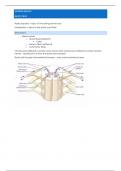
Ventral roots (efferent) contain motor nerves and ventral roots (afferent) contain sensory
nerves – quickly joint to from the spinal nerve proper
Roots exit through intervertebral foramen – very small anatomical area
,CERVICAL ANATOMY
Two important features
1. Pedicle/Nerve Root Mismatch (7 vertebral bodies and 8 spinal nerves)
a. Exiting nerve root beneath the pedicle is one number higher (C7 nerve root is
beneath the C6 pedicle)
2. Horizontal orientation of exiting nerve roots
Together, this means that a prolapsed disc (irrespective of location) will always affect the
exiting nerve root at that spinal level (although it is numerically ‘higher’)
LUMBAR ANATOMY
1. Pedicle/Nerve root match – exiting nerve root beneath the pedicle is the same
number
2. Vertical orientation of the exiting nerves
a. Nerves must descend within the vertical column and exit at the relevant spinal
level
Problems with the vertebral disc (depending on where it is) can affect either the exiting
nerve root or the descending nerve root
I.e. Far Lateral L4/L5 will affect the L4 nerve, whereas a L4/L5 Paracentral pathology will
affect L5 nerve
- Paracentral IVDs - ~90%
o Compress the traversing nerve root, leading to symptoms affecting the nerve
root below
- Lateral ‘foraminal’ IVDs - ~5%
2
, o Compress the exiting nerve root at the same spinal level
CAUDA EQUINA
Spinal cord ends at L1/L2 IVD
The cauda equina:
- L2-S5 (+coccygeal nerve) descend to their exiting foramen
- Below L1/L2 – mixed spinal nerves but within the vertebral canal
o LMNs
o Sensory information
o Autonomic supply to the:
▪ Bladder (detrusor)
▪ Anal sphincter
▪ Urethral sphincters
HISTORY – RED FLAGS AND YELLOW FLAGS
Red flag symptoms
- Cauda equina syndrome
o Bilateral
o Autonomic dysfunction
o Perianal sensory changes
- Neoplasia
o >50 years
o History of cancer
o Pervasive symptoms
o Worsened with straining
o Systemic features of cancer
o Thoracic pain
- Infections
o Fever
o Diabetes/HIV/immunocompromised
3
BACK PAIN
Radiculopathy = injury of the exiting nerve roots
Myelopathy = injury to the spinal cord itself
ANATOMY
- Mixed nerves
o Motor fibres (efferent)
▪ LMNs
o Sensory fibres (afferent)
o Autonomic fibres
Ventral roots (efferent) contain motor nerves and ventral roots (afferent) contain sensory
nerves – quickly joint to from the spinal nerve proper
Roots exit through intervertebral foramen – very small anatomical area
,CERVICAL ANATOMY
Two important features
1. Pedicle/Nerve Root Mismatch (7 vertebral bodies and 8 spinal nerves)
a. Exiting nerve root beneath the pedicle is one number higher (C7 nerve root is
beneath the C6 pedicle)
2. Horizontal orientation of exiting nerve roots
Together, this means that a prolapsed disc (irrespective of location) will always affect the
exiting nerve root at that spinal level (although it is numerically ‘higher’)
LUMBAR ANATOMY
1. Pedicle/Nerve root match – exiting nerve root beneath the pedicle is the same
number
2. Vertical orientation of the exiting nerves
a. Nerves must descend within the vertical column and exit at the relevant spinal
level
Problems with the vertebral disc (depending on where it is) can affect either the exiting
nerve root or the descending nerve root
I.e. Far Lateral L4/L5 will affect the L4 nerve, whereas a L4/L5 Paracentral pathology will
affect L5 nerve
- Paracentral IVDs - ~90%
o Compress the traversing nerve root, leading to symptoms affecting the nerve
root below
- Lateral ‘foraminal’ IVDs - ~5%
2
, o Compress the exiting nerve root at the same spinal level
CAUDA EQUINA
Spinal cord ends at L1/L2 IVD
The cauda equina:
- L2-S5 (+coccygeal nerve) descend to their exiting foramen
- Below L1/L2 – mixed spinal nerves but within the vertebral canal
o LMNs
o Sensory information
o Autonomic supply to the:
▪ Bladder (detrusor)
▪ Anal sphincter
▪ Urethral sphincters
HISTORY – RED FLAGS AND YELLOW FLAGS
Red flag symptoms
- Cauda equina syndrome
o Bilateral
o Autonomic dysfunction
o Perianal sensory changes
- Neoplasia
o >50 years
o History of cancer
o Pervasive symptoms
o Worsened with straining
o Systemic features of cancer
o Thoracic pain
- Infections
o Fever
o Diabetes/HIV/immunocompromised
3