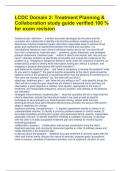
LCDC Domain 2: Treatment Planning & Collaboration study guide verified 100 % for exam revision
LCDC Domain 2: Treatment Planning & Collaboration study guide verified 100 % for exam revision treatment plan, definition - a written document developed by the client and the counselor who collaborate to identify and prioritize problems needing solutions; it determines important treatment goals, describes measurable steps to achieve those goals, and represents an agreement between the client and counselor; it is individualized (based on each client's individual needs) and is not "one-size-fits-all" four main components, treatment plan - problems, goals, objectives, and strategies problem statements, treatment plan - written in client's own words; ask "why are you here?"; describe problem as specifically as possible and include the evidence for the problem (e.g. "engaging in dangerous behavior while under the influence of alcohol, as evidenced by arrest for driving while intoxicated, having sex without a condom, and engaging in physical altercations with family members") goal statements, treatment plan - ask "what is necessary to remedy the problem? what do you want to happen?"; the goal should be acceptable to the client; goals should be stated in terms of the presence of something rather than the absence of something (e.g. "the client will maintain sobriety" not "the client will not drink") objectives, treatment plan - ask "what are you willing to do?"; write specific things the client will do to meet the goal; objectives are stated in behavioral terms and they are observable; a good objective is realistic, time specific, appropriate to the level of treatment, and measurable (frequency, amount, duration, and intensity of the behavior are indicated) strategies (interventions), treatment plan - what the counselor will do to help meet the client's objectives; include the theoretical model to be used as well as specific techniques to be employed (e.g. assertiveness training, refusal skills training); techniques should have demonstrated effectiveness and take into account the client's stage of readiness for change treatment planning, compentencies - 1) explain assessment results to clients in an understandable manner; 2) identify & prioritze problems based on client's needs; 3) formulate immediate and long-term goals using behavioral terms: specific, measurable, attainable, relevant; 4) identify treatment methods & available resources; 5) develop with the client a mutally acceptable treatment plan and method for monitoring and evaluating progress collaboration, purpose - collaboration and service coordination bring the client, treatment services, and community resources together in order to address issues and needs identified in the tre
Written for
- Institution
- LCDC Domain 2
- Course
- LCDC Domain 2
Document information
- Uploaded on
- November 9, 2023
- Number of pages
- 4
- Written in
- 2023/2024
- Type
- Other
- Person
- Unknown
Subjects
-
lcdc domain 2 treatment planning collaboration

Also available in package deal