Marketing and branding:
[step 1,2,3 (people onwards…)]- refer to grade 11 notes
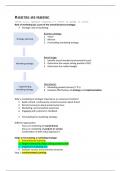
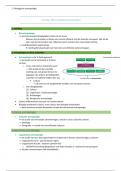
Role of marketing (as a part of the overall business strategy):
➢ Strategic role of marketing:
Business strategy:
1. Vision
Strategic planning: 2. Mission
3. Formulating marketing strategy
Brand image:
1. Identify overall market (environmental scan)
Marketing strategy: 2. Determine the unique selling position (USP)
3. Determine the market budget
Operational:
Implementing 1. Marketing product/service (7 P’s)
marketing strategy: 2. Evaluate effectiveness of strategy and implementation.
Why is marketing of strategic importance as a business function?
1. Build a brand- continuously remind consumer about brand
2. Remind consumer about products/services
3. Marketing communication awareness
4. Engaging with customers= feedback
➢ Formulating the marketing strategy:
Different approaches:
- Focus on marketing of overall brand
- Focus on marketing of product or service
- Combination of both (‘dual approach’)
Steps to formulating a marketing strategy:
1. Environmental scanning
2. Target market and unique selling position (USP)
3. Implement marketing mix
4. Evaluate success and corrective measures
Step 1: environmental scanning
, 1. Internal scanning:
- SWOT
- Value chain analysis
- Resource based
*refer to business environments for examples
2. External scanning:
- Industry= PESTEL and SWOT
- Competitor analysis= Porter’s 6 forces, market mapping and SWOT
- Customer analysis= market research and LSM (lifestyle measurement)
*Customer analysis:
- power of buyer
- current and potential customers; LSM= market research tool in SA
- Purpose of the LSM:
1. Gain understanding of different market segments
2. Assess spending power
3. Spending patterns
- understand the specific needs/wants
Step 2: target market and unique selling position
USP factors:
1. Price
2. Brand identity
3. Utilisation/ incorporation of technology
4. Quality
Step 3: implement marketing mix
Marketing budget:
- Money spent on marketing= investment (long term benefit)
- Determined by methods of marketing
- Rule of thumb: spend 10% of gross profit related to sales
Step 4: marketing strategies (product, price, place, promotion, people, physical evidence,
process)
➢ Product policy:
Background…
- Delivering a product= consumer wants and able/ willing to buy
- The product= add value to customer’s life
- Product not always tangible eg. Insurance
- Ongoing consumer development
- Keeping up to date with changes- technology, trends
- Packaging is linked to the product
Types of products:
[step 1,2,3 (people onwards…)]- refer to grade 11 notes
Role of marketing (as a part of the overall business strategy):
➢ Strategic role of marketing:
Business strategy:
1. Vision
Strategic planning: 2. Mission
3. Formulating marketing strategy
Brand image:
1. Identify overall market (environmental scan)
Marketing strategy: 2. Determine the unique selling position (USP)
3. Determine the market budget
Operational:
Implementing 1. Marketing product/service (7 P’s)
marketing strategy: 2. Evaluate effectiveness of strategy and implementation.
Why is marketing of strategic importance as a business function?
1. Build a brand- continuously remind consumer about brand
2. Remind consumer about products/services
3. Marketing communication awareness
4. Engaging with customers= feedback
➢ Formulating the marketing strategy:
Different approaches:
- Focus on marketing of overall brand
- Focus on marketing of product or service
- Combination of both (‘dual approach’)
Steps to formulating a marketing strategy:
1. Environmental scanning
2. Target market and unique selling position (USP)
3. Implement marketing mix
4. Evaluate success and corrective measures
Step 1: environmental scanning
, 1. Internal scanning:
- SWOT
- Value chain analysis
- Resource based
*refer to business environments for examples
2. External scanning:
- Industry= PESTEL and SWOT
- Competitor analysis= Porter’s 6 forces, market mapping and SWOT
- Customer analysis= market research and LSM (lifestyle measurement)
*Customer analysis:
- power of buyer
- current and potential customers; LSM= market research tool in SA
- Purpose of the LSM:
1. Gain understanding of different market segments
2. Assess spending power
3. Spending patterns
- understand the specific needs/wants
Step 2: target market and unique selling position
USP factors:
1. Price
2. Brand identity
3. Utilisation/ incorporation of technology
4. Quality
Step 3: implement marketing mix
Marketing budget:
- Money spent on marketing= investment (long term benefit)
- Determined by methods of marketing
- Rule of thumb: spend 10% of gross profit related to sales
Step 4: marketing strategies (product, price, place, promotion, people, physical evidence,
process)
➢ Product policy:
Background…
- Delivering a product= consumer wants and able/ willing to buy
- The product= add value to customer’s life
- Product not always tangible eg. Insurance
- Ongoing consumer development
- Keeping up to date with changes- technology, trends
- Packaging is linked to the product
Types of products: