General Management:
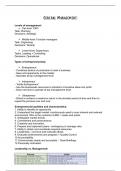
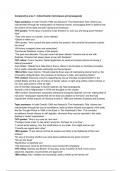
Levels of management:
➢ Top-level: CEO
Task: Planning
Decisions: Strategic
➢ Middle-level: Function managers
Task: Organising
Decisions: Tactical
➢ Lower-level: Supervisors
Tasks: Leading + Controlling
Decisions: Operational
Types of entrepreneurship:
➢ Entrepreneur:
- Combines factors of production to start a business.
- Sees and opportunity in the market.
- Operates at top management level
➢ Intrepreneur
- “Inside Entrepreneur”
- Use the businesses resources to transform innovative ideas into profit.
- Does not have to operate at top management level.
➢ Ultrapreneur
- Wants to achieve a maximum return in the shortest period of time and then to
repeat the process over and over.
Entrepreneurial qualities and characteristics:
1. Ability to identify an opportunity.
2. Understand the target market =continuously need to scan internal and external
environment. Who is the customer (LSM) = needs and wants.
3. Anticipates market trends.
4. Commitment and perseverance.
5. Creativity and innovation.
6. Prepare and implement plans- contingency to manage risks.
7. Ability to obtain and coordinate required resources.
8. Leadership - convince and motivate others.
9. Evaluate achievements and progress = Quality Control.
10.Accountability.
11.Communicate clearly and accurately – Team Briefings.
12.Personally motivated.
Leadership vs. Management:
, Management styles:
➢ Democratic (participative leadership style)
- Allows subordinates to provide input.
- Allows subordinates to participate in decision-making.
- Advantage: Buy-in + commitment from staff = Higher moral = Higher
productivity.
- Disadvantage: Slower decision making.
➢ Autocratic:
- Seldom allows subordinates to provide input.
- He/She makes all the decisions
- Advantage: During crisis situations e.g. disciplinary hearings or risk
management.
- Quick decision making.
- Disadvantage: Low moral as employees feel undervalued by the manger.
➢ Laissez-faire: (Delegating style)
- Manager believes that he/she should not interfere in the process of
carrying out a task.
- He/ she will tell employees, what is expected and allow them to do the task
without interference.
- Advantage: Will yield excellent results IF there is a highly skilled
workforce. Increased motivation as manager trust employee to do what is
needed.
- Disadvantage: Manager could use this style when he or she can’t deal with
conflict or just don’t want to go through the effort of “managing” staff.
Passivity and avoidance.
- Lack of awareness - WHAT, HOW?
➢ Transactional:
- A “give and take” approach.
- Motivate employees to perform additional tasks for additional salary,
bonus, other benefits.
- Advantage: Motivation increased = Increased productivity = increased
profit. Retaining valued staff members.
- Disadvantage: Employees regard the reward as insufficient after a while.
Become demotivated = labour unrest = Strikes , etc.
- It is not always a financially sustainable technique.
➢ Transformational (charismatic):
- Manager will motivate employees by helping them to understand the
meaning of their work.
- He/she played the emphasis on teamwork Explain why they matter.
- Advantage: Builds trust = performance improves: creativity and problem
solving.
- Employees being empowered to achieve their full potential.
Levels of management:
➢ Top-level: CEO
Task: Planning
Decisions: Strategic
➢ Middle-level: Function managers
Task: Organising
Decisions: Tactical
➢ Lower-level: Supervisors
Tasks: Leading + Controlling
Decisions: Operational
Types of entrepreneurship:
➢ Entrepreneur:
- Combines factors of production to start a business.
- Sees and opportunity in the market.
- Operates at top management level
➢ Intrepreneur
- “Inside Entrepreneur”
- Use the businesses resources to transform innovative ideas into profit.
- Does not have to operate at top management level.
➢ Ultrapreneur
- Wants to achieve a maximum return in the shortest period of time and then to
repeat the process over and over.
Entrepreneurial qualities and characteristics:
1. Ability to identify an opportunity.
2. Understand the target market =continuously need to scan internal and external
environment. Who is the customer (LSM) = needs and wants.
3. Anticipates market trends.
4. Commitment and perseverance.
5. Creativity and innovation.
6. Prepare and implement plans- contingency to manage risks.
7. Ability to obtain and coordinate required resources.
8. Leadership - convince and motivate others.
9. Evaluate achievements and progress = Quality Control.
10.Accountability.
11.Communicate clearly and accurately – Team Briefings.
12.Personally motivated.
Leadership vs. Management:
, Management styles:
➢ Democratic (participative leadership style)
- Allows subordinates to provide input.
- Allows subordinates to participate in decision-making.
- Advantage: Buy-in + commitment from staff = Higher moral = Higher
productivity.
- Disadvantage: Slower decision making.
➢ Autocratic:
- Seldom allows subordinates to provide input.
- He/She makes all the decisions
- Advantage: During crisis situations e.g. disciplinary hearings or risk
management.
- Quick decision making.
- Disadvantage: Low moral as employees feel undervalued by the manger.
➢ Laissez-faire: (Delegating style)
- Manager believes that he/she should not interfere in the process of
carrying out a task.
- He/ she will tell employees, what is expected and allow them to do the task
without interference.
- Advantage: Will yield excellent results IF there is a highly skilled
workforce. Increased motivation as manager trust employee to do what is
needed.
- Disadvantage: Manager could use this style when he or she can’t deal with
conflict or just don’t want to go through the effort of “managing” staff.
Passivity and avoidance.
- Lack of awareness - WHAT, HOW?
➢ Transactional:
- A “give and take” approach.
- Motivate employees to perform additional tasks for additional salary,
bonus, other benefits.
- Advantage: Motivation increased = Increased productivity = increased
profit. Retaining valued staff members.
- Disadvantage: Employees regard the reward as insufficient after a while.
Become demotivated = labour unrest = Strikes , etc.
- It is not always a financially sustainable technique.
➢ Transformational (charismatic):
- Manager will motivate employees by helping them to understand the
meaning of their work.
- He/she played the emphasis on teamwork Explain why they matter.
- Advantage: Builds trust = performance improves: creativity and problem
solving.
- Employees being empowered to achieve their full potential.