Cardiac Dysrhythmias Question and answers rated A+ 2023/2024
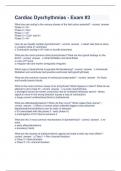
Cardiac DysrhythmWhat ions are acting in the various phases of the fast action potential? - correct answer Phase 4 = K+ Phase 0 = Na+ Phase 1 = K+ Phase 2 = Ca2+ and K+ Phase 3 = K+ How do we classify cardiac dysrhythmias? - correct answer o Heart rate (fast or slow) o Location (atria or ventricles) o Conduction (acting in AV node or bundle branches) What are the most common atrial dysrhythmias? What are the typical findings on the ECG? - correct answer o Atrial fibrillation and atrial flutter o Loss of P wave o irregular rate and rhythm (irregularly irregular) Which type of dysrhythmia is typically life-threatening? - correct answer o Ventricular fibrillation and ventricular tachycardia (ventricular tachydysrhythmias) What are the common causes of ventricular bradycardia? - correct answer AV block and bundle branch blocks What is the most common cause of an arrhythmia? What happens in them? What do we attempt to do to treat it? - correct answer o re-entry dysrhythmias o damaged tissue has slower conduction due to increased refractory period - allows signal to move in the wrong direction (cause a loop of contraction) o drugs convert unidirectional block to bidirectional What are afterdepolariz ias Question and answers rated A+ 2023/2024
Written for
- Institution
- Dysrhythmias
- Course
- Dysrhythmias
Document information
- Uploaded on
- November 6, 2023
- Number of pages
- 4
- Written in
- 2023/2024
- Type
- Exam (elaborations)
- Contains
- Questions & answers
Subjects
- cardiac dysrhythmias
-
cardiac dysrhythmias question and answers rated a

Also available in package deal