TOPIC 13: EXCRETION IN HUMANS
13.1 EXCRETORY SYSTEM
→Excretion: the removal of the waste substances of metabolic reactions (the chemical reactions that take place inside cells),
toxic materials and substances in excess of requirements.
-Humans have organs which are specialised for the removal of
certain excretory products:
→Lungs
→Kidneys
→Liver
-Carbon dioxide must be excreted as it dissolves in water easily to form an acidic solution which can lower the pH of cells
-This can reduce the activity of enzymes in the body which are essential for controlling the rate of metabolic reactions
-For this reason, too much carbon dioxide in the body is toxic
-Urea is also toxic to the body in higher concentrations and so must be excreted
→Egestion: The passing out of food that hasn’t / can’t be digested (i.e. cellulose),
as faeces, through the anus (straight through the alimentary canal).
The role of the liver
→Many digested food molecules absorbed into the blood in the small intestine
are carried to the liver for assimilation (when food molecules are converted to
other molecules that the body needs).
→These include amino acids, which are used to build proteins such as fibrinogen,
a protein found in blood plasma that is important in blood clotting
→Excess amino acids absorbed in the blood that are not needed to make
proteins cannot be stored, so they are broken down in a process called
deamination
→Deamination: the removal of the nitrogen-containing part of amino acids to
form urea.
→Enzymes in the liver split up the amino acid molecules
→The part of the molecule which contains carbon is turned into glycogen and stored
→The other part, which contains nitrogen, is turned into ammonia, which is highly toxic,
and so is immediately converted into urea, which is less toxic
→The urea dissolves in the blood and is taken to the kidney to be excreted
→A small amount is also excreted in sweat
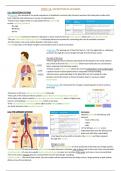
13.2 THE URINARY SYSTEM Formation
-Blood is filtered in the kidneys and
removes:
-most of the urea
-water
-salts
-In the kidneys, glucose is also
reabsorbed back into the blood (most
water and salts also reabsorbed)
-Final liquid is urine which is stored in the bladder and then released
through the urethra.
Changes in urine
-The colour and quantity of urine produced in the body can change quickly.
-Large quantities of urine are usually pale yellow in colour because it contains a lot of water and so the urea is less concentrated
-Small quantities of urine are usually darker yellow/orange in colour as it contains little water and urea is more concentrated.
-There are various reasons why the concentration of urine will change, including:
→Water intake – the more fluids drunk, the more water will be removed from the body and so a large quantity of pale yellow,
dilute urine will be produced.
13.1 EXCRETORY SYSTEM
→Excretion: the removal of the waste substances of metabolic reactions (the chemical reactions that take place inside cells),
toxic materials and substances in excess of requirements.
-Humans have organs which are specialised for the removal of
certain excretory products:
→Lungs
→Kidneys
→Liver
-Carbon dioxide must be excreted as it dissolves in water easily to form an acidic solution which can lower the pH of cells
-This can reduce the activity of enzymes in the body which are essential for controlling the rate of metabolic reactions
-For this reason, too much carbon dioxide in the body is toxic
-Urea is also toxic to the body in higher concentrations and so must be excreted
→Egestion: The passing out of food that hasn’t / can’t be digested (i.e. cellulose),
as faeces, through the anus (straight through the alimentary canal).
The role of the liver
→Many digested food molecules absorbed into the blood in the small intestine
are carried to the liver for assimilation (when food molecules are converted to
other molecules that the body needs).
→These include amino acids, which are used to build proteins such as fibrinogen,
a protein found in blood plasma that is important in blood clotting
→Excess amino acids absorbed in the blood that are not needed to make
proteins cannot be stored, so they are broken down in a process called
deamination
→Deamination: the removal of the nitrogen-containing part of amino acids to
form urea.
→Enzymes in the liver split up the amino acid molecules
→The part of the molecule which contains carbon is turned into glycogen and stored
→The other part, which contains nitrogen, is turned into ammonia, which is highly toxic,
and so is immediately converted into urea, which is less toxic
→The urea dissolves in the blood and is taken to the kidney to be excreted
→A small amount is also excreted in sweat
13.2 THE URINARY SYSTEM Formation
-Blood is filtered in the kidneys and
removes:
-most of the urea
-water
-salts
-In the kidneys, glucose is also
reabsorbed back into the blood (most
water and salts also reabsorbed)
-Final liquid is urine which is stored in the bladder and then released
through the urethra.
Changes in urine
-The colour and quantity of urine produced in the body can change quickly.
-Large quantities of urine are usually pale yellow in colour because it contains a lot of water and so the urea is less concentrated
-Small quantities of urine are usually darker yellow/orange in colour as it contains little water and urea is more concentrated.
-There are various reasons why the concentration of urine will change, including:
→Water intake – the more fluids drunk, the more water will be removed from the body and so a large quantity of pale yellow,
dilute urine will be produced.