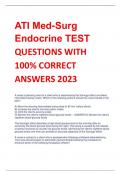
ATI Med -Surg Endocrine TEST QUESTIONS WITH 100% CORRECT ANSWERS 2023 A nurse is planning care for a client who is experiencing the Somogyi effect and takes intermittent -acting insulin. Which of the following actions should the nurse include in the plan? A) Move the evening intermediate -acting dose to 90 min. before dinner B) Increase the client's morning caloric intake C) Omit the client's evening snack D) Monitor the client's nighttime blood glucose levels - ANSWER D) Monitor the client's nighttime blood glucose levels The Somogyi effect describ es a high blood glucose level in the morning after an extremely low blood glucose level during the night. This swing is caused by the release of stress hormones to counter low glucose levels. Monitoring the client's nighttime blood glucose levels over time can provide an accurate diagnosis of the Somogyi effect. A nurse is caring for a client who is postoperative following a bilateral adrenalectomy. The nurse should expect to administer glucocorticoids following the procedure to enhance which of the follow ing therapeutic effects? A) Compensation for decreased cortisol levels B) Inhibition of glucose metabolism C) Diuretic action to maintain urine output D) Decreased susceptibility to infection - ANSWER A) Compensation for decreased cortisol levels A clie nt who has an adrenalectomy requires glucocorticoids before, during, and after surgery to prevent an adrenal crisis caused by a sudden drop in cortisol levels. The adrenal glands produce several hormones including cortisol, a glucocorticoid. Loss of glucoc orticoid secretion leads to a state of altered metabolism and an inability to deal with stressors; if untreated, this can be fatal. A nurse is caring for a client who had a thyroidectomy to treat hyperthyroidism caused by an adenoma. Which of the followin g findings should the nurse report to the provider? (Select all that apply.) A) Tachycardia and hypertension B) Respiratory rate 16/min C) Negative Chvostek's sign D) Laryngeal stridor and hoarseness E) Positive Trousseau's sign - ANSWER A) Tachycardia a nd hypertension D) Laryngeal stridor and hoarseness E) Positive Trousseau's sign Tachycardia and hypertension are unexpected findings that can indicate the occurrence of thyroid storm following removal of the thyroid gland, especially if the client was in a hyperthyroid state prior to the surgery. Thyrotoxicotic (thyroid storm) is a life -threatening condition with a sudden onset that includes tachycardia, a fever, sweating, restlessness, and tremors. Congestive heart failure and pulmonary edema can develop rapidly and lead to death. Laryngeal stridor and hoarseness are unexpected findings and can indicate swelling in the area of the surgery or damage to laryngeal nerve. This should be reported to the provider before before respiratory distress develops. A p ositive Trousseau's sign is an indication of hypocalcemia, which is a complication of thyroid removal. This occurs when the parathyroid glands are also removed and regulation of serum calcium is impaired. A nurse is monitoring a client who has syndrome of inappropriate hormone secretion (SIADH). Which of the following findings should the nurse expect? A) Polyuria B) Dehydration C) Hyponatremia D) Hyperthermia - ANSWER C) Hyponatremia A client who has SIADH will have hyponatremia caused by the excessive release of antidiuretic hormone (ADH). As a result of the excess ADH, the client retains water, which causes dilutional hyponatremia. A nurse is providing teaching to a client who has type 2 diabetes mellitus. the client states, "I eat pasta every day. I can't imagine giving it up." Which of the following responses should the nurse provide? A) "Let's discuss this with your doctor; giving up daily pasta may not be necessary." B) "Is there another favorite dish you can substitute?" C) "You don't have to giv e up pasta; just adjust the mount you eat." D) "You can use no -added -salt tomato products on your pasta." - ANSWER C) "You don't have to give up pasta; just adjust the amount you eat." The American Diabetes Association recommends individualizing carbohyd rate restriction for each client. A careful assessment of the client's usual dietary practices and modifications is an important part of teaching clients to manage this disorder. A nurse is providing teaching about exercise to a client who has type 1 diab etes mellitus. Which of the following statements should the nurse include? A) "You should exercise during peak insulin time." B) "Wear a medical alert identification tag when you exercise." C) "Exercise can decrease the effects of insulin and cause your b lood glucose levels to increase." D) "You will get the most benefit from exercise when your glucose levels are higher than normal." - ANSWER B) "Wear a medical alert identification tag when you exercise." The client should wear a medical alert identifica tion tag in the event of a hypoglycemic response because exercise can potentiate the effects of insulin and cause blood glucose levels to decrease. A nurse is monitoring a client who has Graves' disease for the development of thyroid storm. The nurse shou ld report which of the following findings to the provider? A) Constipation B) Headache C) Bradycardia D) Hypertension - ANSWER D) Hypertension A client who is experiencing a thyroid storm will have an exaggerated condition of hyperthyroidism associated with the development of a fever, hypertension, abdominal pain, and tachycardia. Graves' disease is a common cause of hyperthyroidism, which is an imbalance of metabolism caused by overproduction of thyroid hormone.
Exam (elaborations)
ATI Med-Surg Endocrine TEST QUESTIONS WITH 100% CORRECT ANSWERS 2023
ATI Med-Surg Endocrine TEST QUESTIONS WITH 100% CORRECT ANSWERS 2023 A nurse is planning care for a client who is experiencing the Somogyi effect and takes intermittent-acting insulin. Which of the following actions should the nurse include in the plan? A) Move the evening intermediate-acting dose to 90 min. before dinner B) Increase the client's morning caloric intake C) Omit the client's evening snack D) Monitor the client's nighttime blood glucose levels - ANSWER D) Monitor the client's nighttime blood glucose levels The Somogyi effect describes a high blood glucose level in the morning after an extremely low blood glucose level during the night. This swing is caused by the release of stress hormones to counter low glucose levels. Monitoring the client's nighttime blood glucose levels over time can provide an accurate diagnosis of the Somogyi effect. A nurse is caring for a client who is postoperative following a bilateral adrenalectomy. The nurse should expect to administer glucocorticoids following the procedure to enhance which of the following therapeutic effects? A) Compensation for decreased cortisol levels B) Inhibition of glucose metabolism C) Diuretic action to maintain urine output D) Decreased susceptibility to infection - ANSWER A) Compensation for decreased cortisol levels A client who has an adrenalectomy requires glucocorticoids before, during, and after surgery to prevent an adrenal crisis caused by a sudden drop in cortisol levels. The adrenal glands produce several hormones including cortisol, a glucocorticoid. Loss of glucocorticoid secretion leads to a state of altered metabolism and an inability to deal with stressors; if untreated, this can be fatal. A nurse is caring for a client who had a thyroidectomy to treat hyperthyroidism caused by an adenoma. Which of the following findings should the nurse report to the provider? (Select all that apply.) A) Tachycardia and hypertension B) Respiratory rate 16/min C) Negative Chvostek's sign D) Laryngeal stridor and hoarseness E) Positive Trousseau's sign - ANSWER A) Tachycardia and hypertension D) Laryngeal stridor and hoarseness E) Positive Trousseau's sign Tachycardia and hypertension are unexpected findings that can indicate the occurrence of thyroid storm following removal of the thyroid gland, especially if the client was in a hyperthyroid state prior to the surgery. Thyrotoxicotic (thyroid storm) is a life-threatening condition with a sudden onset that includes tachycardia, a fever, sweating, restlessness, and tremors. Congestive heart failure and pulmonary edema can develop rapidly and lead to death. Laryngeal stridor and hoarseness are unexpected findings and can indicate swelling in the area of the surgery or damage to laryngeal nerve. This should be reported to the provider before before respiratory distress develops. A positive Trousseau's sign is an indication of hypocalcemia, which is a complication of thyroid removal. This occurs when the parathyroid glands are also removed and regulation of serum calcium is impaired. A nurse is monitoring a client who has syndrome of inappropriate hormone secretion (SIADH). Which of the following findings should the nurse expect? A) Polyuria B) Dehydration C) Hyponatremia D) Hyperthermia - ANSWER C) Hyponatremi
Show more
Read less
Institution
ATI Med-Surg
Course
ATI Med-Surg
Whoops! We can’t load your doc right now. Try again or contact support.
Written for
- Institution
- ATI Med-Surg
- Course
- ATI Med-Surg
Document information
- Uploaded on
- October 12, 2023
- Number of pages
- 16
- Written in
- 2023/2024
- Type
- Exam (elaborations)
- Contains
- Questions & answers
Subjects
-
ati med surg endocrine test questions with 1
-
ati med surg endocrine test questions with 100 c
Content preview
$15.99
Get access to the full document:
100% satisfaction guarantee
Immediately available after payment
Both online and in PDF
No strings attached

Also available in package deal
Package deal
bundle for ATI Med/Surg 2 Proctored Exam Questions And Answers
3
12
2023
$ 191.38
More info