ENG2601 EXAM NOTES
BY Sherize Nortje
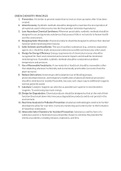
Persuasive Texts
A persuasive text aims at getting readers to agree with a point of view on a particular topic.
Persuasion even though on fact is driven by the writer’s opinion and can draw on emotion
and passion and is therefore subjective.
Persuasion wants to win and support to its side.
In persuasion once a topic is chosen, a side is taken and then presented with supporting
reasons.
Persuasive language features:
Using quotations as evidence
Using contrast
Using figurative language
Using hyperbole
Using emotional language
Using active voice
Using irony
Using conjunctions, reference words.
Using connective words to create authority
Using questions
Using lexical items of substitution and connotation.
Persuasive argument techniques:
Appeal: we can appeal to a person’s emotions (pathos, engaging readers emotionally), their
reasoning (logos: consistency and clarity of the message and whether it uses supporting
evidence) and wisdom (ethos, refers to the credibility of a writer).
Analogy: comparisons using figures of speech e.g. metaphors similes
Anaphora: a form of repetition of a word or phrase to build up emotion.
Anecdote: using a personal experience or specific details to support your point.
Case study: make reference to research or facts to support your point of view.
Repetition; repeating words, phrases or sentences for emphasis.
Rhetorical questions: asking questions to which no answer is required, so as to tease readers
to think.
Word choice: chose word that appeal to many senses; words with denotive and connotive
meaning.
Overgeneralisation: use words such as all, only and many to influence readers.
BY Sherize Nortje
Persuasive Texts
A persuasive text aims at getting readers to agree with a point of view on a particular topic.
Persuasion even though on fact is driven by the writer’s opinion and can draw on emotion
and passion and is therefore subjective.
Persuasion wants to win and support to its side.
In persuasion once a topic is chosen, a side is taken and then presented with supporting
reasons.
Persuasive language features:
Using quotations as evidence
Using contrast
Using figurative language
Using hyperbole
Using emotional language
Using active voice
Using irony
Using conjunctions, reference words.
Using connective words to create authority
Using questions
Using lexical items of substitution and connotation.
Persuasive argument techniques:
Appeal: we can appeal to a person’s emotions (pathos, engaging readers emotionally), their
reasoning (logos: consistency and clarity of the message and whether it uses supporting
evidence) and wisdom (ethos, refers to the credibility of a writer).
Analogy: comparisons using figures of speech e.g. metaphors similes
Anaphora: a form of repetition of a word or phrase to build up emotion.
Anecdote: using a personal experience or specific details to support your point.
Case study: make reference to research or facts to support your point of view.
Repetition; repeating words, phrases or sentences for emphasis.
Rhetorical questions: asking questions to which no answer is required, so as to tease readers
to think.
Word choice: chose word that appeal to many senses; words with denotive and connotive
meaning.
Overgeneralisation: use words such as all, only and many to influence readers.