PEDS- Chapter 41- The Child with an Infectious Disease, Chapter 49 Immunization NCLEX questions, Test #1 2023
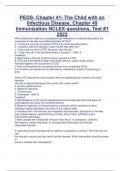
PEDS- Chapter 41- The Child with an Infectious Disease, Chapter 49 Immunization NCLEX questions, Test #1 2023 Which statement made by an adolescent girl indicates an understanding about the prevention of sexually transmitted diseases (STDs)? a. "I know the only way to prevent STDs is to not be sexually active." b. "I practice safe sex because I wash myself right after sex." c. "I won't get any kind of STD because I take the pill." d. "I only have sex if my boyfriend wears a condom." - ANS: A Feedback A Abstinence is the only foolproof way to prevent an STD. B STDs are transmitted through body fluids (semen, vaginal fluids, blood). Perineal hygiene will not prevent an STD. C Oral contraceptives do not protect women from contracting STDs. D A condom can reduce but not eliminate an individual's chance of acquiring an STD. Which STD should the nurse suspect when an adolescent girl comes to the clinic because she has a vaginal discharge that is white with a fishy smell? a. Human papillomavirus b. Bacterial vaginosis c. Trichomonas d. Chlamydia - ANS: B Feedback A Manifestations of the human papillomavirus are anogenital warts that begin as small papules and grow into clustered lesions. B Bacterial vaginosis is characterized by a profuse, white, malodorous (fishy smelling) vaginal discharge that sticks to the vaginal walls. C Infections with Trichomonas are frequently asymptomatic. Symptoms in females may include dysuria, vaginal itching, burning, and a frothy, yellowish-green, foul-smelling discharge. D Many people with chlamydial infection have few or no symptoms. Urethritis with dysuria, urinary frequency, or mucopurulent discharge may indicate chlamydial infection. A child taking oral corticosteroids for asthma is exposed to varicella. The child has not had the varicella vaccine and has never had the disease. What intervention should be taken to prevent varicella from developing? a. No intervention is needed unless varicella develops. b. Administer the varicella vaccine as soon as possible. c. The child should begin a course of oral antibiotics. d. The child should be prescribed acyclovir. - ANS: D Feedback A Children taking oral corticosteroids are immunosuppressed and are at high risk for serious complications. Intervention must be taken to prevent the disease when exposure occurs. B The varicella vaccine is a live virus vaccine and is contraindicated for an immunosuppressed child. C An antibiotic is not effective in treating varicella zoster, which is a virus. D For children receiving short-term corticosteroid treatment, acyclovir is often used in the treatment plan. A nurse is conducting a health education class for a group of school-age children. Which statement made by the nurse is correct about the body's first line of defense against infection in the innate immune system? a. Nutritional status b. Skin integrity c. Immunization status d. Proper hygiene practices - ANS: B Feedback A Nutritional status is an indicator of overall health, but it is not the first line of defense in the innate immune system. B The first lines of defense in the innate immune system are the skin and intact mucous membranes. C Immunizations provide artificial immunity or resistance to harmful diseases. D Practicing good hygiene may reduce susceptibility to disease, but it is not a component of the innate immune system. The mother of an infant with multiple anomalies tells the nurse that she had a viral infection in the beginning of her pregnancy. Which viral infection is associated with fetal anomalies? a. Measles b. Roseola c. Rubella d. Herpes simplex virus (HSV) - ANS: C Feedback A Measles is not associated with congenital defects. B Most cases of roseola occur in children 6 to 18 months old. C The rubella virus can cross the placenta and infect the fetus, causing fetal anomalies. D HSV can be transmitted to the newborn infant during vaginal delivery, causing multisystem disease. It is not transmitted transplacentally to the fetus during gestation. Continues...
Written for
- Institution
- PEDS- Chapter 41- The Child with an Infectious Di
- Course
- PEDS- Chapter 41- The Child with an Infectious Di
Document information
- Uploaded on
- October 1, 2023
- Number of pages
- 19
- Written in
- 2023/2024
- Type
- Exam (elaborations)
- Contains
- Questions & answers
Subjects
- peds chapter 41
- questions test 1 2023
-
the child with an infectious disease
-
chapter 49 immunization nclex

Also available in package deal