EMT Final Written: Multiple Choice Questions With Complete Solutions
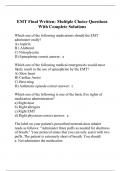
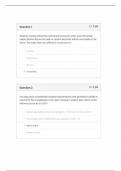
Which one of the following medications should the EMT administer orally? A) Aspirin B ) Alubterol C) Nitroglycerin D) Epinephrine correct answer: a Which one of the following medical emergencies would most likely result in the use of epinephrine by the EMT? A) Slow heart B) Cardiac Arrest C) Best sting D) Asthmatic episode correct answer: c Which one of the following is one of the basic five rights of medication administration? a) Right dose b) Right allergies c) Right EMT d) Right physician correct answer: a The label on your patient's prescribed metered-dose inhaler reads as follows: "Administer three puffs as needed for shortness of breath." Your protocol states that you can only assist with two puffs. The patient is extremely short of breath. You should: a. Not administer the medication b. Administer two puffs c. Administer three puffs d. Contact medical direction correct answer: D You suspect that a patient involved in a MVA is in shock. Which one of the following signs and symptoms of shock will be observed last? A) Decreased blood pressure B) Pale and diaphoretic skin C) Increased respirations D) Tachycardia correct answer: a The EMT shows he understands the use of an EPI pen for a treating a patient with an anaphylactic reaction when he makes which one of the following statements? A. "The EPI pen should never be used if the patient has developed the allergic reaction after eating chocolate" B. "It is critical that the EMT identify the cause of the allergic reaction prior to administering epinephrine through the auto-injector" C. "Epinephrine administered through an auto-injector can be used for all severe allergic reactions, regardless of the cause" D. "The epinephrine auto-injector is used only when a patient is stung by a bee or suffers an insect bite" correct answer: c In which situation must the EMT contact medical direction prior to administering epinephrine for someone who is having an allergic reaction? A. Her heart rate is 144 bpm. B. She is hypertensive and bradycardic. C. The patient is not prescribed an EPI pen. D. She has an allergy to chocolate or eggs. correct answer: C A panicked and anxious patient informs you that he is allergic to peanuts and think he might have accidentally eaten some. He states that the last time he ate the peanuts he had to have a tube put in his throat and almost died. When assessing the patient, which one of these signs and symptoms would show that he is having an allergic reaction? A. Hives on his chest B. Elevated blood pressure C. Increased respiratory rate D. Cool and clammy skin correct answer: A On arrival to a parking lot tailgate, you observe a crowd around a young man who is seizing. As you get equipment from the ambulance and make your way to the patient, his friends tell you that the patient has been up all night "partying" by drinking alcohol and snorting cocaine. At the patient's side, you note that he is no longer seizing, but he is unresponsive and has snoring respirations. His respirations are labored at 16 per minute and his radial pulse is strong. His skin is cool and diaphoretic. Friends also inform you that he is a diabetic and about an hour ago they heard him say that he thought his blood sugar was going low. Which of the following interventions would be included in your care? A. Insert an oral airway, provide positive pressure ventilation, and administer oral glucose. B. Open the airway, check the blood glucose level, and administer oral glucose. C. Open the airway, provide oxygen, and administer oral glucose D. Open the airway, provide, oxygen, and give rapid transport to the hospital correct answer: D You are by the side of a young female college student who is unresponsive. Friends say she is not a heavy drinker, but tonight she drank an excessive amount of alcohol. She responds to painful stimuli and has snoring respirations. Her respiratory rate is 8 breaths per minute and her radial pulse is weak. Your immediate action would be to: A. Perform the head tilt-chin lift maneuver. B. Apply oxygen via NRB. C. Determine if drugs are also involved. D. Administer positive pressure ventilation. correct answer: A A patient suffering from a kidney stone would most likely have which of the following complaints? A. "It hurts so bad!" B. "My urine is bloody!" C. "I am so nauseated!" D. "I can't stop peeing!" correct answer: B A patient has a tumor that has compressed and obstructed her left ureter. Which of the following is true? A. The kidneys are impaired in their ability to make urine. B. The bladder cannot be completely emptied. C. The patient is more prone to urinary tract infections. D. The urine will back up into the left kidney. correct answer: C A patient states that after dinner, she suddenly developed right upper quadrant abdominal pain that radiated to her shoulder. As a knowledgable EMT, you would recognize this characteristic pain pattern as most suggestive of: A. Intestinal obstruction B. Urinary tract infection C .Gall bladder inflammation D. Gastric ulcer correct answer: A A 31-year-old groundskeeper has been stung by wasps three times in his right arm and left ankle. After performing the primary and secondary assessments, what should you do next? A. Place a constricting band above the sting sites.
Written for
- Institution
-
Ivy Tech Community College
- Course
-
EMT
Document information
- Uploaded on
- September 28, 2023
- Number of pages
- 102
- Written in
- 2023/2024
- Type
- Exam (elaborations)
- Contains
- Questions & answers
Subjects
-
emt final written multiple choice questions with

Also available in package deal