CCRN EXAM Q&A
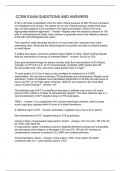
A patient has had a large anterior myocardial infarction last month and developed a ventricular aneurysm. He now has episodes of ventricular tachycardia that are not prevented or converted with antidysrhythmic agents. An implantable cardioverter-defibrillator (ICD) is implanted. Four days after surgery he develops ventricular tachycardia. The ICD has delivered three shocks but has not converted the rhythm. He is pulseless and apneic. Cardiopulmonary resuscitation is in progress. What is the priority action now? A. Administer epinephrine IV. B. Administer amiodarone. C. Defibrillate. D. Reset the ICD. - Answer- Defibrillate A 28-year-old woman is admitted to the critical care unit from the emergency department with a diagnosis of asthma. Her initial arterial blood gases on a 28% Venturi mask are as follows: pH 7.48 PaCO2 30 mm Hg HCO3 24 mEq/L PaO2 64 mm Hg Which of the following repeat arterial blood gases on 40% oxygen indicate that the patient's condition is worsening? A. pH 7.48, PaCO2 30 mm Hg, PaO2 68 mm Hg B. pH 7.46, PaCO2 32 mm Hg, PaO2 61 mm Hg C. pH 7.40, PaCO2 40 mm Hg, PaO2 62 mm Hg D. pH 7.39, PaCO2 30 mm Hg, PaO2 60 mm Hg - Answer- C. pH 7.40, PaCO2 40 mm Hg, PaO2 62 mm Hg
Written for
- Institution
- CCRN
- Course
- CCRN
Document information
- Uploaded on
- September 6, 2023
- Number of pages
- 15
- Written in
- 2023/2024
- Type
- Exam (elaborations)
- Contains
- Questions & answers
Subjects
- ccrn exam qa
-
a patient has had a large anterior myocardial infa
-
a 28 year old woman is admitted to the critical ca

Also available in package deal