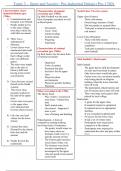
Topic 3 – Sport and Society: Pre-Industrial Britain (Pre-1780)
Characteristics of pre- Characteristics of popular Social Class: Two tier system
industrial Britain (pre recreation (pre 1780s):
1780s): Eg Mob Football was the main Upper class (Gentry):
1) Communication and form of popular recreation as well - Those with money
transport were limited: as blood sports - Owned large amounts of land
- People tended to live - Did not partake in manual labor
in the same village / - Occasional - Took part in rational recreation (e.g.,
town their whole life, - Local / rural real tennis)
with little movement - Limited coding
- Violent/unruly Lower Class (Peasants):
2) There was a - Wagering - Those with little money
widespread of - Functional - Lived in poverty in cramped poor
illiteracy: conditions
- Lower classes were Characteristics of rational - Took part in popular recreation (e.g.,
uneducated and could recreation (pre 1780s): mob football)
not read and write Eg Real tennis was the main form
- Each village would of rational recreation
play very different Mob football vs Real tennis:
games - Organised
- The rules were simple - Code of conduct Mob football:
due to the lack of - Promoted fair play - The game had no skill development
literacy skills and no rules and was brutal in nature
- Exclusive for the upper
having to have brief - Only lower class would take part
class
conversations - Games were very occasional usually
- Played in urban
environments only being played on religious
3) Class divisions existed holidays when the lower class had
- Played in specific facilities
(based on the feudal time off work
system): - Wagering
- The participants risked injuries and
- The lower-class Other recreation in the 1780s: loss of income due to time off work
peasants worked on The Haxey hood: - They were large scale games often
the land of the upper - Was violent // occurred in played by local village
class Real tennis:
rural areas // limited free
- Lower class were poor time - A game for the upper class
vs the upper class - Had Limited rules - It required expensive equipment
were educated and - It required access to appropriate
- Occasional – happened 1
lived in relative luxury facilities
time a year
- Lots of betting and drinking It was considered sophisticated
4) Life was cruel and
- No access for the lower class
violent for the lower
Pedestrianism: A form of - It had a set of written rules
classes:
competitive running/walking - Participants were expected to
5) Limited free time: involving feasts of endurance compete in a fair manner
- Dictated by the church - the gentry would wager on - Participants were expected to
holy day) and the how many miles are understand the rules and play within
seasons footman could cover in a them
specific amount of time
6) People lived in the - The Gentry gains increase
countryside social status if they win
- The footmen were hired
servants competing as
messengers by the upper
class for speed of movement
across land
,Topic 3 – Sport and Society: Industrial and Post-Industrial (1780-1900)
Industrial revolution (1780s- 1900s): Social Class: Three tier system Status of Amateur and
- The industrial change in agriculture, 3 tiers: professional:
meant that there were less farmers 1) Gentry - Upper class: amateurs
needed due to the invention of factories 2) Middle class - Lower class: professionals
- The peasant no longer needed to work 3) Working class
- The living and working conditions: - Professionals were
dirty, overcrowded, dangerous in The industrial revolution marked banned from playing in
factories a change in Britain from feudal some competitions while
- Huge mass movement of people from rural into industrial machine- high membership fees
rural to urban areas based capitalist society controlled kept clubs exclusive to
by a power urban middle class.
upper class
1) Lack of space
Characteristics of sport:
- Migration of lower classes to urban
- Regular Changing role of women in
areas to work in factories led to
- Played by each of the sport:
overcrowding and lack of space
classes - Women had less
2) Lack of leisure time - Governing bodies were in opportunity to
- Factory owners were keen to maximise place participate as forward
profits - Positions and officiating perceived as being
- Factory hours were 12hrs a day, 6 days were implemented masculine and physical
a week (Sunday considered a rest day) - The use of rules - Rational recreation
- The factory bell dictated time and work - Reputable characterized by rules
patterns - Fixtures and leagues were and skill was seen as
developed more socially acceptable
3) Lack of income / poor health by females
- Low wages led to poverty and very
little disposable income for any leisure Example 1: Lawn Tennis Example 2: Association football
pursuits - Created by the middle - Came from mob football
- Pollution and poor working conditions class in 1874 as an as he rules became
contributed to poor health amongst alternative to real tennis standardized
working class - Not very popular with - Became popular with
o Led to many people being sick schoolboys due to lack of teams, fixtures and
to participate in any activity physical challenge competitions being set up
beyond work - Provided greater - Allowed factory workers
opportunity for women to to compete for money
4) Loss of rights take part in sport
- New laws banned mob football and
blood sports
o They were stopped due to Example 3: Wenlock Olympic games
damage to property and A example of change from popular recreation to rational recreation:
excessive violence - used to promote moral, physical, and intellectual
- Blood sports were banned in public improvements
spaces due to their cruelty - Prizes awarded by upper class patrons for successful
o They used dogs and chicken to participants
fight instead of bears - Vent were both local and drew people from around the country
- Events: athletics, football, cricket etc.
5) Lack of public provision - Rules were written (indicates development of literacy)
- Cities were densely populated with ** 1st Wenlock games = 1850 By Dr William Penny Brookes
cheap, crammed houses for the ** Dr William created a society called Wenlock Olympian Society
working class, near their lace of work ** He campaigned for P to be implemented into school curriculums
- No leisure facilities were built for any ** The Wenlock games inspired Baron Pierre de Coubertin to start the
form of recreation international Olympic games
, Public Schools: Muscular Christianity: Christian values instilled
= Public schools were harsh and cruel places through sports + exercise
- Bullying was rife and pupils controlled their own Values:
schools teamwork
loyalty
Example: Rugby School fair play
- Thomas Arnold, the headmaster, 1828 sportsmanship
- Common activities that took place: guns, wagering, taking part is more important than winning
drinking/smoking, bullying.
o These were banned to create a Christian Athleticism: doing things in the correct way (healthy
gentleman society body + healthy mind)
Values:
Games were introduced to have a rationality and promote Manliness
the values of athleticism and muscular Christianity Endeavour
To do ones best
- Games with a purpose and rules (social control) Gamesmanship
- Prefects to act as role models Physical games encouraged as they required a range of
- House system it to instill pride and competition physical strengths and qualities
- Uniforms to instill order
- Referees to officiate fair play
Melting Pot: Social benefits of participation:
- Teamwork
- Oxford and Cambridge became a - Abiding by rules
melting pot of ideas and rules from - Win with honour / lose with dignity
different schools - Leadership
- The students involved games and began
to standardize rules to make games with Physical benefits of participation:
common - Development of physical fitness through hard work
- Stress relief
- Codification = creation of strict rules - Physical challenge – bravery
- ‘Varsity matches’ were created between
the universities which drove this early
codification Creation of NGBS:
- Oxford and Cambridge students with
the driving force behind the creation of - Codification of rules ensured fair competition for all
NGBs (national governing bodies) - More clubs were being formed
- National fixtures were organized
- Leagues and competitions needed officiating
Popular recreation rational recreation was - The need to maintain the amateur ideal
standardised and codified so all people could - maintenance of power for upper / middle class is to deal
play with the threat of professionalism
- Rules
- Time bound Characteristics of rational recreation (1780-1900):
- Equipment - Respectability – It was nonviolent and emphasis on fair play
- Kit - Regularly played nationally and internationally.
- Division of labour - Codification – strict and complex rules were written down by
- Officials NGBs
- Competitions - Referees were present to officiate
- Purpose built facilities - specially constructed grounds,
Led to the creation of NGBs which were pitches, and tracks (accessible to people)
created by Old public school boys so that they - Tactics and skills – Players had specific roles and trained to
could continue to play sport in an organised improve their techniques
structured way
Characteristics of pre- Characteristics of popular Social Class: Two tier system
industrial Britain (pre recreation (pre 1780s):
1780s): Eg Mob Football was the main Upper class (Gentry):
1) Communication and form of popular recreation as well - Those with money
transport were limited: as blood sports - Owned large amounts of land
- People tended to live - Did not partake in manual labor
in the same village / - Occasional - Took part in rational recreation (e.g.,
town their whole life, - Local / rural real tennis)
with little movement - Limited coding
- Violent/unruly Lower Class (Peasants):
2) There was a - Wagering - Those with little money
widespread of - Functional - Lived in poverty in cramped poor
illiteracy: conditions
- Lower classes were Characteristics of rational - Took part in popular recreation (e.g.,
uneducated and could recreation (pre 1780s): mob football)
not read and write Eg Real tennis was the main form
- Each village would of rational recreation
play very different Mob football vs Real tennis:
games - Organised
- The rules were simple - Code of conduct Mob football:
due to the lack of - Promoted fair play - The game had no skill development
literacy skills and no rules and was brutal in nature
- Exclusive for the upper
having to have brief - Only lower class would take part
class
conversations - Games were very occasional usually
- Played in urban
environments only being played on religious
3) Class divisions existed holidays when the lower class had
- Played in specific facilities
(based on the feudal time off work
system): - Wagering
- The participants risked injuries and
- The lower-class Other recreation in the 1780s: loss of income due to time off work
peasants worked on The Haxey hood: - They were large scale games often
the land of the upper - Was violent // occurred in played by local village
class Real tennis:
rural areas // limited free
- Lower class were poor time - A game for the upper class
vs the upper class - Had Limited rules - It required expensive equipment
were educated and - It required access to appropriate
- Occasional – happened 1
lived in relative luxury facilities
time a year
- Lots of betting and drinking It was considered sophisticated
4) Life was cruel and
- No access for the lower class
violent for the lower
Pedestrianism: A form of - It had a set of written rules
classes:
competitive running/walking - Participants were expected to
5) Limited free time: involving feasts of endurance compete in a fair manner
- Dictated by the church - the gentry would wager on - Participants were expected to
holy day) and the how many miles are understand the rules and play within
seasons footman could cover in a them
specific amount of time
6) People lived in the - The Gentry gains increase
countryside social status if they win
- The footmen were hired
servants competing as
messengers by the upper
class for speed of movement
across land
,Topic 3 – Sport and Society: Industrial and Post-Industrial (1780-1900)
Industrial revolution (1780s- 1900s): Social Class: Three tier system Status of Amateur and
- The industrial change in agriculture, 3 tiers: professional:
meant that there were less farmers 1) Gentry - Upper class: amateurs
needed due to the invention of factories 2) Middle class - Lower class: professionals
- The peasant no longer needed to work 3) Working class
- The living and working conditions: - Professionals were
dirty, overcrowded, dangerous in The industrial revolution marked banned from playing in
factories a change in Britain from feudal some competitions while
- Huge mass movement of people from rural into industrial machine- high membership fees
rural to urban areas based capitalist society controlled kept clubs exclusive to
by a power urban middle class.
upper class
1) Lack of space
Characteristics of sport:
- Migration of lower classes to urban
- Regular Changing role of women in
areas to work in factories led to
- Played by each of the sport:
overcrowding and lack of space
classes - Women had less
2) Lack of leisure time - Governing bodies were in opportunity to
- Factory owners were keen to maximise place participate as forward
profits - Positions and officiating perceived as being
- Factory hours were 12hrs a day, 6 days were implemented masculine and physical
a week (Sunday considered a rest day) - The use of rules - Rational recreation
- The factory bell dictated time and work - Reputable characterized by rules
patterns - Fixtures and leagues were and skill was seen as
developed more socially acceptable
3) Lack of income / poor health by females
- Low wages led to poverty and very
little disposable income for any leisure Example 1: Lawn Tennis Example 2: Association football
pursuits - Created by the middle - Came from mob football
- Pollution and poor working conditions class in 1874 as an as he rules became
contributed to poor health amongst alternative to real tennis standardized
working class - Not very popular with - Became popular with
o Led to many people being sick schoolboys due to lack of teams, fixtures and
to participate in any activity physical challenge competitions being set up
beyond work - Provided greater - Allowed factory workers
opportunity for women to to compete for money
4) Loss of rights take part in sport
- New laws banned mob football and
blood sports
o They were stopped due to Example 3: Wenlock Olympic games
damage to property and A example of change from popular recreation to rational recreation:
excessive violence - used to promote moral, physical, and intellectual
- Blood sports were banned in public improvements
spaces due to their cruelty - Prizes awarded by upper class patrons for successful
o They used dogs and chicken to participants
fight instead of bears - Vent were both local and drew people from around the country
- Events: athletics, football, cricket etc.
5) Lack of public provision - Rules were written (indicates development of literacy)
- Cities were densely populated with ** 1st Wenlock games = 1850 By Dr William Penny Brookes
cheap, crammed houses for the ** Dr William created a society called Wenlock Olympian Society
working class, near their lace of work ** He campaigned for P to be implemented into school curriculums
- No leisure facilities were built for any ** The Wenlock games inspired Baron Pierre de Coubertin to start the
form of recreation international Olympic games
, Public Schools: Muscular Christianity: Christian values instilled
= Public schools were harsh and cruel places through sports + exercise
- Bullying was rife and pupils controlled their own Values:
schools teamwork
loyalty
Example: Rugby School fair play
- Thomas Arnold, the headmaster, 1828 sportsmanship
- Common activities that took place: guns, wagering, taking part is more important than winning
drinking/smoking, bullying.
o These were banned to create a Christian Athleticism: doing things in the correct way (healthy
gentleman society body + healthy mind)
Values:
Games were introduced to have a rationality and promote Manliness
the values of athleticism and muscular Christianity Endeavour
To do ones best
- Games with a purpose and rules (social control) Gamesmanship
- Prefects to act as role models Physical games encouraged as they required a range of
- House system it to instill pride and competition physical strengths and qualities
- Uniforms to instill order
- Referees to officiate fair play
Melting Pot: Social benefits of participation:
- Teamwork
- Oxford and Cambridge became a - Abiding by rules
melting pot of ideas and rules from - Win with honour / lose with dignity
different schools - Leadership
- The students involved games and began
to standardize rules to make games with Physical benefits of participation:
common - Development of physical fitness through hard work
- Stress relief
- Codification = creation of strict rules - Physical challenge – bravery
- ‘Varsity matches’ were created between
the universities which drove this early
codification Creation of NGBS:
- Oxford and Cambridge students with
the driving force behind the creation of - Codification of rules ensured fair competition for all
NGBs (national governing bodies) - More clubs were being formed
- National fixtures were organized
- Leagues and competitions needed officiating
Popular recreation rational recreation was - The need to maintain the amateur ideal
standardised and codified so all people could - maintenance of power for upper / middle class is to deal
play with the threat of professionalism
- Rules
- Time bound Characteristics of rational recreation (1780-1900):
- Equipment - Respectability – It was nonviolent and emphasis on fair play
- Kit - Regularly played nationally and internationally.
- Division of labour - Codification – strict and complex rules were written down by
- Officials NGBs
- Competitions - Referees were present to officiate
- Purpose built facilities - specially constructed grounds,
Led to the creation of NGBs which were pitches, and tracks (accessible to people)
created by Old public school boys so that they - Tactics and skills – Players had specific roles and trained to
could continue to play sport in an organised improve their techniques
structured way