

- explain the mechanisms of reproduction that ensure the continuity of a species, by
analysing sexual and asexual methods of reproduction in a variety of organisms,
including but not limited to:
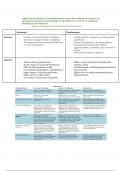
– animals: advantages of external and internal fertilisation
Advantages Disadvantages
External - It results in increased genetic variations. - A large quantity of gametes is wasted and left
- It produces a larger number of offspring. unfertilized.
- The gametes released can drift and therefore - Chances of fertilization are diminished by
it is easy to find mates environmental hazards and Predators
- Eggs and sperms, essentially, may not come in
contact
- Dessication of zygote or gametes
Internal
- Increase chance gametes meet - Harder to bring both male and female into
- greater chance of successful fertilisation intimate contact
- More protection against outside - Limited amount of offspring being produced at
environments and predators, and therefore a any given time.
higher chance of surviving until birth. - Higher risk of sexually transmitted diseases
- More selective of their mates being passed on.
- Less chance of desiccation of gametes
, – plants: asexual and sexual reproduction
Asexual reproduction in plants:
- Runners: A technique performed by grasses in which shoots of grass grow outwards away
from the main plant. Lobes on this runner grow into the ground. While these are connected to
begin with, they can survive as distinct organisms. (Eg strawberries)
- Bulbs: Bulbs form in the root of the plant which then grows buds which grow into new plants
(daffodils, tulips)
- Cuttings: branch from the parent plant is cut off, stripped from its lower leaves and planted in
the ground, where it grows roots and establishes itself as a new plant
Sexual reproduction in plants:
- Pollination: transfer of pollen from one plant to another
- Insects, birds or the wind carry pollen (the male plant sex cell) from one flower to
another. In the flower is the ovules (female plant sex cell). After fertilisation the
female parts turn into fruit and the ovules turn into the seeds
– fungi: budding, spores
Fungi is a eukaryotic organism that can be either unicellular or multicellular, such as mushrooms.
- Can produce either sexually or asexually
Asexual:
- Reproduce asexually in good conditions and spread quickly
- Budding: fungus develops a growth which then breaks off and forms a new organism
- Spores:
- essentially sex cells released directly into the surrounding environment, which spread
and grow elsewhere
- Almost all fungi reproduce asexually by producing spores
- genetically identical to the parent cell
, - Spores may be dispersed by moving water, wind, or other organisms.
Sexual:
- Reproduce sexually when conditions are bad
- Fungi uses spores to reproduce as the spores from two different fungi fuse together to form a
single new cells which will form a new fungus
- Increases genetic variations and the species chance of survival
– bacteria: binary fission (ACSBL075)
Bacteria is a prokaryotic single-celled organism such as E. Coli.
Asexual: Binary Fission
1. During this type of asexual reproduction, the single DNA molecule replicates and both copies
attach, at different points, to the cell membrane
2. As the cell begins to grow and elongate, the distance between the two DNA molecules
increases.
3. Once the bacterium just about doubles its original size, the cell membrane begins to pinch
inward at the center.
4. Finally, a cell wall forms which separates the two DNA molecules and divides the original
cell into two identical daughter cells
Advantages:
- Single bacterium is able to produce high numbers of offspring at a rapid rate
- In the right conditions some can double their population in a matter of minutes or hours
- No time wasting looking for mates
- Due to the daughter cells being identical to the original cell, they are already well suited to
that specific environment
– protists: binary fission, budding
A protist is a eukaryotic, single celled organism that does not classify as an animal, plant, fungus or
bacteria. (E.g. Plasmodium which causes malaria)
- analyse the features of fertilisation, implantation and hormonal control of pregnancy
and birth in mammals (ACSBL075)
Mammals reproduce by sexual reproduction
- Fertilisation: the fusion of egg and sperm
- The fusion of haploid gametes to form a diploid zygote, a single celled egg. The embryo
begins dividing and travels down the nucleus, undergoing 5-6 mitotic divisions. At this point,
the egg must be differentiated enough to implant into the uterine wall.
1. Ovulation: ovary releases egg
2. Egg travels from the ovary to the oviducts where fertilisation occurs (fallopian tubes)
analysing sexual and asexual methods of reproduction in a variety of organisms,
including but not limited to:
– animals: advantages of external and internal fertilisation
Advantages Disadvantages
External - It results in increased genetic variations. - A large quantity of gametes is wasted and left
- It produces a larger number of offspring. unfertilized.
- The gametes released can drift and therefore - Chances of fertilization are diminished by
it is easy to find mates environmental hazards and Predators
- Eggs and sperms, essentially, may not come in
contact
- Dessication of zygote or gametes
Internal
- Increase chance gametes meet - Harder to bring both male and female into
- greater chance of successful fertilisation intimate contact
- More protection against outside - Limited amount of offspring being produced at
environments and predators, and therefore a any given time.
higher chance of surviving until birth. - Higher risk of sexually transmitted diseases
- More selective of their mates being passed on.
- Less chance of desiccation of gametes
, – plants: asexual and sexual reproduction
Asexual reproduction in plants:
- Runners: A technique performed by grasses in which shoots of grass grow outwards away
from the main plant. Lobes on this runner grow into the ground. While these are connected to
begin with, they can survive as distinct organisms. (Eg strawberries)
- Bulbs: Bulbs form in the root of the plant which then grows buds which grow into new plants
(daffodils, tulips)
- Cuttings: branch from the parent plant is cut off, stripped from its lower leaves and planted in
the ground, where it grows roots and establishes itself as a new plant
Sexual reproduction in plants:
- Pollination: transfer of pollen from one plant to another
- Insects, birds or the wind carry pollen (the male plant sex cell) from one flower to
another. In the flower is the ovules (female plant sex cell). After fertilisation the
female parts turn into fruit and the ovules turn into the seeds
– fungi: budding, spores
Fungi is a eukaryotic organism that can be either unicellular or multicellular, such as mushrooms.
- Can produce either sexually or asexually
Asexual:
- Reproduce asexually in good conditions and spread quickly
- Budding: fungus develops a growth which then breaks off and forms a new organism
- Spores:
- essentially sex cells released directly into the surrounding environment, which spread
and grow elsewhere
- Almost all fungi reproduce asexually by producing spores
- genetically identical to the parent cell
, - Spores may be dispersed by moving water, wind, or other organisms.
Sexual:
- Reproduce sexually when conditions are bad
- Fungi uses spores to reproduce as the spores from two different fungi fuse together to form a
single new cells which will form a new fungus
- Increases genetic variations and the species chance of survival
– bacteria: binary fission (ACSBL075)
Bacteria is a prokaryotic single-celled organism such as E. Coli.
Asexual: Binary Fission
1. During this type of asexual reproduction, the single DNA molecule replicates and both copies
attach, at different points, to the cell membrane
2. As the cell begins to grow and elongate, the distance between the two DNA molecules
increases.
3. Once the bacterium just about doubles its original size, the cell membrane begins to pinch
inward at the center.
4. Finally, a cell wall forms which separates the two DNA molecules and divides the original
cell into two identical daughter cells
Advantages:
- Single bacterium is able to produce high numbers of offspring at a rapid rate
- In the right conditions some can double their population in a matter of minutes or hours
- No time wasting looking for mates
- Due to the daughter cells being identical to the original cell, they are already well suited to
that specific environment
– protists: binary fission, budding
A protist is a eukaryotic, single celled organism that does not classify as an animal, plant, fungus or
bacteria. (E.g. Plasmodium which causes malaria)
- analyse the features of fertilisation, implantation and hormonal control of pregnancy
and birth in mammals (ACSBL075)
Mammals reproduce by sexual reproduction
- Fertilisation: the fusion of egg and sperm
- The fusion of haploid gametes to form a diploid zygote, a single celled egg. The embryo
begins dividing and travels down the nucleus, undergoing 5-6 mitotic divisions. At this point,
the egg must be differentiated enough to implant into the uterine wall.
1. Ovulation: ovary releases egg
2. Egg travels from the ovary to the oviducts where fertilisation occurs (fallopian tubes)


