

PATHO NURS611 Exam 2 - Maryville | 243 Questions and Answers with complete solution
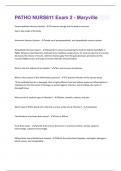
Parasympathetic Nervous System - Conserves energy and the body's resources day to day needs of the body Autonomic Nervous System - made up of parasympathetic, and sympathetic nervous system. Sympathetic Nervous System - Responds to stress by preparing the body to defend itself (fight or flight). Releases catecholamines (epinephrine), mobilizes energy stores, for instance, glucose to muscles, decreases the release of insulin, redirects blood supply from the gut( decreases peristalsis) to the muscles (flight), heart, and lungs (increases diameter of bronchioles). What is the first defense of our bodies? - Skin and mucous membranes What is the purpose of the inflammatory process? - To prevent infection of the injured tissue. *If the epithelial barrier is damaged, then a highly efficient local and system response (inflammation) is mobilized to limit the extent of damage, to protect against infection, and to initiate the repair of damaged tissue What are the 4 cardinal signs of infection? - Edema, warmth, redness, and pain Which type of White blood cell is the first to arrive at the site of infection? - Leukocytes Classifications of primary brain injury? - focal or diffuse Focal Brain Injury - Specific brain lesions that occur in a precise location. (stroke, epidural hemorrhage, subdural hemorrhage) Diffuse Brain Injury (Multi-focal injuries) - Affects the entire brain (hypoxia, meningitis, damage to blood vessels, and encephalitis)What is commonly seen after a TBI? - Swelling. *Swelling can lead to dangerous increases in intracranial pressure which can cause collateral dysfunction (the brain is in a limited space). Why does increased intracranial pressure cause diabetes insipidus? - Pressure is applied to the pituitary gland and prevents ADH from being released, thus causing polyuria. **Closely monitor urine output in these patients, output will get very high!
Document information
- Uploaded on
- August 5, 2023
- Number of pages
- 30
- Written in
- 2023/2024
- Type
- Exam (elaborations)
- Contains
- Questions & answers


