

Diabetes [DKA/HHS Final Exam Questions] A+ Rated
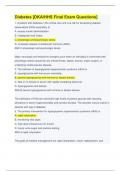
Diabetes [DKA/HHS Final Exam Questions] 1. A patient with diabetes in the critical care unit is at risk for developing diabetic ketoacidosis (DKA) secondary to A. excess insulin administration. B. inadequate food intake. C. physiologic and psychologic stress. D. increased release of antidiuretic hormone (ADH). ANS C physiologic and psychologic stress. Major neurologic and endocrine changes occur when an individual is confronted with physiologic stress caused by any critical illness, sepsis, trauma, major surgery, or underlying cardiovascular disease. 2. The hallmark of hyperglycemic hyperosmolar syndrome (HHS) is A. hyperglycemia with low serum osmolality. B. severe hyperglycemia with minimal or absent ketosis. C. little or no ketosis in serum with rapidly escalating ketonuria. D. hyperglycemia and ketosis. ANS B severe hyperglycemia with minimal or absent ketosis. The hallmarks of HHS are extremely high levels of plasma glucose with resulting elevations in serum hyperosmolality and osmotic diuresis. The disorder occurs mainly in patients with type II diabetes. 3. The primary intervention for hyperglycemic hyperosmolar syndrome (HHS) is A. rapid rehydration. B. monitoring vital signs. C. high-dose intravenous (IV) insulin. D. hourly urine sugar and acetone testing. ANS A rapid rehydration. The goals of medical management are rapid rehydration, insulin replacement, and correction of electrolyte abnormalities, specifically potassium replacement. The underlying stimulus of HHS must be discovered and treated. The same basic principles used to treat patients with diabetic ketoacidosis are used for patients with HHS. 4. Characteristics of diabetes insipidus (DI) are A. hyperglycemia and hyperosmolarity. B. hyperglycemia and peripheral edema. C. intense thirst and passage of excessively large quantities of dilute urine. D. peripheral edema and pulmonary crackles. ANS C intense thirst and passage of excessively large quantities of dilute urine
Document information
- Uploaded on
- July 6, 2023
- Number of pages
- 19
- Written in
- 2022/2023
- Type
- Exam (elaborations)
- Contains
- Questions & answers


