

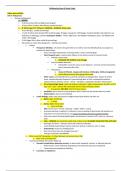
Childbearing Exam #2 Study Guide
Yellow was on EXAM
Unit 4: Postpartum
Nursing Management
o Priority
o If HR more than 100 (red flag) hemorrhaging?
o If Temp 100.4 24 hours after delivery maybe infection?
o IF 100.4 temp IN 1st 24 hours = NORMAL = HYDRATE; drink water
o If Low BP signs ..maybe hemorrhage
o If a lot of lochia check fundus FIRST could be boggy; If boggy massage it). If still boggy= (could be bladder) Ask patient to use
bathroom; if still boggy could be neutrogenic bladder –Tell Dr. Right away (full bladder will displace uterus, full bladder will
make it feel boggy)
o If clot bigger than a dime could be hemorrhage
o Electrolytes to check after giving birth – Chloride and sodium
Actions
Postpartum bleeding – all women who give birth are at risk for excessive bleeding that can progress to
postpartum hemorrhage
o Assess vital signs (hypotension and tachycardia = shock, hemorrhaging)
o Most frequent cause = uterine atony (failure of the uterine muscle to contract firmly)
Maintain uterine tone
MASSAGE THE FUNDUS; only if boggy
Prevent bladder distension
Full bladder causes the uterus to be displaced – prevents normal contraction
that is necessary after birth
Medications
Oxytocin (Pitocin), misoprostol (Cytotec), Methergine, Meth prostaglandin
Assess Blood pressure when giving these meds
o Other causes: overdistended uterus, general anesthesia, prolonged labor, history of uterine
atony, retained placental fragments, trauma during labor or birth, unrepaired lacerations,
ruptured uterus, placenta accreta – previa – abruption, coagulation disorders, hypertension
o S/S of hemorrhagic shock: rapid and shallow respirations, rapid and weak pulse, low BP is a LATE
sign, cool – pale – clammy skin, decreased urinary output, lethargy, anxiety
If suspected, GET HELP. Start IV. Ensure airway.
o Involution: uterus returns to pre-pregnancy state: should not feel fundus after two weeks
o Subinvolution: uterus is not shrinking
Lochia findings: notice color and amount/ weight perineal pads before and after use.
o Rubra: deep, red/brown
3-4 days
o Serosa: lighter brown/pink
Up to 4-10 days
o Alba: 10 and more “normal” discharge – lighter, whiter, creamy
o A perineal pad that is soaked in 15 minutes or less or pooling of blood under the buttocks are
indications of excessive blood loss and require immediate assessment and intervention
o Color and amount should gradually lighten and decrease in amount, NOT return to a previous
state
o Clots – NORMAL but should be smaller than a dime (1cm); IF LARGER THAN DIME TELL HCP ASAP
o NO bright red blood – indicates active and continuous bleeding
o Lochia finding should always improve and never go back to previous color or stage
o Endometritis- heavy foul smelling lochia
o How many times have you changed your pad ?
o Average 6 peripads/ day NORMAL
Who to see first? Remember ; 2-3 days later pain not normal sore is fine
Who is the most high-risk?
Assessment findings that require follow-up
Placental complications (placenta accreta): an abnormally implanted, invasive, or adhered placenta
o Hysterectomy can be indicated, depending on how deep the placenta is implanted
o Causes abnormal postpartum bleeding
Laceration or episiotomy
, o Prevent infection
o Maintain a level of comfort
o Avoid constipation (fiber, stool softner, fluids)
o Perineal care – topical lidocaine cream; ice pack (vasocontraction (helps with swelling and pain),
witch hazel, ice packs, peri bottle (cold water); sitz bath connected to cath and basin. Unclamp
fluid is sprayed on perineum
Hematomas- localized collection of blood into tissues of reproductive sac
o Pain is the most common symptom
o Risk factors- use of epidural, prolonged 2nd stage labor, forceps for delivery
o Provide pain relief, monitor for any abnormal bleeding, replace fluids, monitor labs (H&H)
o Teaching: need antibiotic, help with house keeping, nurse baby on side, no iontercourse til stiches
heal
Thrombophlebitis and thrombosis
o Promote early ambulation
Uterine inversion
o Occurs when fundus collapses into the uterine cavity (turns inside out)
o Primary symptoms include hemorrhage, shock and pain
Mastitis
o Flu-like symptoms
o Localized breast pain and tenderness – hot and reddened area
o Risk factors: inadequate emptying of breasts, sore – cracked, bleeding nipples, not washing hands
o Tx: bed rest, antibiotics, reduce pain and swelling, continued lactation
o Teaching: continue breast feeding, or pumping; empty breasts; use antibiotics; ice pack,
analgesics
Engorgement
o Breasts become “too full”
o Breasts can become firm, tender and hot – can appear shiny or taut
o If milk is not removed, breast milk production may reduce
o If breastfeeding, feed or pump regularly (you can store it, save it, donate it), and apply warm
water; storage
o If NOT breastfeeding, 1st pump milk out then; do not touch breasts, apply cold water or cabbage
leaves, wear a tight form-fitting bra; keep husband off breast (3-4 days)
Psychosocial complications
o Postpartum blues (“baby blues”)
Considered normal (due to fluctuating and changing hormones)
Treatment is not necessary
Symptoms should subside in less than two weeks
o Postpartum depression
Onset generally occurs in first few months after giving birth
Intense and pervasive sadness with labile mood swings
More persistent and serious than the baby blues – lasting more than 2 weeks
Treatment is similar to “regular” depression
o Postpartum psychosis
Can be related to previous depression and bipolar diagnoses
Most often occurs 2-4 weeks after birth
Can lead to suicide or infanticide
NEEDS TO BE TREATED AND RECOGNIZED
Abnormal BUBBLE-HE assessment findings – questions to ask, priority actions
Breasts
o Assessment includes nipples, breast tissue, temperature and color
o Redness? Hardening? Swelling?
o Teaching about Engorgement-
Uterus – fundal height
1st hours uterus is 1cm above umbilicus
By day 10 fundus not palpable
o Fundal assessment= 1st encourage mom to void, then massage fundus
o Fundal assessment – lie flat with knees flexed
o Involution NEEDS to occur – pre-pregnancy uterine state by 2 weeks after birth
o Tone = needs to be firm
Yellow was on EXAM
Unit 4: Postpartum
Nursing Management
o Priority
o If HR more than 100 (red flag) hemorrhaging?
o If Temp 100.4 24 hours after delivery maybe infection?
o IF 100.4 temp IN 1st 24 hours = NORMAL = HYDRATE; drink water
o If Low BP signs ..maybe hemorrhage
o If a lot of lochia check fundus FIRST could be boggy; If boggy massage it). If still boggy= (could be bladder) Ask patient to use
bathroom; if still boggy could be neutrogenic bladder –Tell Dr. Right away (full bladder will displace uterus, full bladder will
make it feel boggy)
o If clot bigger than a dime could be hemorrhage
o Electrolytes to check after giving birth – Chloride and sodium
Actions
Postpartum bleeding – all women who give birth are at risk for excessive bleeding that can progress to
postpartum hemorrhage
o Assess vital signs (hypotension and tachycardia = shock, hemorrhaging)
o Most frequent cause = uterine atony (failure of the uterine muscle to contract firmly)
Maintain uterine tone
MASSAGE THE FUNDUS; only if boggy
Prevent bladder distension
Full bladder causes the uterus to be displaced – prevents normal contraction
that is necessary after birth
Medications
Oxytocin (Pitocin), misoprostol (Cytotec), Methergine, Meth prostaglandin
Assess Blood pressure when giving these meds
o Other causes: overdistended uterus, general anesthesia, prolonged labor, history of uterine
atony, retained placental fragments, trauma during labor or birth, unrepaired lacerations,
ruptured uterus, placenta accreta – previa – abruption, coagulation disorders, hypertension
o S/S of hemorrhagic shock: rapid and shallow respirations, rapid and weak pulse, low BP is a LATE
sign, cool – pale – clammy skin, decreased urinary output, lethargy, anxiety
If suspected, GET HELP. Start IV. Ensure airway.
o Involution: uterus returns to pre-pregnancy state: should not feel fundus after two weeks
o Subinvolution: uterus is not shrinking
Lochia findings: notice color and amount/ weight perineal pads before and after use.
o Rubra: deep, red/brown
3-4 days
o Serosa: lighter brown/pink
Up to 4-10 days
o Alba: 10 and more “normal” discharge – lighter, whiter, creamy
o A perineal pad that is soaked in 15 minutes or less or pooling of blood under the buttocks are
indications of excessive blood loss and require immediate assessment and intervention
o Color and amount should gradually lighten and decrease in amount, NOT return to a previous
state
o Clots – NORMAL but should be smaller than a dime (1cm); IF LARGER THAN DIME TELL HCP ASAP
o NO bright red blood – indicates active and continuous bleeding
o Lochia finding should always improve and never go back to previous color or stage
o Endometritis- heavy foul smelling lochia
o How many times have you changed your pad ?
o Average 6 peripads/ day NORMAL
Who to see first? Remember ; 2-3 days later pain not normal sore is fine
Who is the most high-risk?
Assessment findings that require follow-up
Placental complications (placenta accreta): an abnormally implanted, invasive, or adhered placenta
o Hysterectomy can be indicated, depending on how deep the placenta is implanted
o Causes abnormal postpartum bleeding
Laceration or episiotomy
, o Prevent infection
o Maintain a level of comfort
o Avoid constipation (fiber, stool softner, fluids)
o Perineal care – topical lidocaine cream; ice pack (vasocontraction (helps with swelling and pain),
witch hazel, ice packs, peri bottle (cold water); sitz bath connected to cath and basin. Unclamp
fluid is sprayed on perineum
Hematomas- localized collection of blood into tissues of reproductive sac
o Pain is the most common symptom
o Risk factors- use of epidural, prolonged 2nd stage labor, forceps for delivery
o Provide pain relief, monitor for any abnormal bleeding, replace fluids, monitor labs (H&H)
o Teaching: need antibiotic, help with house keeping, nurse baby on side, no iontercourse til stiches
heal
Thrombophlebitis and thrombosis
o Promote early ambulation
Uterine inversion
o Occurs when fundus collapses into the uterine cavity (turns inside out)
o Primary symptoms include hemorrhage, shock and pain
Mastitis
o Flu-like symptoms
o Localized breast pain and tenderness – hot and reddened area
o Risk factors: inadequate emptying of breasts, sore – cracked, bleeding nipples, not washing hands
o Tx: bed rest, antibiotics, reduce pain and swelling, continued lactation
o Teaching: continue breast feeding, or pumping; empty breasts; use antibiotics; ice pack,
analgesics
Engorgement
o Breasts become “too full”
o Breasts can become firm, tender and hot – can appear shiny or taut
o If milk is not removed, breast milk production may reduce
o If breastfeeding, feed or pump regularly (you can store it, save it, donate it), and apply warm
water; storage
o If NOT breastfeeding, 1st pump milk out then; do not touch breasts, apply cold water or cabbage
leaves, wear a tight form-fitting bra; keep husband off breast (3-4 days)
Psychosocial complications
o Postpartum blues (“baby blues”)
Considered normal (due to fluctuating and changing hormones)
Treatment is not necessary
Symptoms should subside in less than two weeks
o Postpartum depression
Onset generally occurs in first few months after giving birth
Intense and pervasive sadness with labile mood swings
More persistent and serious than the baby blues – lasting more than 2 weeks
Treatment is similar to “regular” depression
o Postpartum psychosis
Can be related to previous depression and bipolar diagnoses
Most often occurs 2-4 weeks after birth
Can lead to suicide or infanticide
NEEDS TO BE TREATED AND RECOGNIZED
Abnormal BUBBLE-HE assessment findings – questions to ask, priority actions
Breasts
o Assessment includes nipples, breast tissue, temperature and color
o Redness? Hardening? Swelling?
o Teaching about Engorgement-
Uterus – fundal height
1st hours uterus is 1cm above umbilicus
By day 10 fundus not palpable
o Fundal assessment= 1st encourage mom to void, then massage fundus
o Fundal assessment – lie flat with knees flexed
o Involution NEEDS to occur – pre-pregnancy uterine state by 2 weeks after birth
o Tone = needs to be firm



