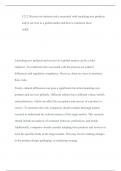
Chapter 34 - Pediatric Emergencies Final Exam Questions And Answers The EMT should be MOST concerned when a child presents with fever and: A. chills. B. a rash. C. ear pain. D. a headache. - ANSWER B. a rash. 2. Padding underneath the torso when immobilizing an injured child is generally not necessary if he or s he is: A. older than 8 to 10 years. B. complaining of severe back pain. C. immobilized on a long backboard. D. experiencing cardiopulmonary arrest. - ANSWER A. older than 8 to 10 years. 3. A high -pitched inspiratory sound that indicates a partial upper airway obstruction is called: A. stridor. B. rhonchi. C. grunting. D. wheezing. - ANSWER A. stridor. 4. After squeezing the end of a child's finger or toe for a few seconds, blood s hould return to the area within: A. 2 seconds. B. 3 seconds. C. 4 seconds. D. 5 seconds. - ANSWER A. 2 seconds. 5. After determining that an infant or child has strong central pulses, you should: A. assume the child is hypertensive. B. not rule out compensated shock. C. conclude that the child is stable. D. assess his or her respiratory effort. - ANSWER B. not rule out compensated shock. 6. Which of the following is NOT a known risk factor of SIDS? A. mother younger than 20 years B. low birth weight C. putting a baby to sleep on his or her back D. mother smoked during pregnancy - ANSWER C. putting a baby to sleep on his or her back 7. A child who has no recent history of illness suddenly appears cyanotic and cannot speak after playing with a small toy. You should: A. perform abdominal thrusts. B. visualize the child's airway. C. perform a blind finger sweep. D. give oxygen and transport at once. - ANSWER A. perform abdominal thrusts. 8. In most children, febrile seizures are characterized by: A. a blank stare, a duration of between 15 and 30 minutes, and a prolonged postictal phase. B. unresponsiveness, complete body relaxation, a fever greater than 105°F, and a short postictal phase. C. generalized tonic -clonic activity, a duration of less than 15 minutes, and a short or absent posticta l phase. D. isolated tonic -clonic activity, a duration of greater than 15 minutes, and a short postictal phase. - ANSWER C. generalized tonic -clonic activity, a duration of less than 15 minutes, and a short or absent postictal phase. 9. In contrast to adults, deterioration to cardiac arrest in infants and children is usually associated with: A. irritability of the left ventricle. B. a sudden ventricular arrhythmia. C. severe hypoxia and bradycardia. D. acute hypoxia and tachycardia. - ANSWER C. severe hypoxia and bradycardia. 10. A 6-year-old male presents with acute respiratory distress. His mother states that she saw him put a small toy into his mouth shortly before the episode began. The child is conscious, obviously frightened, and is coughing forcefully. You should: A. carefully look into his mouth and remove the object if you see it. B. encourage him to cough, give oxygen as tolerated, and transport. C.
Exam (elaborations)
Chapter 34 - Pediatric Emergencies Final Exam Questions And Answers
Rating
Sold
-
Pages
23
Grade
A+
Uploaded on
29-05-2023
Written in
2022/2023
Chapter 34 - Pediatric Emergencies Final Exam Questions And Answers The EMT should be MOST concerned when a child presents with fever and: A. chills. B. a rash. C. ear pain. D. a headache. - ANSWER B. a rash. 2. Padding underneath the torso when immobilizing an injured child is generally not necessary if he or she is: A. older than 8 to 10 years. B. complaining of severe back pain. C. immobilized on a long backboard. D. experiencing cardiopulmonary arrest. - ANSWER A. older than 8 to 10 years. 3. A high-pitched inspiratory sound that indicates a partial upper airway obstruction is called: A. stridor. B. rhonchi. C. grunting. D. wheezing. - ANSWER A. stridor. 4. After squeezing the end of a child's finger or toe for a few seconds, blood should return to the area within: A. 2 seconds. B. 3 seconds. C. 4 seconds. D. 5 seconds. - ANSWER A. 2 seconds. 5. After determining that an infant or child has strong central pulses, you should: A. assume the child is hypertensive. B. not rule out compensated shock. C. conclude that the child is stable. D. assess his or her respiratory effort. - ANSWER B. not rule out compensated shock. 6. Which of the following is NOT a known risk factor of SIDS? A. mother younger than 20 years B. low birth weight C. putting a baby to sleep on his or her back D. mother smoked during pregnancy - ANSWER C. putting a baby to sleep on his or her back 7. A child who has no recent history of illness suddenly appears cyanotic and cannot speak after playing with a small toy. You should: A. perform abdominal thrusts. B.
Show more
Read less
Institution
Pediatric Emergencies
Course
Pediatric Emergencies
Whoops! We can’t load your doc right now. Try again or contact support.
Written for
- Institution
- Pediatric Emergencies
- Course
- Pediatric Emergencies
Document information
- Uploaded on
- May 29, 2023
- Number of pages
- 23
- Written in
- 2022/2023
- Type
- Exam (elaborations)
- Contains
- Questions & answers
Subjects
- chapter 34 pediatric
-
chapter 34 pediatric emergencies
-
chapter 34 pediatric emergencies final exam questions and answers
Content preview
$13.29
Get access to the full document:
100% satisfaction guarantee
Immediately available after payment
Both online and in PDF
No strings attached