Certified Dialysis Nurse Review and Sample Questions With Correct Answers
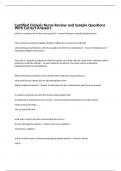
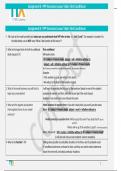
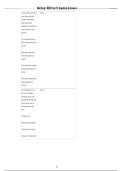
which is considered to be the renal corpuscle? - Answer Bowman's capsule and glomerulus Most selective serotonin reuptake inhibitors (SSRIs) do not need to be adjusted with declining renal function, with the exception of which two medications? - Answer Venlafaxine and Mirtazapine (Effexor & Remeron) The nurse is caring for a patient for which lab results come back with the"classic triad" indicated. Which syndrome could this indicate? - Answer Nephrotic Syndrome -the classic triad is proteinuria, hypoalbuminemia & hyperlipidemia When performing evaluations of the patient with nephrotic range proteinuria, what would be the reason that an ultrasonography of the kidneys might be ordered? - Answer To determine the size of the kidneys and if two are present It would be important to teach the chronic kidney patient that the following is important for them to do? - Answer Keep their blood pressure under control. Reduce their salt intake. Get an annual flu shot. what plays a major role with concentrating the urine as it moves through the tubules? - Answer Vasa recta capillaries Peritubular capillaries which could be used as calcium-containing phosphate binders? - Answer Caltrate OsCal Tums Which is a potent phosphate binder that does not contain calcium, aluminum, or magnesium? - Answer Sevelamer It is very common for an end stage renal disease (ESRD) patient with human immunodeficiency virus (HIV) to be co-infected with which of the following? a Hepatitis C b Hepatitis B c Hepatitis A d both a and b - Answer d both a and b The intervention of diuretics for the patient with nephrotic range proteinuria would be used for which of the following? a The patient with nephrotic syndrome bThe patient with edema. c The patient with nephrotic range proteinuria. d None of the above - Answer b the pt with edema All of the following occupational environmental toxins can potentially affect the patient with chronic kidney disease, except? a Silica b Heroin c Lead d Organic compounds - Answer b heroin Patients with chronic kidney disease (CKD) have the highest risk for cardiovascular disease. What is the most common cardiovascular complication of patients with CKD? a Pericarditis b Coronary artery calcification c Hypertension d Pericardial tamponade - Answer c htn The progression of diabetic nephropathy can be delayed by the use of what type of medication? a HMG CoA reductase inhibitors b ACE inhibitor medication c Anticoagulants d SSRI - Answer b ACE inhibitor medication Which of the following are tubular portions of the nephron? a Loop of Henle b Bowman's capsule c Proximal tubule d All of the above - Answer d all of the above Viral infections are considered to be the source of several kinds of glomerular diseases. Which one of these might be caused by the human immunodeficiency virus? a MGN b MPGN c FSGS d HBV - Answer c FSGS Which of the following would be included as potential causes for acute renal failure? a Kidney infection b A crushing injury c An over-exposure to such things as certain antibiotics. d All of the above - Answer d All of the above Which of the following would be the most correct statement about how the liver assist the kidneys to convert substances so they can be excreted by the kidneys? a The liver works to convert toxic substances to water-soluble substances that can then be excreted by the kidneys. b The liver does not help the kidneys. c The liver works to convert sodium in the body. d None of the above - Answer a The liver works to convert toxic substances to water-soluble substances that can then be excreted by the kidneys. Which of the following is considered to be the most significant side effect of recombinant human erythropoietin (rHuEPO)? a Nausea/vomiting b Headaches c Hypertension d Edema - Answer c Hypertension The nurse is caring for a 68 year old male patient which is 30 minutes into his hemodialysis treatment. The patients complains of chest pain and nausea. When assessing the patient, he is diaphoretic, short of breath, and starts vomiting. Which of the following interventions might be considered appropriate for the patient at this time? a Administer oxygen as indicated. b Administer nitroglycerin or other medications as per facility protocol. c Decrease the UF rate temporarily. d All of the above - Answer d All of the above Bacteria which causes infection that is acquired from dialysis equipment would be considered which of the following? a Endogenous b Exogenous c Entericgenous d None of the above - Answer b Exogenous one of the interventions that can help to prevent fever and chills is the careful disinfection of equipment. The bicarbonate powder that is used in order to generate the sodium bicarbonate dialysate concentrate can be contaminated by which of the following? a Pyrogens b Molds c Bacteria d All of the above - Answer d All of the above All of the following are considered to be common sterilization methods for the hemodialyzers except? a Ethylene oxide b Steam c Gamma irradiation d Pressure - Answer d Pressure Besides electrolyte and pH changes, which of the following etiologies could potentially be responsible for a patient developing dysrhythmias? a The stopping of anti-arrhythmic medications with dialysis. b Infection c Acetate dialysate d None of the above - Answer a The stopping of anti-arrhythmic medications with dialysis. Which of the following interventions could be correct for the treatment of neutropenia in the hemodialysis patient? a Administer oxygen. b Draw all CBC's prior to dialysis. c Administer antiarrhythmias. d None of the above - Answer b Draw all CBC's prior to dialysis. What stage of chronic kidney disease does a patient reach before being referred to a nephrologist? Stage 1 Stage 2 Stage 3 Stage 4 - Answer Stage 3 Which of the following terms would be correct for the pressure that a liquid exerts against the wall of its container? Removal Ultrafiltration Hydrostatic pressure None of the above - Answer Hydrostatic pressure The term for an infection of the lower urinary tract would be which of the following? Pyelonephritis Toxicity Cystitis None of the above - Answer Cystitis Which of the following would be considered to be an appropriate intervention for the hemodialysis patient to help prevent intradialytic complications? The use of acetate dialysate. The use of bicarbonate dialysate. The use of glucose dialysate. The use of potassium dialysate. - Answer The use of bicarbonate dialysate If the hemodialysis patient has a history of seizures, which of the following interventions might be correct for the patient during dialysis? a. Hold the patient's routine anticonvulsant medication if having hemodialysis. b. Have the patient inform the nurse if they feel they are about to have a seizure. c. The administration of an additional dose of anticonvulsant during hemodialysis. d. None of the above - Answer c. The administration of an additional dose of anticonvulsant during hemodialysis. Which of the following might be considered a clinical action for a patient that has reached Stage 2 kidney damage? Preparation for kidney replacement therapy. Treatment of comorbid conditions. Estimating progression None of the above - Answer Estimating progression Preparation for kidney replacement therapy would be for stage 4. Treatment of comorbid conditions would be stage 1. Of the following, which is considered to be a major diagnostic tool for evaluating the patient with renal abnormalities? Urinalysis CT Scan Serum electrolytes All of the above - Answer Urinalysis Which of the following are considered calcium-based phosphate binders? Calcium citrate Calcium carbonate Calcium acetate All of the above - Answer All of the above The physician wants the ESRD (end-stage renal disease) patient to take calcium carbonate phosphate binders. Which of the following of these should the nurse have knowledge of? Oscal 500 Citracal Amphojel None of the above - Answer Oscal 500 other calcium carbonate phosphate binders would include: Oscal 500 Chooz gum Nephro-Calci Tums Ultra Calci-Mix Calcichew Tums EX Caltrate 600 Which of the following principles of postoperative peritoneal catheter exit-site care would not be correct? a The catheter should not be immobilized. b Only trained staff should changes the dressings. c Only sterile water should be used to rinse the exit-site. d Aseptic techniques should be used when changing dressing site. - Answer a The catheter should not be immobilized. Which of the following factors might be related to abdominal pain with peritoneal dialysis? a Dialysis technique b Catheter position c Both A and B d None of the above - Answer c Both A and B Which of the following medications is not eliminated with peritoneal dialysis? Metformin Manitol Sulfisoxazole Salicylate - Answer Metformin Metformin is eliminated with hemodialysis, but not peritoneal dialysis. Medications that are eliminated by peritoneal dialysis are: Manitol Sulfisoxazole Salicylate Phenobarbital Lithium Imipenem Fluconazole Enalapril Cefipime Ceftazidime Aminoglycoside antibiotics With a child that is on peritoneal dialysis and is still in diapers, which of the following would be strongly recommended? A very short tunnel with the exit-site at least a inch from the diaper area. A long subcutaneous tunnel with the exit-site well away from the diaper area. Both A and B None of the above - Answer A long subcutaneous tunnel with the exit-site well away from the diaper area. Which of the following can result in post catheter implantation incisional leaks when dialysis is initiated? Malnutrition Friable tissues Diabetes mellitus All of the above - Answer All of the above
Written for
- Institution
- Dialysis
- Course
- Dialysis
Document information
- Uploaded on
- May 28, 2023
- Number of pages
- 43
- Written in
- 2022/2023
- Type
- Exam (elaborations)
- Contains
- Questions & answers
Subjects
- dialysis stuvia
-
certified dialysis nurse review and sample stuvia
-
certified dialysis nurse review and sample questions with correct answers
-
which is considered to be the renal corpuscle bowmans c

Also available in package deal