Module 06 Case Study:Articulations and Nerve Tissue
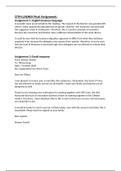
Part I—"Harry" Questions 1. What condition or conditions (disease/diseases) could Harry have as described in this case? Which one would be your primary diagnosis? In a very general explanation, describe this condition/disease. (1 point) My best guess is that Harry has ALS. ALS or amyotrophic lateral sclerosis, is a progressive neurodegenerative disease that affects nerve cells in the brain and the spinal cord. Muscles do not get enough nourishment and begin to atrophy. 2. Which patient findings/observations lead you to your primary diagnosis? How do they relate to the primary diagnosis? (1 point) Harrys muscle weakness in his arms, tripping, slurred speech, and positive Babinski reflex indicates motor damage to both upper and lower motor neurons. Also Harrys glutamate is high, which is common in ALS. 3. How does this condition (pathophysiology) affect the body and lead to the observable symptoms and dysfunction? Be specific in the areas of the CNS it affects. (1 point) In ALS, the nerve cells that control the movement of your muscles gradually die, so your muscles progressively weaken and begin to waste away. Gene mutation can cause this horrible disease, as well as a chemical imbalance of glutamate around nerve cells in the spinal fluid which can be toxic to nerves. Abnormal immune response can al
Written for
- Institution
-
Rasmussen College
- Course
-
NURSING MA278
Document information
- Uploaded on
- May 20, 2023
- Number of pages
- 4
- Written in
- 2022/2023
- Type
- Case
- Professor(s)
- Articulations and nerve tissue
- Grade
- A+
Subjects
-
articulations and nerve tissue