

100% satisfaction guarantee Immediately available after payment Both online and in PDF No strings attached 4.6 TrustPilot
logo-home
Exam (elaborations)

Test Bank for Current Psychotherapies 10th Edition Wedding

Rating
-
Sold
-
Pages
297
Grade
A+
Uploaded on
01-05-2023
Written in
2024/2025

The Test Bank for Current Psychotherapies, 10th Edition by Raymond J. Wedding is a comprehensive study guide designed to support students and professionals studying psychotherapy theories and techniques. This test bank contains a wide array of practice questions that align with the content of the 10th edition of Current Psychotherapies, a well-regarded textbook that provides an in-depth overview of modern psychotherapeutic practices, theoretical approaches, and therapeutic techniques. This resource is ideal for those preparing for exams or looking to reinforce their understanding of psychotherapy concepts. Key Features of the Test Bank Comprehensive Coverage of Psychotherapy Theories and Techniques: The test bank covers all of the major therapeutic modalities discussed in Current Psychotherapies, including: Cognitive-Behavioral Therapy (CBT) Psychodynamic Therapy Humanistic Therapy Family Therapy Group Therapy Interpersonal Therapy Existential Therapy Integrative and Eclectic Approaches The questions focus on key theoretical concepts, therapeutic techniques, and applications for each approach. Multiple-Choice Questions (MCQs): The test bank includes multiple-choice questions designed to test students' knowledge of the different psychotherapy models, therapeutic processes, and clinical applications discussed in the textbook. Topics might include: Core concepts such as the role of the therapist, treatment goals, and client-therapist relationship. Techniques such as cognitive restructuring, free association, and role-playing. Practical applications like case studies, patient management, and therapeutic interventions in real-world settings. Case Studies and Scenario-Based Questions: The test bank provides case study questions where students analyze and apply psychotherapy techniques to real-life patient scenarios. These questions test the ability to think critically about how specific approaches and techniques can be used in clinical settings to address different psychological issues. True/False and Matching Questions: In addition to multiple-choice questions, the test bank includes true/false questions that focus on factual knowledge of psychotherapy approaches. Matching questions may require students to match specific therapeutic techniques with their respective therapeutic models. Answer Key with Detailed Rationales: Each question comes with an answer key and detailed explanations, offering clarity on why certain answers are correct. The rationales provide students with an understanding of the underlying principles of each therapeutic approach and how they are applied in practice. Sample Practice Questions from the Test Bank Question 1: Cognitive-Behavioral Therapy (CBT) Which of the following is a primary focus of Cognitive-Behavioral Therapy (CBT)? A) Exploring unconscious conflicts B) Changing negative thought patterns C) Enhancing emotional awareness D) Exploring childhood experiences Answer: B) Changing negative thought patterns Rationale: CBT focuses on identifying and changing negative thought patterns that influence emotions and behaviors. This therapy emphasizes the connection between thoughts, feelings, and behaviors. Question 2: Humanistic Therapy In humanistic therapy, the concept of unconditional positive regard refers to: A) The therapist’s ability to challenge the client’s negative behaviors B) The therapist’s acceptance of the client without judgment C) The therapist’s active role in confronting the client’s defense mechanisms D) The client’s ability to reflect on their own behavior Answer: B) The therapist’s acceptance of the client without judgment Rationale: Unconditional positive regard is a key concept in humanistic therapy, particularly in client-centered therapy. It refers to the therapist's nonjudgmental acceptance and support of the client, regardless of their actions or behaviors. Question 3: Psychodynamic Therapy Which of the following is a key feature of psychodynamic therapy? A) Use of relaxation techniques to reduce anxiety B) Exploration of unconscious thoughts and early life experiences C) Cognitive restructuring of thought patterns D) Emphasis on the present moment and mindfulness Answer: B) Exploration of unconscious thoughts and early life experiences Rationale: Psychodynamic therapy focuses on understanding the unconscious mind and how past experiences, especially early life experiences, influence current behavior. It often involves techniques like free association and dream analysis. Question 4: Case Study (Scenario-Based Question) A 35-year-old woman presents with symptoms of anxiety, including excessive worrying and restlessness. She reports a history of difficult childhood experiences, including an emotionally distant mother. Based on this information, which therapeutic approach would likely be most appropriate? A) Cognitive-Behavioral Therapy (CBT) B) Gestalt Therapy C) Psychodynamic Therapy D) Narrative Therapy Answer: C) Psychodynamic Therapy Rationale: Given the history of early childhood experiences and the emotional issues, psychodynamic therapy, which explores unconscious thoughts and early relationships, would be appropriate for understanding how past experiences influence the client’s current anxiety symptoms. Question 5: Group Therapy Which of the following is an advantage of group therapy? A) The therapist can give individualized attention to each client. B) It allows for deep emotional exploration without the presence of others. C) Clients can benefit from hearing others’ experiences and sharing their own. D) Group therapy guarantees faster treatment outcomes. Answer: C) Clients can benefit from hearing others’ experiences and sharing their own. Rationale: One of the advantages of group therapy is the shared learning and emotional support that clients receive from hearing others’ experiences and from being able to share their own. This helps foster a sense of connection and community. Why Students Should Use This Test Bank Comprehensive Review: The test bank offers a thorough review of key concepts from Current Psychotherapies, 10th Edition, covering all major psychotherapeutic approaches, techniques, and clinical applications. This makes it an excellent tool for mastering the material. Real-World Application: Scenario-based questions provide practical, real-world situations that help students develop critical thinking skills and apply psychotherapy concepts in clinical settings. Variety of Question Types: The test bank includes a mix of question types (multiple-choice, true/false, matching, case studies) that help reinforce learning from different angles and ensure students are well-prepared for exams. Answer Explanations: Detailed answer rationales help students understand the reasoning behind the correct answers, which deepens their understanding of psychotherapeutic principles. Efficient Exam Preparation: By regularly practicing with this test bank, students can improve their test-taking skills, recall important concepts, and increase their confidence for exams and practical applications in clinical settings. How to Use the Test Bank Effectively Study Each Therapy Approach: After studying each chapter in Current Psychotherapies, use the corresponding questions in the test bank to test your understanding of that particular therapeutic approach. Focus on the Rationale: Pay close attention to the rationales provided for each answer. Understanding the reasoning behind the correct answers helps reinforce key psychotherapy concepts. Practice Regularly: Make studying consistent by practicing regularly with the test bank. This will help solidify your knowledge and improve retention. Simulate Exam Conditions: Practice under timed conditions to simulate actual exam scenarios. This will help improve your test-taking speed and accuracy. Conclusion The Test Bank for Current Psychotherapies, 10th Edition by Raymond J. Wedding is an invaluable resource for students and professionals studying psychotherapy. With comprehensive coverage of therapeutic models, detailed answer explanations, and various question types, this test bank is designed to help students build a deep understanding of psychotherapy principles and techniques. By using this resource, students will be well-prepared for exams and better equipped to apply psychotherapeutic approaches in real-world clinical settings.

Show more Read less
Institution
Registered Nurse Educator
Course
Registered Nurse Educator

Content preview

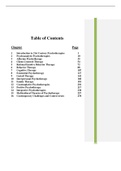
Table of Contents

Chapter Page
1 Introduction to 21st Century Psychotherapies 1
2 Psychoanalytic Psychotherapies 10
3 Adlerian Psychotherapy 35
4 Client-Centered Therapy 54
5 Rational Emotive Behavior Therapy 72
6 Behavior Therapy 88
7 Cognitive Therapy 107
8 Existential Psychotherapy 127
9 Gestalt Therapy 142
10 Interpersonal Psychotherapy 160
11 Family Therapy 181
12 Contemplative Psychotherapies 201
13 Positive Psychotherapy 217
14 Integrative Psychotherapies 238
15 Multicultural Theories of Psychotherapy 257
16 Contemporary Challenges and Controversies 278

,
,
, Chapter 1
Introduction to 21st-Century Psychotherapies
Authors: Frank Dumont
Key Points and Terms
Evolution of the Science and Profession of Psychology

Early attempts to address mental disorders include:
► Pre-Christian, temple-like asklepeia and other retreat centers, which used religio-
philosophical lectures, to assuage if not remedy psychological disorders.
► Hellenist physicians understood that the brain was not only the seat of knowledge and
learning but also the source of depression, delirium, and madness.
► Hippocrates insisted that his students address illnesses by natural means.

Psychotherapy in its present guise did not clearly emerge until the 18th century. Below are some
key players:
► Scientific study of the unconscious attributed to renowned polymath Gottfried Wilhelm
Leibniz:
▪ Investigated subliminal perceptions
▪ Coined the term “dynamic”
► Johann Friedrich Herbart:
▪ Attempted to apply mathematics to dynamics
▪ Suggested ideas struggle with one another to access consciousness
► Franz Anton Mesmer and his disciple the Marquis de Puysegur are influential in current
understanding of:
▪ hypnotherapy
▪ rapport between therapist and patient
▪ influence of the unconscious
▪ importance of the qualities of the therapist
▪ spontaneous remission of disorders
▪ hypnotic somnambulism
▪ selective function of unconscious memory
▪ role of patient confidence
▪ common factors across effective treatments
► Arthur Schopenhauer
▪ Work strongly influenced Freud
► Gustav T. Fechner
▪ Made distinction between waking and sleeping states
▪ Attempted to measure the intensity of psychic stimulation
► Herman von Helmholtz
▪ Discovered the phenomenon of unconscious inference
► Emil Kraepelin
▪ Attention to classifying diseases
► Carl Gustav Carus

Introduction to 21st-Century Psychotherapies 1

Written for

Institution
Registered Nurse Educator
Course
Registered Nurse Educator

Document information

Uploaded on
May 1, 2023
Number of pages
297
Written in
2024/2025
Type
Exam (elaborations)
Contains
Questions & answers

Subjects

  • latest revised update

Get to know the seller

Seller avatar
Reputation scores are based on the amount of documents a seller has sold for a fee and the reviews they have received for those documents. There are three levels: Bronze, Silver and Gold. The better the reputation, the more your can rely on the quality of the sellers work.
examsolutions6 George Mason University
View profile
Follow You need to be logged in order to follow users or courses
Sold
12
Member since
3 year
Number of followers
10
Documents
567
Last sold
4 months ago
EXAM CORNER SHOP

A STOP SHOP CONTAINING READILY AVAILABLE EXAMINATION MATERIALS TO HELP YOU PASS EASILY WELL SUMMARIZED,ORGANIZED TEST BANKS

3.8

6 reviews

5
3
4
0
3
2
2
1
1
0

Recently viewed by you

Why students choose Stuvia

Created by fellow students, verified by reviews

Quality you can trust: written by students who passed their tests and reviewed by others who've used these notes.

Didn't get what you expected? Choose another document

No worries! You can instantly pick a different document that better fits what you're looking for.

Pay as you like, start learning right away

No subscription, no commitments. Pay the way you're used to via credit card and download your PDF document instantly.

Student with book image

“Bought, downloaded, and aced it. It really can be that simple.”

Alisha Student

Frequently asked questions


