NR-602-Midterm-Study-Guide (Latest, )
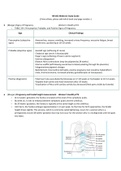
[Morgan] Signs of Pregnancy Women’s Health p774 ○ TABLE 29-1 Presumptive, Probable, and Positive Signs of Pregnancy Sign Clinical Findings Presumptive (subjective signs) Amenorrhea, nausea, vomiting, increased urinary frequency, excessive fatigue, breast tenderness, quickening at 18–20 weeks Probable (objective signs) Goodell sign (softening of cervix) Chadwick sign (cervix is blue/purple) Hegar’s sign (softening of lower uterine segment) Uterine enlargement Braxton Hicks contractions (may be palpated by 28 weeks) Uterine soufflé (soft blowing sound due to blood pulsating through the placenta) Integumentary pigment changes Ballottement, fetal outline definable, positive pregnancy test (could be hydatidiform mole, choriocarcinoma, increased pituitary gonadotropins at menopause) Positive (diagnostic) Fetal heart rate auscultated by fetoscope at 17–20 weeks or by Doppler at 10–12 weeks Palpable fetal outline and fetal movement after 20 weeks Visualization of fetus with cardiac activity by ultrasound (fetal parts visible by 8 weeks) ● [Morgan] Pregnancy and fundal height measurement Women’s Health p774 ○ At 12 weeks’ gestation, the fundus is located at the level of the symphysis pubis. ○ By week 16, it rises to midway between symphysis pubis and the umbilicus. ○ By 20 weeks’ gestation, the fundus is typically at the same height as the umbilicus. ○ Until term, the fundus enlarges approximately 1 cm per week. As the time for birth approaches, the fundal height drops slightly. This process, which is commonly called lightening, occurs for a woman who is a primigravida around 38 weeks’ gestation but may not occur for the woman who is a multigravida until she goes into labor. ● [Morgan] Naegele’s rule Women’s Health p783 ○ The EDB for women with 28-day cycles can be determined by using Nägele’s rule: Add 7 days to the first day of the LMP, then subtract 3 months (Box 30-1). ○ ● [Morgan] Hematological changes during pregnancy Women’s Health p777 ○ During pregnancy, blood volume increases by 30% to 50%, or 1,100 to 1,600 mL and peaks at 30 to 34 weeks’ gestation. The increase in blood volume improves blood flow to the vital organs and protects against excessive blood loss during birth. Fetal growth during pregnancy and newborn weight are correlated with the degree of blood volume expansion. ○ Of the blood volume expansion occurring during pregnancy, 75% is considered to be plasma. There is also a slight increase in red blood cell volume (RBC). ○ The blood volume changes result in hemodilution, which leads to a state of physiologic anemia during pregnancy. As the RBC volume increases, iron demands also increase. ○ Leukocytosis occurs in pregnancy, with white blood cell counts increasing to as much as 14,000 to 17,000 cells per mm3 of blood. Clotting factors increase as well, creating a risk for clotting events during pregnancy. ○ Systemic vascular resistance is reduced due to the effects of progesterone, prostaglandins, estrogen, and prolactin. This lowered systemic vascular resistance, in combination with inferior vena cava compression, is partly responsible for the dependent edema that occurs in pregnancy. ○ Epulis of pregnancy, or hypertrophy of the gums accompanied by bleeding, may also occur and is due to decreased vascular resistance and increase in the growth of capillaries during pregnancy. ○ ● Prescribing combined estrogen birth control (Kim) CH11 Women’s Health pg. 209-243 Combined Oral Contraceptives ■ Combined oral contraceptives (COCs) are a combination of estrogen and progestin ■ Most COC formulations now contain between 20 to 35 mcg of ethinyl estradiol plus one of 8 available progestins. ■ A high number of unintended pregnancies are due to misuse or discontinuation of OCs. ■ Consider the “quick start” method when initiating oral contraceptives. ○ If last menstrual period (LMP) was within the last 5 days, the method can be started immediately. ○ In unprotected sex within last 2 weeks, start the contraceptive method today and advise patient to return to the clinic for a pregnancy test in 3 weeks. ■ Instruct women who are using the pill, patch, ring, injection, or implant to use backup contraception for the first 7 days. ■ Sunday start- menstruation does not occur over the weekend, 7 days of back method ■ First day start- NO BACKUP method ○ Mechanism of Action: (Progestin and estrogen inhibit the hypothalamic-pituitary -ovarian axis and subsequent steroidogenesis ■ The progestin in COCS is the main actor in preventing pregnancy. ○ Prevents the luteinizing hormone (LH) surge thereby inhibiting ovulation ○ Thickening the cervical mucus→ inhibits sperm penetration and transport ○ Changes the fallopian tubes so that transport of sperm or ova is impaired ○ Causes endometrium to become atrophic. ■ The estrogen primarily inhibits follicle-stimulating hormone secretion. ■ The estrogen also works synergistically with the progestin to affect the uterine lining and cervical mucus production. ○ Candidates: ■ Women with dysmenorrhea and menorrhagia ■ Women who want to regulate menses ■ Women who will use a daily method consistently ■ Post abortion (any trimester) ■ Past ectopic pregnancy ○ Advantages: ■ Reduced menstrual flow and dysmenorrhea for most users ■ Reduce the risk of ovarian cancer 20 % for every 5 years- Even after discontinuing COC use, protection continues for 15-20 years. ■ COCs also reduce the risk of endometrial cancer by 40-50%, and like ovarian cancer, protection increases with duration of use. ■ Reduces risk of colon cancer ■ 90 percent protection from ectopic pregnancy with current OC use. ■ Reduced incidence of benign breast disease ■ Effective in reducing acne. ■ Lower incidence of endometriosis ■ Possible Advantages: 1) May preserve bone density, and 2) May protect against iron deficiency anemia, ovarian cysts with higher doses, and pelvic inflammatory disease. ○ Contraindications: ■ Multiple risk factors for arterial cardiovascular disease, such as smoking, diabetes, hypertension ■ Known thrombogenic mutations ■ Current or history of current ischemic heart disease, history of stroke, history of or current deep venous thrombosis or pulmonary emboli ■ Vascular disease ■ Complicated valvular heart disease ■ Hypertension (systolic ≥160 or diastolic ≥ 100) ■ Smoking (>15 cigarettes/day and age 35 or older) ■ Migraine headache with aura ■ Major surgery with prolonged immo
Written for
Document information
- Uploaded on
- April 20, 2023
- Number of pages
- 63
- Written in
- 2022/2023
- Type
- Exam (elaborations)
- Contains
- Unknown
Subjects
- nursing nr 601
-
nr 602 midterm study guide

Also available in package deal