100% satisfaction guarantee Immediately available after payment Both online and in PDF No strings attached 4.2 TrustPilot
logo-home
Exam (elaborations)

Title: Test Bank for Structure & Function of the Body 16th Edition by Kevin Patton & Gary Thibodeau

Rating
5.0
(6)
Sold
8
Pages
514
Grade
A+
Uploaded on
13-04-2023
Written in
2024/2025

Test Bank for Structure & Function of the Body - Softcover 16th Edition by Kevin T. Patton & Gary A. Thibodeau - Complete, Elaborated and Latest Test Bank. ALL Chapters (1-22) Included and Updated Test Bank - Structure & Function of the Body -16th Edition by Kevin T. Patton & Gary A. Thibodeau - Complete, Elaborated and Latest Test Bank. ALL Chapters (1-22) Included and Updated for 2023 Structure & Function of the Body - Softcover 16th Edition by Kevin T. Patton & Gary A. Thibodeau - Complete, Elaborated and Latest Test Bank. ALL Chapters (1-22) Included and Updated for 2023 #Patton #Thibodeau #AnatomyTextbook #PhysiologyEducation #BodyStructureFunction #MedicalTextbook #LatestEdition #TestBankIncluded #KevinTPatton #GaryAThibodeau #BioScienceBook #Updated2023 #CompleteTestBank #BodySystems #StudyGuide #HealthScience #LearningAnatomy Chapter: 1. Introduction to the Body Chapter: 2. Chemistry of Life Chapter: 3. Cells Chapter: 4. Tissues Chapter: 5. Organ Systems Chapter: 6. Skin and Membranes Chapter: 7. Skeletal System Chapter: 8. Muscular System Chapter: 9. Nervous System Chapter: 10. Senses Chapter: 11. Endocrine System Chapter: 12. Blood Chapter: 13. Cardiovascular System Chapter: 14. Lymphatic System and Immunity Chapter: 15. Respiratory System Chapter: 16. Digestive System Chapter: 17. Nutrition and Metabolism Chapter: 18. Urinary System Chapter: 19. Fluid and Electrolyte Balance Chapter: 20. Acid-Base Balance Chapter: 21. Reproductive Systems Chapter: 22. Growth, Development and Aging Structure & Function of the Body - Softcover 16E by Patton & Thibodeau-Test Bank|2023 Updated| ISBN- ISBN- COMPLETE - Elaborated Test Bank for Structure & Function of the Body 16E Kevin T. Patton & Gary A. Thibodeau.ALL Chapters included and updated for 2023 1. Introduction to the body Language of science and medicine Introduction Scientific method Levels of organization Anatomical position Anatomical directions Planes of the body Body cavities Body regions Balance of body functions 2. Chemistry of life Language of science and medicine Introduction Levels of chemical organization Chemical bonding Inorganic chemistry Organic chemistry Chemistry in the human body 3. Cells Language of science and medicine Introduction Overview of cells Parts of the cell Relationship of cell structure and function Movement of substances through cell membranes Cell growth and reproduction 4. Tissues Language of science and medicine Introduction Introduction to tissues Epithelial tissue Connective tissue Muscle tissue Nervous tissue 5. Organ systems Language of science and medicine Introduction Organ systems The body as a whole Outline summary Active learning 6. Skin and membranes Language of science and medicine Introduction Body membranes Skin Skin cancer Burns 7. Skeletal system Language of science and medicine Introduction Functions of the skeletal system Gross structure of bones Microscopic structure of bones Bone development Axial skeleton Appendicular skeleton Skeletal variations Joints 8. Muscular system Language of science and medicine Introduction Muscle tissue Structure of skeletal muscle Functions of skeletal muscle Role of other body systems in movement Motor unit Muscle stimulus Types of skeletal muscle contractions Effects of exercise on skeletal muscle Movements produced by skeletal muscle contractions Skeletal muscle groups 9. Nervous system Language of science and medicine Introduction Organization of the nervous system Cells of the nervous system Nerves and tracts Nerve signals Central nervous system Peripheral nervous system Autonomic nervous system Outline summary Active learning 10. Senses Language of science and medicine Introduction Classification of senses Sensory pathways General senses Special senses Integration of senses 11. Endocrine system Language of science and medicine Introduction Endocrine glands Mechanisms of hormone action Regulation of hormone secretion Prostaglandins Pituitary gland Hypothalamus Thyroid gland Parathyroid glands Adrenal glands Pancreatic islets Sex glands Thymus Placenta Pineal gland Endocrine functions throughout the body 12. Blood Language of science and medicine Introduction Blood composition Red blood cells White blood cells Platelets and blood clotting 13. Cardiovascular system Language of science and medicine Introduction Heart Blood vessels Routes of circulation Hemodynamics Pulse Outline summary Active learning 14. Lymphatic system and immunity Language of science and medicine Introduction Lymphatic system Immune system Immune system molecules Immune system cells 15. Respiratory system Language of science and medicine Introduction Structural plan Upper respiratory tract Lower respiratory tract Respiration Pulmonary ventilation Gas exchange and transport 16. Digestive system Language of science and medicine Introduction Overview of digestion Wall of the digestive tract Mouth Pharynx Esophagus Stomach Small intestine Liver and gallbladder Pancreas Large intestine Appendix Peritoneum Digestion Absorption 17. Nutrition and metabolism Language of science and medicine Introduction Metabolic function of the liver Macronutrients Micronutrients Regulating food intake Metabolic rates Body temperature 18. Urinary system Language of science and medicine Introduction Kidneys Formation of urine Control of urine volume Elimination of urine Urinalysis 19. Fluid and electrolyte balance Language of science and medicine Introduction Body fluid volumes Body fluid compartments Mechanisms that maintain fluid balance Fluid imbalances Importance of electrolytes in body fluids Electrolyte imbalances 20. Acid-base balance Language of science and medicine Introduction pH of body fluids Mechanisms that control pH of body fluids pH imbalances 21. Reproductive systems Language of science and medicine Introduction Sexual reproduction Male reproductive system Female reproductive system Summary of the reproductive systems 22. Growth, development, and aging Language of science and medicine Introduction Prenatal period Birth Postnatal period Effects of aging 1. The word derived from two word parts that mean “cutting apart” is a. physiology b. homeostasis c. anatomy d. dissection ANS: C DIF: Memorization REF: p. 3 OBJ: 1 TOP: Introduction 2. The study of how the body functions is called a. physiology b. homeostasis c. anatomy d. dissection ANS: A DIF: Memorization REF: p. 3 OBJ: 1 TOP: Introduction 3. The correct sequence of the level of organization is a. cellular, chemical, tissue, organ b. chemical, cellular, tissue, organ c. chemical, cellular, organ, tissue d. chemical, tissue, cellular, organ ANS: B DIF: Memorization REF: p. 5 OBJ: 3 TOP: Structural levels of organization 4. The smallest living unit of structure is considered to be at the a. chemical level b. cellular level c. organ level d. tissue level ANS: B DIF: Memorization REF: p. 6 OBJ: 3 TOP: Structural levels of organization 5. The reference position for all body directional terms is the a. anatomical position b. prone position c. supine position d. sitting position ANS: A DIF: Memorization REF: pp. 6-7 OBJ: 4 TOP: Anatomical position 6. The relationship between the knee and the ankle can be described as a. the knee is inferior to the ankle b. the knee is distal to the ankle c. the knee is proximal to the ankle d. both a and b above ANS: C DIF: Application REF: pp. 7-8 OBJ: 5 TOP: Anatomical directions 7. The relationship between the heart and the lungs can be described as a. the heart is distal to the lungs b. the heart is medial to the lungs c. the heart is lateral to the lungs d. both a and c above ANS: B DIF: Application REF: p. 7 OBJ: 5 TOP: Anatomical directions 8. The term most opposite proximal is a. medial b. superior c. anterior d. distal ANS: D DIF: Memorization REF: p. 7 OBJ: 5 TOP: Anatomical directions 9. Because humans walk in an upright position, the two terms that can be used interchangeably are a. posterior and ventral b. posterior and inferior c. posterior and superficial d. posterior and dorsal ANS: D DIF: Memorization REF: p. 7 OBJ: 5 TOP: Anatomical directions 10. The term most opposite medial is a. dorsal b. lateral c. superficial d. none of the above ANS: B DIF: Memorization REF: p. 7 OBJ: 5 TOP: Anatomical directions 11. The relationship between the skin and the muscles can be described as a. the skin is superficial to the muscle b. the muscle is superficial to the skin c. the muscle is deep to the skin d. both a and c above ANS: D DIF: Memorization REF: p. 7 OBJ: 3 TOP: Anatomical directions 12. A cut dividing the body into anterior and posterior portions is called a a. sagittal section b. frontal section c. transverse section d. none of the above ANS: B DIF: Memorization REF: p. 9 OBJ: 5 TOP: Planes or body sections 13. A cut dividing the body into upper and lower portions is called a a. sagittal section b. frontal section c. transverse section d. coronal section ANS: C DIF: Memorization REF: p. 9 OBJ: 5 TOP: Planes or body sections 14. A cut dividing the body into right and left portions is called a a. sagittal section b. frontal section c. transverse section d. coronal section ANS: A DIF: Memorization REF: pp. 8-9 OBJ: 5 TOP: Planes or body sections 15. The mediastinum is part of the a. dorsal cavity b. ventral cavity c. abdominal cavity d. both b and c above ANS: B DIF: Memorization REF: p. 9 OBJ: 6 TOP: Body cavities 16. The two major cavities of the body are the a. dorsal and ventral b. thoracic and abdominal c. pleural and mediastinum d. none of the above ANS: A DIF: Memorization REF: p. 9 OBJ: 6 TOP: Body cavities 17. The diaphragm divides the a. dorsal from the ventral cavity b. abdominal from the pelvic cavity c. thoracic from the abdominal cavity d. pleural from the mediastinum ANS: C DIF: Memorization REF: p. 9 OBJ: 6 TOP: Body cavities 18. The upper abdominopelvic regions include the a. right and left hypochondriac and umbilical b. right and left lumbar and umbilical c. right and left iliac and epigastric d. right and left hypochondriac and epigastric ANS: D DIF: Memorization REF: p. 10 OBJ: 7 TOP: Body cavities 19. The middle abdominopelvic regions include the a. right and left lumbar and umbilical b. right and left lumbar and epigastric c. right and left iliac and hypogastric d. right and left iliac and umbilical ANS: A DIF: Memorization REF: p. 10 OBJ: 7 TOP: Body cavities 20. The lower abdominopelvic regions include the a. right and left iliac and umbilical b. right and left lumbar and epigastric c. right and left lumbar and hypogastric d. right and left iliac and hypogastric ANS: D DIF: Memorization REF: p. 10 OBJ: 7 TOP: Body cavities 21. The brain is in the a. ventral cavity b. cranial cavity c. mediastinum d. none of the above ANS: B DIF: Memorization REF: p. 10 OBJ: 6 TOP: Body cavities 22. The spinal cavity is part of the a. dorsal cavity b. ventral cavity c. cranial cavity d. none of the above ANS: A DIF: Memorization

Show more Read less


Whoops! We can’t load your doc right now. Try again or contact support.

Document information

Uploaded on
April 13, 2023
Number of pages
514
Written in
2024/2025
Type
Exam (elaborations)
Contains
Questions & answers

Subjects

  • bodysystems studyguide

Content preview

Prof.Exams


TEST BANK


2022

, Prof.Exams


COMPLETE
Elaborated Test Bank
for
Structure & Function of the Body 16Ed.
by
Kevin T. Patton
Gary A. Thibodeau.
2022

,Prof.Exams
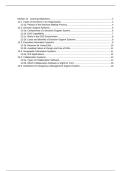
TABLE OF CONTENTS

1. Introduction to the body
Language of science and medicine
Introduction
Scientific method
Levels of organization
Anatomical position
Anatomical directions
Planes of the body
Body cavities
Body regions
Balance of body functions

2. Chemistry of life
Language of science and medicine
Introduction
Levels of chemical organization
Chemical bonding
Inorganic chemistry
Organic chemistry
Chemistry in the human body

3. Cells
Language of science and medicine
Introduction
Overview of cells
Parts of the cell
Relationship of cell structure and function
Movement of substances through cell membranes
Cell growth and reproduction

4. Tissues
Language of science and medicine
Introduction
Introduction to tissues
Epithelial tissue
Connective tissue
Muscle tissue
Nervous tissue

5. Organ systems

, Prof.Exams
Language of science and medicine
Introduction
Organ systems
The body as a whole
❑ Outline summary
❑ Active learning
6. Skin and membranes
Language of science and medicine
Introduction
Body membranes
Skin
Skin cancer
Burns


7. Skeletal system
Language of science and medicine
Introduction
Functions of the skeletal system
Gross structure of bones
Microscopic structure of bones
Bone development
Axial skeleton
Appendicular skeleton
Skeletal variations
Joints

8. Muscular system
Language of science and medicine
Introduction
Muscle tissue
Structure of skeletal muscle
Functions of skeletal muscle
Role of other body systems in movement
Motor unit
Muscle stimulus
Types of skeletal muscle contractions
Effects of exercise on skeletal muscle
Movements produced by skeletal muscle contractions
Skeletal muscle groups

$20.00
Get access to the full document:
Purchased by 8 students

100% satisfaction guarantee
Immediately available after payment
Both online and in PDF
No strings attached

Reviews from verified buyers

Showing all 6 reviews
1 year ago

9 months ago

Thanks for the great review

1 year ago

1 year ago

Tha nk you for the great review.

1 year ago

1 year ago

Thank you for the great review...

2 year ago

2 year ago

Thanks for the great review. For any test banks feel free to inbox..

2 year ago

Thanks for the great review

2 year ago

2 year ago

Thanks for the great review. Kindly inbox for any other exam requirements. you can also follow us on twitter @DroneSturdy and tiktok @sturdydrone

2 year ago

2 year ago

Thanks fr the great review should you need other documents do not hesitate to inbox me

5.0

6 reviews

5
6
4
0
3
0
2
0
1
0
Trustworthy reviews on Stuvia

All reviews are made by real Stuvia users after verified purchases.

Get to know the seller

Seller avatar
Reputation scores are based on the amount of documents a seller has sold for a fee and the reviews they have received for those documents. There are three levels: Bronze, Silver and Gold. The better the reputation, the more your can rely on the quality of the sellers work.
ProfExams Chamberlain College Of Nursing
View profile
Follow You need to be logged in order to follow users or courses
Sold
604
Member since
5 year
Number of followers
418
Documents
1221
Last sold
2 weeks ago
Top Grades Guaranteed

All Science and Health Science Solution provider

3.9

78 reviews

5
39
4
19
3
6
2
3
1
11

Recently viewed by you

Why students choose Stuvia

Created by fellow students, verified by reviews

Quality you can trust: written by students who passed their tests and reviewed by others who've used these notes.

Didn't get what you expected? Choose another document

No worries! You can instantly pick a different document that better fits what you're looking for.

Pay as you like, start learning right away

No subscription, no commitments. Pay the way you're used to via credit card and download your PDF document instantly.

Student with book image

“Bought, downloaded, and aced it. It really can be that simple.”

Alisha Student

Frequently asked questions