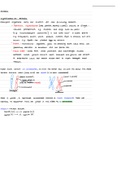
CERTAINTY OF SUBJECT MATTER
“The income from my blue-chip shares to my trustee Bill and Ben from
which they must ensure that my old Uncle Tom has a reasonable standard
of living.
1. INCOME FROM BLUE CHIP SHARES
Subject matter of the trust must be ascertainable at the very outset or at the
time the trust is to be administered by the trustee or the court. Or else, the trust
would be invalidated. In the present fact, it is argued that it is uncertain as to
which property and the beneficial interests which the beneficiaries are to take.
In Re Kolb’s WT, a reference to stocks and shares ‘in the blue-chip category’
was uncertain as the term ‘blue chip’ has no precise meaning except to indicate
a very good share. Drawing analogy to the current fact, the trust will therefore
fail for uncertainty of subject matter. Should the court held that ‘blue chip share
is sufficiently certain, other parts of disposition will be considered.
2. REASONABLE INCOME
(SUFFICIENT INCOME for a reasonable standard of living) might appear to
be uncertain, but in Re Golay’s WT, it was held that ‘a reasonable income’ was
capable of being quantified objectively in relation to a person’s lifestyle.
Presumably, therefore, a (sufficient income) relating to (B1B2)’s lifestyle could
be ascertained.
, 3. “Three of my five Van Gogh paintings to my trustees to hold one of
them in trust for my brother, Alex, whichever he may choose, and
the other two in trust for my sister, Theresa.
There is an uncertainty of subject matter as to which (three of the five) (Van
Gogh Paintings) are to be held on trust for (TRUSTEE) to choose from. This is
similar to Palmer v Simmonds where ‘bulk of my residuary estate’ failed for
uncertainty of subject matter.
Moreover, the interests of (Alex) and (Theresa) are uncertain until
(trustee) has made her choice; no choice can now be made as (Alex) has died.
Drawing analogy to Boyce v Boyce, where Maria predeceased her father
before making a choice, as such Charlotte’s trust that is dependent upon
Maria’s choice failed because it was unsure which house Maria would choose.
On the fact, (Alex) predeceased the testator, it is impossible to determine
which (paintings) should be held in trust for (Theresa). All (paintings) will
therefore fall into residue. In the absence of a residuary gift, they will pass to
(TOR)’s next-of-kin as on intestacy.
Alternatively, it may be argued that (TOR) intended to make (Alex) a
trustee of the power of selection. Hence, someone else or the court could make
the choice as ‘equity will not allow a trust to fail for want of trustee’. However,
such construction is unlikely to succeed interpreting the wording of the
disposition.
In the event, FAIL FOR CERTAINTY OF SUBJECT MATTER here
If the bequest fails for uncertainty of subject matter, it will result back to the
estate and be disposed of according to the provisions of the will regarding the
residue.
“The income from my blue-chip shares to my trustee Bill and Ben from
which they must ensure that my old Uncle Tom has a reasonable standard
of living.
1. INCOME FROM BLUE CHIP SHARES
Subject matter of the trust must be ascertainable at the very outset or at the
time the trust is to be administered by the trustee or the court. Or else, the trust
would be invalidated. In the present fact, it is argued that it is uncertain as to
which property and the beneficial interests which the beneficiaries are to take.
In Re Kolb’s WT, a reference to stocks and shares ‘in the blue-chip category’
was uncertain as the term ‘blue chip’ has no precise meaning except to indicate
a very good share. Drawing analogy to the current fact, the trust will therefore
fail for uncertainty of subject matter. Should the court held that ‘blue chip share
is sufficiently certain, other parts of disposition will be considered.
2. REASONABLE INCOME
(SUFFICIENT INCOME for a reasonable standard of living) might appear to
be uncertain, but in Re Golay’s WT, it was held that ‘a reasonable income’ was
capable of being quantified objectively in relation to a person’s lifestyle.
Presumably, therefore, a (sufficient income) relating to (B1B2)’s lifestyle could
be ascertained.
, 3. “Three of my five Van Gogh paintings to my trustees to hold one of
them in trust for my brother, Alex, whichever he may choose, and
the other two in trust for my sister, Theresa.
There is an uncertainty of subject matter as to which (three of the five) (Van
Gogh Paintings) are to be held on trust for (TRUSTEE) to choose from. This is
similar to Palmer v Simmonds where ‘bulk of my residuary estate’ failed for
uncertainty of subject matter.
Moreover, the interests of (Alex) and (Theresa) are uncertain until
(trustee) has made her choice; no choice can now be made as (Alex) has died.
Drawing analogy to Boyce v Boyce, where Maria predeceased her father
before making a choice, as such Charlotte’s trust that is dependent upon
Maria’s choice failed because it was unsure which house Maria would choose.
On the fact, (Alex) predeceased the testator, it is impossible to determine
which (paintings) should be held in trust for (Theresa). All (paintings) will
therefore fall into residue. In the absence of a residuary gift, they will pass to
(TOR)’s next-of-kin as on intestacy.
Alternatively, it may be argued that (TOR) intended to make (Alex) a
trustee of the power of selection. Hence, someone else or the court could make
the choice as ‘equity will not allow a trust to fail for want of trustee’. However,
such construction is unlikely to succeed interpreting the wording of the
disposition.
In the event, FAIL FOR CERTAINTY OF SUBJECT MATTER here
If the bequest fails for uncertainty of subject matter, it will result back to the
estate and be disposed of according to the provisions of the will regarding the
residue.