ATLS Pre-test Q&A
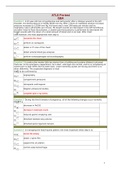
ATLS Pre-test Q&A Question:1 A 22-year-old man is hypotensive and tachycardic after a shotgun wound to the left shoulder. His blood pressure is initially 80/40 mm Hg. After 2 liters of crystalloid solution his blood pressure increases to 122/84 mm Hg. His heart rate is now 100 beats per minute and his respiratory rate is 28 breaths per minute. His breath sounds are decreased in the left hemithorax, and after initial IV fluid resuscitation, a closed tube thoracostomy is performed for decreased left breath sounds with the return of a small amount of blood and no air leak. After chest tube insertion, the most appropriate next step is A) reexamine the chest. B) perform an aortogram. C) obtain a CT scan of the chest. D) obtain arterial blood gas analyses E) perform transesophageal echocardiography. Question:2 A construction worker falls two stories from a building and sustains bilateral calcaneal fractures. In the emergency department, he is alert, vital signs are normal, and he is complaining of severe pain in both heels and his lower back. Lower extremity pulses are strong and there is no other deformity. The suspected diagnosis is most likely to be confirmed by A) angiography. B) compartment pressures C) retrograde urethrogram D) Doppler-ultrasound studies. E) complete spine x-ray series. Question:3 During the third trimester of pregnancy, all of the following changes occur normally EXCEPT a A) decrease in PaCO2 B) decrease in leukocyte count. C) reduced gastric emptying rate. D) dimished residual lung volume. E) dimished pelvic ligament tension. Question:4 In managing the head-injured patient, the most important initial step is to A) secure the airway. B) obtain c-spine film. C) support the circulation D) control scalp hemorrhage. E) determine the GCS Score. Question:5 A previously healthy, 70-kg (154-pound) man suffers an estimated acute blood loss of 2 liters. Which one of the following statements applies to this patient? A) His pulse pressure will be widened. B) His urinary output will be at the lower limits of normal. C) He will have tachycardia, but no change in his systolic blood pressure. D) His systolic blood pressure will be decreased with a narrowed pulse pressure. E) His systolic blood pressure will be maintained with an elevated diastolic pressure. Question:6 The physiologic hypervolemia of pregnancy has clinical significance in the management of the severely injured, gravid woman by A) reducing the need for blood transfusion. B) increasing the risk of pulmonary edema. C) complicating the mangement of closed head injury. D) reducing the volume of crystalloid required for resuscitation. E) increasing the volume of blood loss to produce maternal hypotension. Question:7 The best guide for adequate fluid resuscitation of the burn patient is A) adequate urinary output. B) reversal of systemic acidosis. C) normalization of the heart rate. D) a normal central venous pressure. E) 4 mL/kg/percent body burn/ 24 hours. Question:8 Establishing a diagnosis of shock must include A) hypoxemia. B) acidosis. C) hypotension. D) increased vascular resistance. E) evidence of inadequate organ perfusion.
Document information
- Uploaded on
- March 29, 2023
- Number of pages
- 11
- Written in
- 2022/2023
- Type
- Exam (elaborations)
- Contains
- Questions & answers