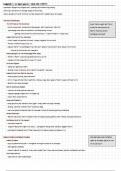
Judicial review overview
Administrative law introduction
Administrative law concerns the principles relating to executive/governmental powers. Government
officials and agencies are conferred with extensive powers (typically by statute) to provide public
services such as social security. Administrative law focuses specifically on the powers and
responsibilities exercised by governmental bodies and how they are regulated and controlled by
both legal and extra-judicial means. Although there is no clear demarcation between constitutional
and administrative law due largely to the absence of a codified constitution), the latter is particularly
concerned with how the executive/administration uses and misuses its public law decision-makers
are accountable for their actions. Public lawyers are particularly interested in:
• The methods by which the exercise of public powers and duties may be controlled by the courts
or by other extra-judicial bodies (Ombudsman);
• The ways in which the government/administration in exercising its public law powers and duties
facilitates the following constitutional principles: justice, participation in public affairs, open
government.
An overview of the regulation of the regulation of governmental power
Although administrative law primarily concerns the legal regulation of the exercise of public power
by governmental bodies, it also embraces non-legal controls outside the strict court system. In
general terms, government power is regulated in the following: political control, legal control and
extra-judicial control.
Political control
The government is politically controlled in the following ways:
I. Public pressure: government is influenced by public pressure and may therefore react to
public opinion. By reacting to public opinion, the government may act illegally - ex parte
Venables and Thompson (1997), the Home Secretary acted unlawfully in taking into account
public concern regarding the length of Venables and Thompson’s detention for killing James
Bulger. Ultimately, governments (MP’s in the government) need to seek re-election at least 5
years and obtain support of the electorate.
II. Parliamentary pressure: in constitutional theory, government ministers are controlled and
regulated in Parliament through the following devices:
• Parliamentary questions;
• Parliamentary debates;
• Parliamentary committees.
In fact, 2 of the most fundamental constitutional conventions underpinning our constitution are the
conventions of collective and individual responsibility.
Legal control
The government is legally controlled in the following ways:
I. Private law remedies: in general terms, government bodies, like private individuals, are
subject to the private laws of tort and contract, ect. The private citizen may sue for breach of
contract if a local authority fails to fulfil its obligations under a contract made. In private law,
however, public bodies are treated differently in two respects: 1) for public interest reasons,
they may have defences to private law actions which private individuals do not. 2) the courts
Administrative law introduction
Administrative law concerns the principles relating to executive/governmental powers. Government
officials and agencies are conferred with extensive powers (typically by statute) to provide public
services such as social security. Administrative law focuses specifically on the powers and
responsibilities exercised by governmental bodies and how they are regulated and controlled by
both legal and extra-judicial means. Although there is no clear demarcation between constitutional
and administrative law due largely to the absence of a codified constitution), the latter is particularly
concerned with how the executive/administration uses and misuses its public law decision-makers
are accountable for their actions. Public lawyers are particularly interested in:
• The methods by which the exercise of public powers and duties may be controlled by the courts
or by other extra-judicial bodies (Ombudsman);
• The ways in which the government/administration in exercising its public law powers and duties
facilitates the following constitutional principles: justice, participation in public affairs, open
government.
An overview of the regulation of the regulation of governmental power
Although administrative law primarily concerns the legal regulation of the exercise of public power
by governmental bodies, it also embraces non-legal controls outside the strict court system. In
general terms, government power is regulated in the following: political control, legal control and
extra-judicial control.
Political control
The government is politically controlled in the following ways:
I. Public pressure: government is influenced by public pressure and may therefore react to
public opinion. By reacting to public opinion, the government may act illegally - ex parte
Venables and Thompson (1997), the Home Secretary acted unlawfully in taking into account
public concern regarding the length of Venables and Thompson’s detention for killing James
Bulger. Ultimately, governments (MP’s in the government) need to seek re-election at least 5
years and obtain support of the electorate.
II. Parliamentary pressure: in constitutional theory, government ministers are controlled and
regulated in Parliament through the following devices:
• Parliamentary questions;
• Parliamentary debates;
• Parliamentary committees.
In fact, 2 of the most fundamental constitutional conventions underpinning our constitution are the
conventions of collective and individual responsibility.
Legal control
The government is legally controlled in the following ways:
I. Private law remedies: in general terms, government bodies, like private individuals, are
subject to the private laws of tort and contract, ect. The private citizen may sue for breach of
contract if a local authority fails to fulfil its obligations under a contract made. In private law,
however, public bodies are treated differently in two respects: 1) for public interest reasons,
they may have defences to private law actions which private individuals do not. 2) the courts