PROBLEM 7
CONSTRUCTIVIST APPROACH
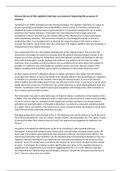
Constructivism emphasizes he learner’s contribution to meaning and learning through both individual and
social activity. According to this view, learners arrive at meaning by selecting information and constructing
what they know either individually or in collaboration with other learners. Although there are many
dimensions of constructivism, most constructivism share our main characteristics:
Learners are active in constructing their own knowledge by discovering and transforming existing
knowledge and experience into new understanding
Social interactions are important to knowledge construction. Specifically, dialectical constructivism
highlights the importance of social interaction in developing knowledge and thought.
Self-regulation and metacognition which includes planning, goal setting, strategy selection, and
coordination, integration, and self-monitoring.
Learning tasks in the classroom that reflect how knowledge and skills will be used outside the
classroom
The aim of teaching, from a constructivist perspective, is not so much to transmit information as to encourage
knowledge formation and metacognitive process for judging, organizing, and acquiring new information that
is student-driven. In constructivist classrooms, students typically are taught to plan and direct their own
learning to some extent and to take an active role in their learning. It also emphasizes on top-down rather
than bottom-up instruction. Thus, students begin with complex problems to solve and then work out or
discover the basic skills required. Constructivist approach to teaching typically makes extensive use of
cooperative learning on the theory that students will more easily discover and comprehend difficult concepts
if they can talk with each other about the problems.
There are 3 types of constructivism:
Exogenous constructivism: knowledge formation is basically a reconstruction of structures such as
cause-effect relationship, presented information, and observed behavior patterns, that already exist
in external reality. In this view, our mental structures reflect the organization of the world outside or
exogenous to us. An example is reciprocal teaching method in which an expert scaffolds instruction
for a novice until the novice can construct sufficient knowledge and regulate her own performance.
Endogenous constructivism (Moshman: cognitive structures are created from earlier structures, not
directly from information provided by the environment. Knowledge exists a more abstract level and
develops through cognitive activity within or endogenous to us. An example of this type of
constructivist approach are Piaget’s stages of cognitive development. An instructional method tied
to endogenous constructivism is discovery learning (students are encouraged to learn largely on their
own through active involvement with concepts and principles, and teachers encourage students to
have experiences and conduct experiments that permit them to discover principles for themselves).
However, it is highly criticized because studies show that is less effective than more structured
approaches and that students may lack the knowledge and motivation to construct deep
understanding autonomously.
Dialectical constructivism (Vygotsky): places the source of knowledge in the interactions between
learners and their environments (it incorporates internal and external factors). Knowledge is a
constructed synthesis that grows out of contradiction that individuals experience during these
CONSTRUCTIVIST APPROACH
Constructivism emphasizes he learner’s contribution to meaning and learning through both individual and
social activity. According to this view, learners arrive at meaning by selecting information and constructing
what they know either individually or in collaboration with other learners. Although there are many
dimensions of constructivism, most constructivism share our main characteristics:
Learners are active in constructing their own knowledge by discovering and transforming existing
knowledge and experience into new understanding
Social interactions are important to knowledge construction. Specifically, dialectical constructivism
highlights the importance of social interaction in developing knowledge and thought.
Self-regulation and metacognition which includes planning, goal setting, strategy selection, and
coordination, integration, and self-monitoring.
Learning tasks in the classroom that reflect how knowledge and skills will be used outside the
classroom
The aim of teaching, from a constructivist perspective, is not so much to transmit information as to encourage
knowledge formation and metacognitive process for judging, organizing, and acquiring new information that
is student-driven. In constructivist classrooms, students typically are taught to plan and direct their own
learning to some extent and to take an active role in their learning. It also emphasizes on top-down rather
than bottom-up instruction. Thus, students begin with complex problems to solve and then work out or
discover the basic skills required. Constructivist approach to teaching typically makes extensive use of
cooperative learning on the theory that students will more easily discover and comprehend difficult concepts
if they can talk with each other about the problems.
There are 3 types of constructivism:
Exogenous constructivism: knowledge formation is basically a reconstruction of structures such as
cause-effect relationship, presented information, and observed behavior patterns, that already exist
in external reality. In this view, our mental structures reflect the organization of the world outside or
exogenous to us. An example is reciprocal teaching method in which an expert scaffolds instruction
for a novice until the novice can construct sufficient knowledge and regulate her own performance.
Endogenous constructivism (Moshman: cognitive structures are created from earlier structures, not
directly from information provided by the environment. Knowledge exists a more abstract level and
develops through cognitive activity within or endogenous to us. An example of this type of
constructivist approach are Piaget’s stages of cognitive development. An instructional method tied
to endogenous constructivism is discovery learning (students are encouraged to learn largely on their
own through active involvement with concepts and principles, and teachers encourage students to
have experiences and conduct experiments that permit them to discover principles for themselves).
However, it is highly criticized because studies show that is less effective than more structured
approaches and that students may lack the knowledge and motivation to construct deep
understanding autonomously.
Dialectical constructivism (Vygotsky): places the source of knowledge in the interactions between
learners and their environments (it incorporates internal and external factors). Knowledge is a
constructed synthesis that grows out of contradiction that individuals experience during these