NU606_W11_Genitourinary_and_Reproductive_Guided_Notes_ and |_marking scheme
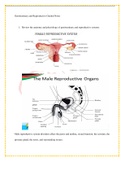
Genitourinary and Reproductive Guided Notes 1. Review the anatomy and physiology of genitourinary and reproductive systems. Male reproductive system disorders affect the penis and urethra, sexual function, the scrotum, the prostate gland, the testis, and surrounding tissues. 2. Define incontinence. Loss of bladder and anal sphincter muscle voluntary control. 3. What are the different types of incontinence? Stress incontinence, functional incontinence, mixed incontinence, urge incontinence, overflow incontinence, and reflex incontinence. 4. What is enuresis, and what can lead to it? Loss of bladder control in children who are at the age of not wetting the bed. Penile anomalies and abnormalities, diabetes, psychological issues, and urinary tract infection are the known causes of enuresis. 5. Urinary tract infections Describe It Pathophysiology of It Risk Factors Signs and Symptoms Specific Lab Values Infection occurring to any part of the urinary system They are infections occurring after the normal flora of other body parts gets into the urinary tract. It can either be in the upper or lower urinary tract infection. Age Sexual activity Pregnancy Previous UTI Indwelling urinary catheters Pain or burning sensation when urinating Blood in urine Frequent urination Feeling an urgency to urinate Bacteria in urine Proteinuria Glycosuria Altered pH in urine 6. What are the common pathogens of UTIs? Enterococcus faecalis, Escherichia coli, Proteus mirabilis, Staphylococcus saprophyticus, and Klebsiella pneumoniae.
Written for
- Institution
- NU606
- Course
- NU606
Document information
- Uploaded on
- January 17, 2023
- Number of pages
- 29
- Written in
- 2022/2023
- Type
- Exam (elaborations)
- Contains
- Questions & answers
Subjects
-
nu606w11genitourinaryandreproductiveguidednotes
-
nu606w11genitourinaryandreproductivemarking scheme
-
nu606w11genitourinaryandreproductive 100 correct answers
-
nu606w11genitourinaryand

Also available in package deal